
Corrosion Protection
Salt air is extremely corrosive. Standard onshore equipment will rust quickly in offshore conditions. Offshore equipment needs marine-grade paint, stainless steel components, and proper drainage to prevent salt buildup.
Offshore oilfield operations are among the most demanding in the industry. Salt air causes rapid corrosion, deck space is at a premium, weather can change in minutes, and safety standards are extremely high. Offshore equipment must be specifically designed for this environment: compact, lightweight (within platform load limits), marine-rated, and built to the highest safety standards. We supply a range of offshore-rated equipment designed for platform, jack-up, and FPSO applications.
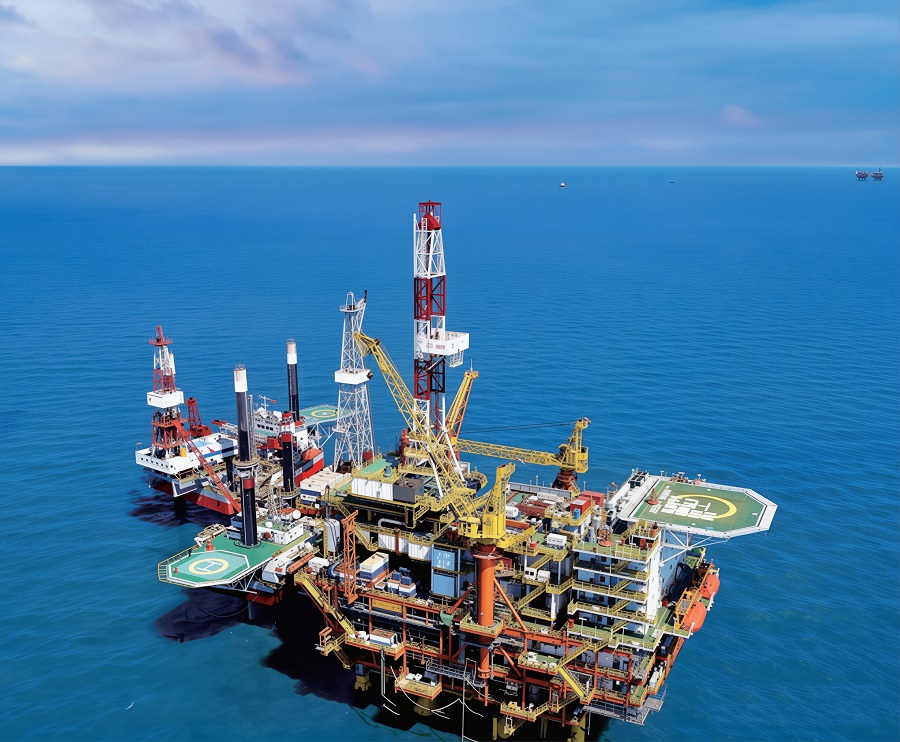
Why offshore configuration matters:
Salt air is extremely corrosive. Standard onshore equipment will rust quickly in offshore conditions. Offshore equipment needs marine-grade paint, stainless steel components, and proper drainage to prevent salt buildup.
Deck space on offshore platforms is limited and expensive. Offshore equipment must be compact and lightweight. Every kilogram counts. This means smaller footprints and higher power density compared to onshore equipment.
Offshore safety standards are extremely high. Equipment must meet marine classification society requirements (DNV, ABS, BV, etc.). Fire and gas detection, emergency shutdown, and escape route considerations are built in.
Rough seas, storms, and hurricanes. Equipment must be designed for motion (roll, pitch, heave), wind loading, and extreme weather. Anchoring, securing, and weather rating are critical.
Every piece of offshore-configured equipment includes:
| Feature | Offshore Specification |
|---|---|
| Corrosion Protection | Marine-grade paint system (multi-coat epoxy + polyurethane), stainless steel fasteners, galvanized components, proper drainage |
| Compact Design | Reduced footprint, skid-mounted, modular design for easy installation in limited deck space |
| Marine Certification | Can be certified by DNV, ABS, BV, or other classification societies as required |
| Hazardous Area | ATEX / IECEx certified electrical equipment for hazardous area (Zone 1 / Zone 2) applications |
| Emergency Systems | Emergency shutdown (ESD), fire and gas detection, high-integrity pressure protection |
| Sea Fastening | Lifting points, sea-fastening lugs, anti-vibration mounting, designed for ship motion |
We offer offshore-rated versions of our major equipment types:
Skid-mounted offshore cementing units for platform and jack-up operation. Compact design, marine-rated, hazardous area certified. For offshore well cementing operations.
Compact offshore workover rigs for platform well servicing. Lightweight design within platform load limits. Marine-rated and certified for offshore operation.
Compact offshore coiled tubing units for platform and FPSO intervention operations. Marine-rated, hazardous area certified. For offshore well intervention.
Marine-rated BOP stacks, choke and kill manifolds, and well control systems for offshore applications. Certified by classification societies.
Our offshore equipment is suitable for offshore operations worldwide:
UAE, Qatar, Saudi Arabia, Bahrain, Oman —Gulf offshore operations. We supply offshore equipment for the Middle East offshore market.
Brazil (deepwater pre-salt), Mexico, Argentina —offshore operations. We supply equipment for South American offshore projects.
Angola, Nigeria, Gabon —deepwater offshore operations. We supply offshore equipment for West African projects.
Indonesia, Malaysia, Thailand, Vietnam —offshore Gulf of Thailand and South China Sea operations.
Azerbaijan (Baku), Kazakhstan (Caspian) —offshore Caspian Sea operations. We supply offshore-rated equipment.
North Sea, Gulf of Mexico, offshore India, offshore Australia. Tell us your offshore location, and we will configure accordingly.
Yes. We can provide offshore equipment certified by DNV, ABS, BV, or other classification societies as required. Certification involves design review, material inspection, and witnessed testing by the classification society surveyor. Tell us your certification requirement, and we will coordinate with the relevant classification society. Certification adds time and cost but is essential for most offshore projects.
Offshore equipment differs from onshore equipment in several key ways: (1) corrosion protection —marine-grade paint and stainless components, (2) compact design —smaller footprint for limited deck space, (3) weight —designed within platform load limits, (4) hazardous area certification —ATEX/IECEx electrical equipment, (5) marine certification —DNV/ABS/BV design approval, (6) sea fastening —designed for ship motion. Offshore equipment is more expensive but required for safe offshore operation.
Yes. We supply offshore equipment suitable for FPSO (Floating Production Storage and Offloading) vessel operations. FPSO equipment must be designed for marine motion, compact footprint, and hazardous area operation. Tell us your FPSO application, and we will design suitable equipment. FPSO equipment typically requires DNV or ABS certification.
Offshore equipment installation requires careful planning: (1) equipment is designed and built to fit within your platform's deck space and load limits, (2) equipment is tested at our factory (FAT), (3) equipment is shipped to the offshore location, (4) equipment is lifted onto the platform by crane, (5) equipment is positioned, secured, and connected, (6) commissioning on site. Our service engineers supervise the offshore installation and commissioning. We work with your installation contractor to ensure a smooth installation.
Some onshore equipment can be modified to offshore configuration: adding marine-grade paint, upgrading to stainless fasteners, converting to hazardous area electrical, and adding sea fastening points. However, this is typically more expensive than building offshore-rated equipment from the start. For new projects, we recommend specifying offshore configuration from the beginning. Tell us what equipment you have and what offshore application you need, and we will advise on feasibility.
Tell us about your offshore project: platform type, location, equipment needs, and certification requirements. Our engineering team will design the right offshore-rated solution.