
Iron Roughneck
Automated pipe tongs that make and break tubing connections. Replaces manual tongs and the roughnecks who operate them. Hydraulically powered, controlled from the driller's cabin. Faster and more consistent than manual tongs.
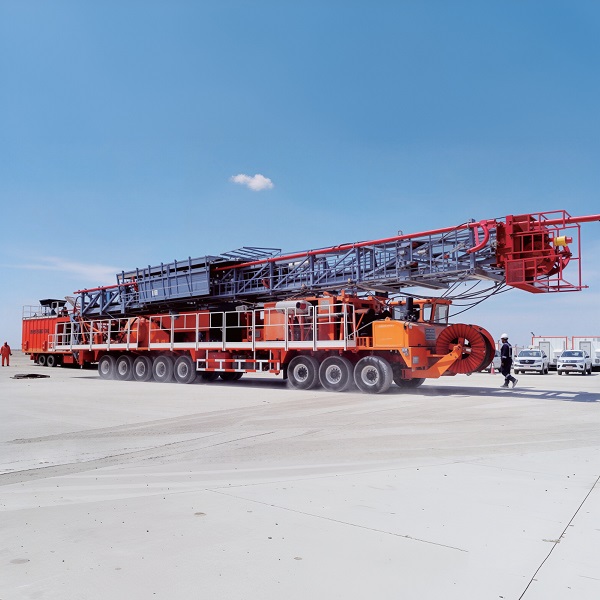
Workover is one of the most labor-intensive oilfield operations: pulling and running tubing, changing pumps, performing well maintenance. A conventional workover rig needs a crew of 8-10 roughnecks on the rig floor —heavy physical labor, high injury risk, and high personnel cost. An automated workover rig uses iron roughnecks, automated catwalks, and pipe handling systems to reduce the crew to 4-6 people, mostly in the driller's cabin. Same workover capability, fewer people on the floor, faster tripping, and safer operations. We design and build automated workover rigs tailored to your automation level requirements —from semi-automatic to full automation.
| Automation Level | Key Features | Crew Size | Best For |
|---|---|---|---|
| Manual (Basic) | Manual tongs, manual catwalk, manual pipe handling | 8-10 people | Low-cost workover, shallow wells |
| Semi-Automatic | Iron roughneck, powered catwalk, manual pipe racking | 6-8 people | Standard workover, cost-effective upgrade |
| Full Automation | Iron roughneck, automated catwalk, automated pipe racker, driller's cabin control | 4-6 people | Deep workover, high-pressure wells, personnel cost optimization |
Automated pipe tongs that make and break tubing connections. Replaces manual tongs and the roughnecks who operate them. Hydraulically powered, controlled from the driller's cabin. Faster and more consistent than manual tongs.
Powered pipe delivery from the pipe rack to the rig floor. Replaces the manual catwalk crew. Hydraulic or pneumatic, controlled from the driller's cabin or remote panel.
Mechanical pipe handling system that stands pipe in the derrick. Replaces the manual derrickman. Fully automated, controlled from the driller's cabin. Critical for full automation.
Enclosed, climate-controlled driller's cabin with joystick controls, displays, and cameras. The driller operates the rig from inside the cabin, not on the rig floor. Improves safety and reduces fatigue.
It depends on the rig. Some older workover rigs can be retrofitted with iron roughnecks and automated catwalks. Full automation (automated pipe racker) usually requires a newer rig with suitable derrick design. Tell us what rig you have, and we'll evaluate what automation upgrades are feasible. We also build new automated workover rigs from the ground up.
An automated workover rig typically costs 20-40% more upfront than a manual rig of the same capacity. However, the automation components save personnel cost over the rig's life. Many operators find the payback period is 2-4 years, depending on personnel costs and utilization. Tell us your operating environment, and we'll help you calculate the business case.
Yes. Automated rigs require skilled operators who understand the control system, hydraulic systems, and automation logic. We provide operator training at our factory or on-site. Training covers basic operation, safety procedures, troubleshooting, and maintenance. Most crews transition to automated rigs within 2-4 weeks of training.
Tell us your workover depth, well type, and automation requirements. We'll recommend the right automation level —from semi-automatic upgrade to full automation —and provide a detailed quote.