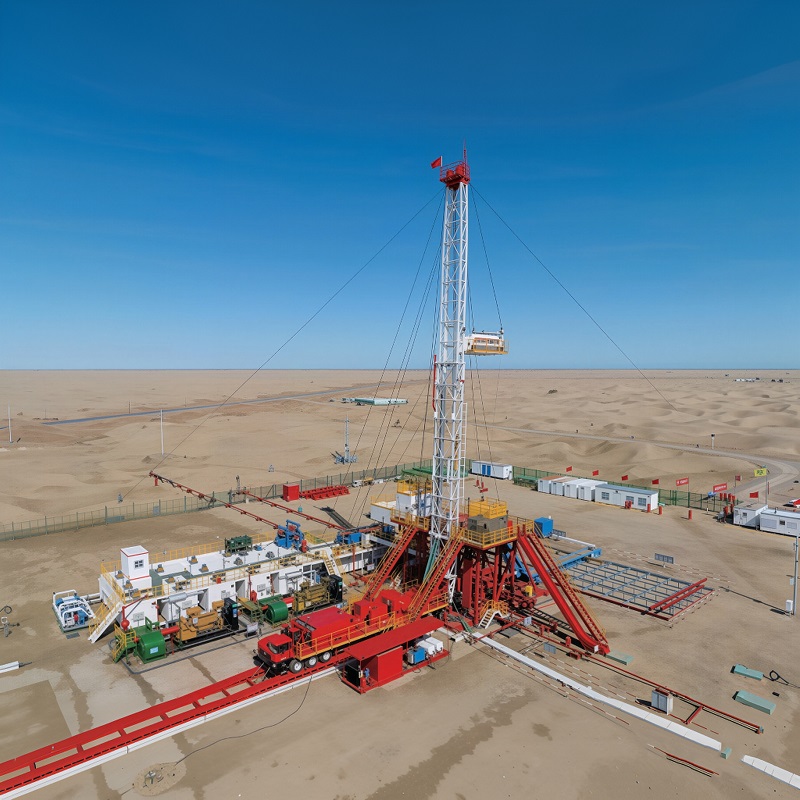
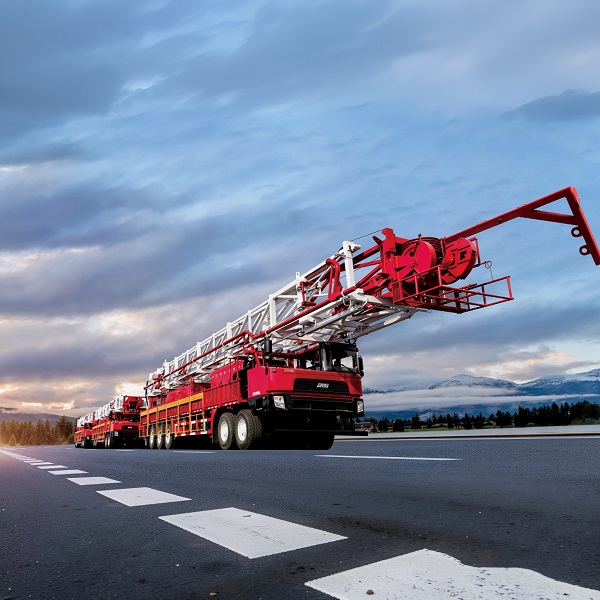
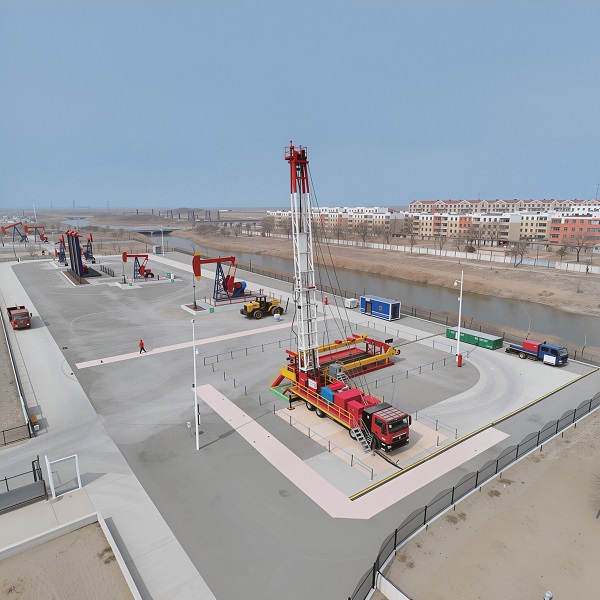
300-500 Ton | Deep Well Intervention

Heavy Duty Workover Rig for Deep Well Intervention

A heavy duty workover rig is designed for the toughest well intervention operations: pulling stuck tubing, recovering casing, and performing deep well workover that requires high hoisting capacity. These rigs bridge the gap between standard workover rigs and full drilling rigs.

Heavy duty workover rig for deep well intervention

What Is a Heavy Duty Workover Rig?

A heavy duty workover rig (also called a heavy workover unit or super workover rig) is a high-capacity hoisting machine designed for challenging well intervention operations. It has significantly more lifting capacity than a standard workover rig, approaching the capacity of a medium drilling rig.

Key Characteristics

  • High lifting capacity: 300-500+ tons (vs 50-225 ton for standard rigs)
  • Tall mast: 40-50+ meters for long pipe strings
  • Powerful winch: High-power VFD electric winch for heavy loads
  • Reinforced structure: Heavier mast, substructure and chassis
  • Advanced controls: Precision hoisting control for sensitive operations

Where It Fits in the Equipment Spectrum

  • Standard workover rig: 50-225 ton, routine maintenance
  • Heavy duty workover rig: 300-500 ton, heavy intervention
  • Medium drilling rig: 500-900+ ton, drilling new wells

Heavy duty workover rigs fill the gap: they can handle operations that are too heavy for standard workover rigs, without the cost and complexity of a full drilling rig.

What Are Heavy Duty Rigs Used For?

Heavy duty workover rigs are designed for these demanding operations:

Stuck Pipe Recovery

When pipe becomes stuck in the well (differential sticking, mechanical sticking), standard workover rigs may not have enough pulling force. A heavy duty rig can apply the high pull force needed to free stuck pipe or back it off safely.

Casing Pulling

Pulling casing from a well requires enormous force —casing strings are heavy and may be cemented in place. A heavy duty workover rig provides the pulling power needed to recover casing for well abandonment or recompletion.

Deep Well Workover

Deep wells (4,000-6,000+ m) have heavy tubing strings and require more lifting capacity. A heavy duty rig can handle the full tubing string weight plus the safety margin needed for safe operation.

Deep Completion Work

Running and pulling completion strings in deep, high-pressure wells requires a heavy duty rig. The completion string may include production tubing, packers, downhole safety valves and artificial lift equipment —all adding up to significant weight.

Jetting & Milling Operations

For operations that require running and pulling a work string (jetting, milling, fishing), a heavy duty rig provides the hoisting capacity needed for the work string plus the downhole tools.

Well Abandonment (P&A)

Plug and abandonment operations require pulling all tubing and casing from the well. This is often a heavy operation —a heavy duty workover rig is ideal for P&A work, especially on older, deeper wells.

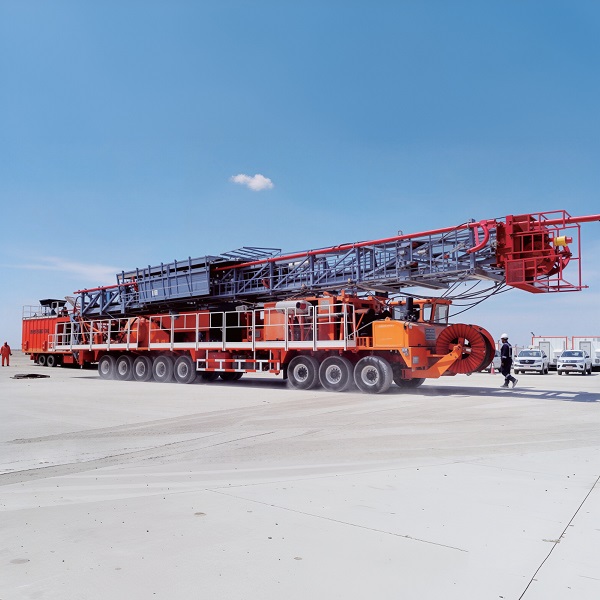
Heavy Duty Rig Model Range

Our heavy duty workover rig lineup covers the range from 300 ton to 500+ ton lifting capacity:

Model Lifting Capacity Mast Height Winch Power Mounting Type
SJW300-HD 300 ton 40 m 3 x 500 kW Trailer / Skid
SJW450-HD 450 ton 45 m 4 x 600 kW Trailer / Skid
SJW500-HD 500 ton 48 m 4 x 750 kW Skid / Platform
SJW650-HD 650 ton 52 m 6 x 750 kW Skid (offshore option)

Heavy Duty Workover Rig vs Drilling Rig

Why use a heavy workover rig instead of a drilling rig? The answer is cost and efficiency:

Factor Heavy Duty Workover Rig Medium Drilling Rig
Lifting capacity 300-500+ ton 500-900+ ton
Mud circulation system Optional (smaller) Standard (large capacity)
Mobility Moderate (trailer-mounted) Low (skid-mounted, requires crane)
Rig-up time 1-3 days 1-2 weeks
Initial cost USD 1-3 million USD 5-15 million+
Operating cost per day Lower Higher (bigger crew, more fuel)
Best for Heavy intervention, deep workover Drilling new wells, ultra-deep workover

Engineering Advantages of Our Heavy Duty Rigs

VFD Electric Winch

All our heavy duty rigs feature VFD (Variable Frequency Drive) electric winches. This provides precise hoisting control, smooth operation and high energy efficiency. Regenerative braking lowers heavy loads gently without brake wear.

API 4F Certified Mast

Our heavy duty masts are API 4F certified. They are designed and tested to handle the specified lifting capacity plus safety margin. Hydrostatic and load testing are performed on every unit before shipment.

Reinforced Structure

The mast, substructure and load-bearing components are reinforced for heavy loads. Heavy-duty steel, thicker wall sections and reinforced joints ensure structural integrity under maximum load.

Advanced Safety Systems

Our heavy duty rigs include comprehensive safety systems: load indicator with overload protection, emergency stop, winch brake monitoring, mast limit switches, and fall protection for the mast climbing system.

Offshore Configuration Option

For offshore platform use, we offer offshore-rated configurations: corrosion protection, DNV certification, compact footprint and hazardous area classification. These rigs are designed for platform workover operations.

Global Service Support

Our engineers provide commissioning, operator training and after-sales support worldwide. Critical spare parts are stocked in regional warehouses for fast delivery to any oilfield location.

Frequently Asked Questions About Heavy Duty Rigs

How much does a heavy duty workover rig cost?

The cost depends on capacity and configuration. A 300-ton heavy duty rig typically starts from USD 1-1.5 million. A 450-ton rig may cost USD 1.5-2.5 million. A 500+ ton rig can cost USD 2.5-4 million. Offshore-rated or custom configurations add additional cost. Compare this to a drilling rig at USD 5-15 million+ —the heavy workover rig is a cost-effective alternative for heavy intervention work.

What is the difference between a workover rig and a heavy workover rig?

The main difference is lifting capacity. Standard workover rigs have 50-225 ton capacity. Heavy workover rigs have 300-500+ ton capacity. Heavy rigs also have taller masts, more powerful winches and reinforced structures. They are designed for heavier operations that exceed the capacity of standard workover rigs.

When should I use a heavy duty workover rig instead of a drilling rig?

Use a heavy workover rig when you need heavy hoisting capacity but do not need to drill a new well. Examples: stuck pipe recovery, casing pulling, deep well workover, deep completion work. If you need to drill new wells, you need a drilling rig. The heavy workover rig is a cost-effective middle ground.

Can a heavy duty workover rig be used on offshore platforms?

Yes. We offer offshore-rated heavy duty workover rigs designed for platform use. These rigs have corrosion protection, DNV certification, compact footprint and hazardous area classification. They are commonly used for platform workover operations on offshore oil and gas platforms.

What is the lead time for a heavy duty workover rig?

Standard configuration heavy duty workover rigs take approximately 12-15 months from order confirmation. Offshore-rated or custom configurations may require 15-18 months. This includes engineering design, fabrication, load testing and factory acceptance testing. On-site commissioning typically takes 1-2 weeks after delivery.

Need a Heavy Duty Workover Rig?

Tell us your required lifting capacity, well depth and application. Our engineering team will recommend the optimal heavy duty rig configuration and provide a detailed quotation within 48 hours.