
Heavy Duty Travelling Block: Built for Extreme Loads
A heavy duty travelling block is designed for the most demanding lifting operations: ultra-deep drilling, heavy casing runs, offshore platform work and heavy workover. It has higher load capacity, more sheaves, and heavier construction than standard travelling blocks.
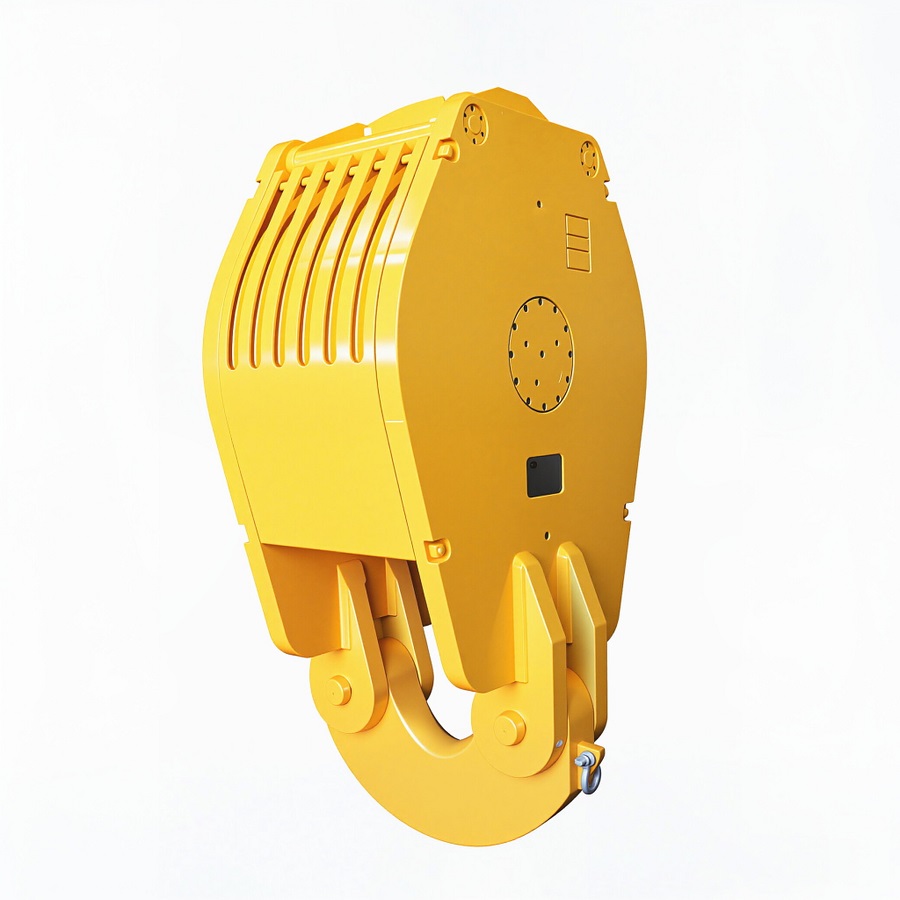
When You Need a Heavy Duty Block
Standard travelling blocks top out around 350-500 tons. You need a heavy duty block when:
- You're drilling ultra-deep wells (6000m+) where the drill string alone weighs 350+ tons
- You're running heavy casing strings (13-3/8 inch, 20 inch) that need 500+ ton hook loads
- You're working on offshore rigs with heavier derrick and rig configurations
- You're doing heavy workover on deep wells with long tubing strings
- Your expected hook load exceeds the standard block's safe working load
For standard drilling (3000-4500m wells) or workover, a standard travelling block is sufficient. Heavy duty blocks are for the extreme end of the loading spectrum.
Typical Specifications
| Parameter | Typical Range |
|---|---|
| Rated load capacity | 600 - 1000 tons (1,320,000 - 2,200,000 lbs) |
| Number of sheaves | 6 - 8 (matching crown block) |
| Wire rope diameter | 32 - 38 mm (1.25 - 1.5 inch) |
| Standard | API 8C (hoisting equipment) |
| Sheave size | Larger diameter sheaves for heavier rope and smoother operation |
| Weight | 3 - 6 tons (heavier construction for extreme loads) |
Standard vs Heavy Duty Block
| Feature | Standard Block | Heavy Duty Block |
|---|---|---|
| Load capacity | 250 - 500 tons | 600 - 1000 tons |
| Number of sheaves | 4 - 6 | 6 - 8 |
| Typical application | Land drilling, workover | Deep drilling, offshore, heavy casing |
| Construction | Standard weight | Heavier, reinforced body |
| Wire rope | 26 - 32 mm | 32 - 38 mm |
Frequently Asked Questions
Can I use a heavy duty block on my standard rig?
You can, but you need to check that your derrick, crown block and drawworks can handle the increased load. The block is only one component of the system. If your derrick is rated for 500 tons and you put a 800 ton block on it, you're still limited by the derrick capacity. The heavy duty block only helps if the rest of the system can handle the load. We can help you verify whether your rig can safely use a heavy duty block.
How does the heavy duty block handle more load?
There are three main design differences: more sheaves (which distributes load across more wire rope lines), heavier body construction (thicker steel, reinforced castings), and larger diameter sheaves (which reduce bending stress on the wire rope). Combined, these allow the block to safely lift more total weight. The trade-off is that the block is heavier and slower to travel —which is fine for deep drilling where load matters more than speed.
What wire rope goes with a heavy duty block?
Heavy duty blocks use larger diameter wire rope (32-38 mm) rated for higher individual line tension. The rope must match the sheave groove size and the line tension. For a 800 ton block with 7 lines, each line carries about 114 tons of tension. You need a wire rope rated above that per line. We can specify the exact wire rope size and type (rotation-resistant, compacted, etc.) based on your block configuration and operating conditions.
Need a Heavy Duty Travelling Block?
Tell us your required hook load and number of lines. Our engineering team will recommend the right block and provide a quote within 48 hours.