
Extreme Heat
Ambient temperatures of 45-55°C mean engines run hotter, hydraulic fluid breaks down faster, electronics fail more often. Standard cooling systems are sized for 35°C ambient —they can't keep up in the desert.
Drilling in the desert isn't the same as drilling in a temperate climate. When the ambient temperature hits 50°C, when sand gets into every engine intake, when water is scarce and roads are just sand tracks —standard equipment struggles. Desert-spec drilling equipment is engineered for these conditions: larger cooling systems, dust-sealed enclosures, wide-base tires for soft sand, and components that keep running when everything wants to overheat. Whether you're working in the Arabian Desert, the Sahara, the Gobi, or the Central Asian steppes, the equipment has to earn its keep.
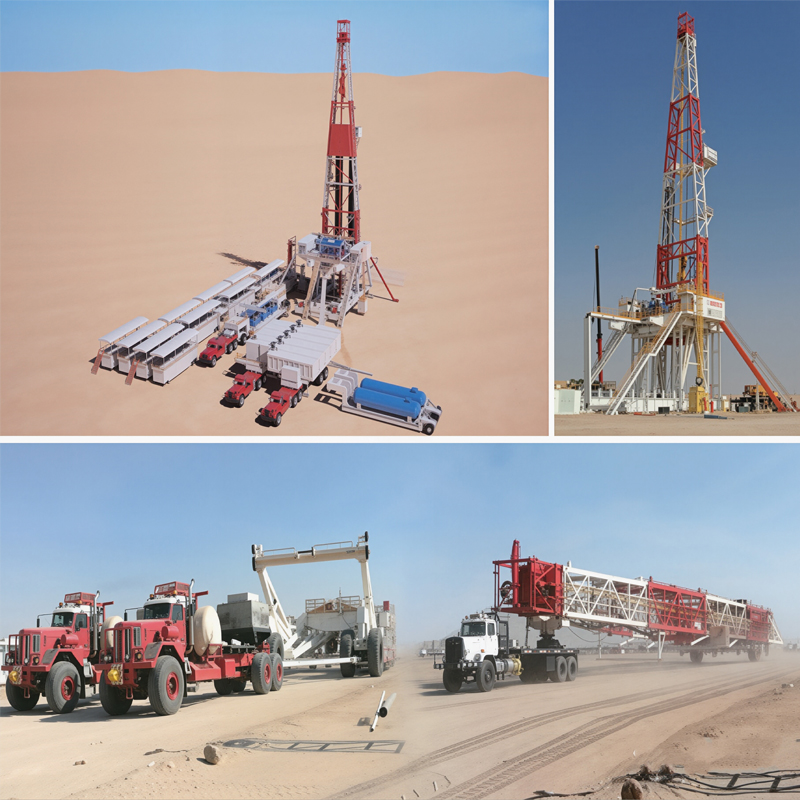
It's not just hot. It's a whole set of engineering challenges:
Ambient temperatures of 45-55°C mean engines run hotter, hydraulic fluid breaks down faster, electronics fail more often. Standard cooling systems are sized for 35°C ambient —they can't keep up in the desert.
Shamal winds or haboobs can drop visibility to zero. Sand gets into engine intakes, hydraulic systems, electrical connectors. Without proper sealing, equipment life is cut in half.
Mud systems need water, cooling systems need water, crew needs water. In the desert, water is trucked in at great expense. Equipment that uses less water (air drilling, air cooling) is a major advantage.
Conventional trucks sink in soft sand. Wide-base tires or track systems are needed. Rig moves become slow and difficult. Equipment weight matters —lighter rigs move easier.
When we say equipment is desert-rated, these are the specific upgrades:
| System | Standard | Desert Rated |
|---|---|---|
| Cooling system design ambient | 35°C (95°F) | 50°C (122°F) |
| Air filtration stages | 1 stage | 2-3 stages (cyclone + HEPA) |
| Electrical enclosure rating | IP54 | IP55 / IP65 pressurized |
| Tire configuration (mobile rigs) | Standard dual tires | Wide single tires or full tracks |
| Hydraulic fluid rating | Standard ISO VG 46 | High-VI, anti-wear, high temp rated |
| Operating temperature range | -10°C to +40°C | -20°C to +55°C |
Sometimes, but it's risky. Adding a bigger radiator helps with heat, but it doesn't solve the sand problem. Sand gets into everything —engine cylinders, hydraulic valves, electrical contacts. If you're just doing a short well in relatively clean desert, a standard rig with extra air filtration might work. But for a multi-well campaign or a remote desert location, desert-spec equipment pays for itself in reduced downtime. The rule of thumb: if the rig will be in the desert for more than a month, buy desert-spec.
Air drilling (using compressed air instead of mud) is very common in desert formations because it saves water and drills faster in hard rock. Desert-spec rigs often include air compressors and a misting system for dust control. The trade-off is that air drilling requires special well control considerations (air can flow into the wellbore) and the rig needs proper rotating equipment and blowout prevention. We can configure your drilling package with air drilling capability if your formations are suitable.
Several approaches: (1) wide-base single tires —they spread the rig weight over a larger area, so it floats on the sand instead of sinking. (2) track systems —the whole rig rides on continuous tracks, like a tank. Best for very soft sand but adds weight and cost. (3) build a temporary road with steel mats or sand mats. Common for remote desert locations where there are no existing roads. The best solution depends on how far you're moving and how soft the sand is.
Tell us your operating region (Middle East, North Africa, Central Asia, Gobi), maximum ambient temperature and typical sand conditions. We'll configure the right desert-spec package for your operation.