
Front-Opening Mast
The most common design for modern land rigs. The front opens wide so the traveling block can be pulled out to the catwalk for tripping pipe. Raised and lowered by hydraulic cylinders. Good for 150t to 450t load ratings.
The drilling mast (or derrick) is the tall steel structure you see on every land rig. It supports the traveling block, hook, drill string and casing while drilling, and it must also survive wind loads during periods when there's no pipe in the hole. Get the mast wrong and nothing else matters. We design and build drilling masts for land rigs from 150 tonne to 500 tonne rated static load, with height and wind ratings matched to your operating environment —from gentle onshore plains to desert wind corridors and cold-weather regions.
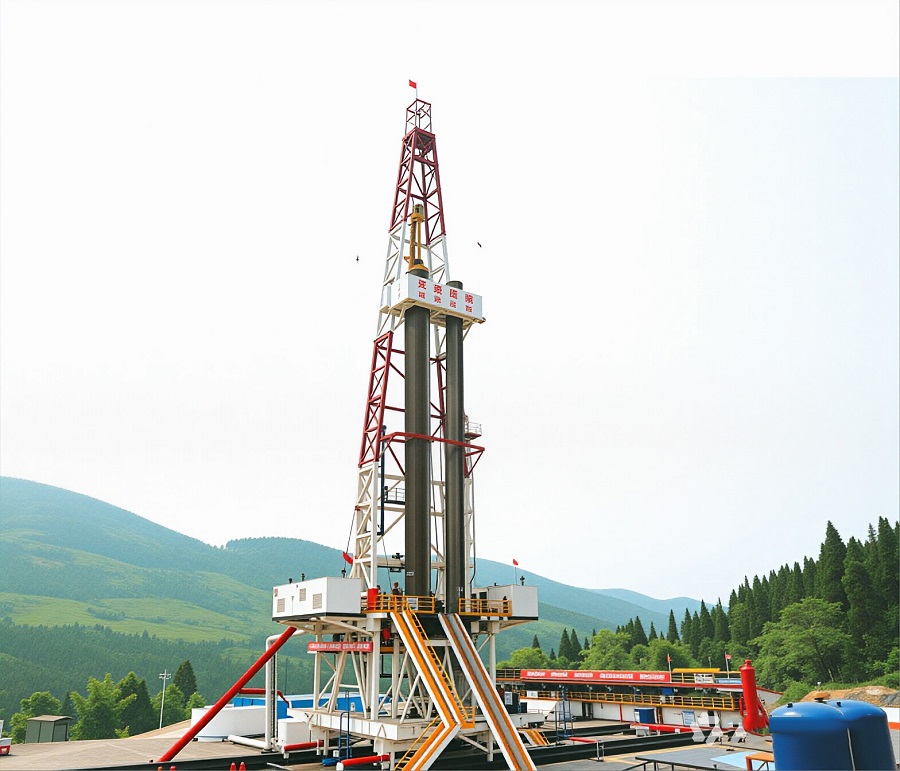
Not all drilling masts are the same. The right design depends on how you move the rig and how deep you drill:
The most common design for modern land rigs. The front opens wide so the traveling block can be pulled out to the catwalk for tripping pipe. Raised and lowered by hydraulic cylinders. Good for 150t to 450t load ratings.
The classic four-leg derrick shape. Stronger than a front-opening mast for the same weight, but you need a crown block and traveling block that go through the inside. More common on older or very heavy rigs (500t+).
Folds in half for transport. The whole mast folds down on the rig substructure for fast rig moves. Popular on mobile workover rigs and smaller drilling rigs where fast rig-up/rig-down is critical.
Extends in sections like a telescope. Saves space during transport. Common on truck-mounted rigs where overall height on the road is a constraint. Load ratings typically up to 225t.
When you're talking to a mast supplier, these are the numbers that actually matter:
| Rig Class | RSL (tonnes) | Effective Height (m) | Wind Rating (unloaded) |
|---|---|---|---|
| 1000m Workover Rig | 150 - 225 | 22 - 29 | 36 m/s (80 mph) |
| 2000m Drilling Rig | 225 - 315 | 29 - 36 | 36 m/s (80 mph) |
| 4000m Drilling Rig | 315 - 450 | 36 - 45 | 40 m/s (90 mph) - desert/coastal |
| 7000m+ Drilling Rig | 450 - 500+ | 45 - 52 | 40 - 45 m/s |
Start with the total weight of your heaviest drill string (drill pipe + drill collars + heavy weight drill pipe). Add the weight of the traveling block, hook and elevator. Then add a safety margin (typically 20-30%). For example: if your 5,000m 5" drill string weighs 180t, plus 15t for block and hook, plus 25% margin = ~245t. So you'd want a 315t RSL mast to have comfortable headroom. If you also run heavy casing (13-3/8" or larger), add that weight too.
Technically they're different. A derrick is a four-legged, fixed-base structure that you climb on the outside. A mast is a two-leg, front-opening design that raises hydraulically and you climb inside (or on a ladder on the back). In common oilfield usage, people often say "mast" for any drilling structure. The key difference for you as a buyer is: derricks are heavier and stronger for their height, but slower to rig up. Masts are faster to raise but slightly more steel for the same strength.
Yes. Desert rigs in places like the Middle East, North Africa or Central Asia often need higher wind ratings because of shamal winds or dust storms. We can design the mast structure with extra bracing, thicker wall tubing and higher wind load design (up to 45 m/s unloaded). The cost increase is modest compared to the risk of mast damage in a wind event. Just tell us your site's 50-year wind gust data and we'll design to that standard.
Tell us your target drilling depth, drill string weight and operating environment (wind, temperature, seismic). Our engineering team will design a mast that meets API 4F and your specific site conditions.