
Box-Type Substructure
The classic two-box design. Left and right boxes support the drill floor beams. Strong, simple, easy to erect. Best for rigs that stay on location for weeks or months. Standard for 2000m to 7000m rigs.
The substructure is the steel frame that lifts the drill floor, drawworks, rotary table and mast base several meters above the wellhead. It might not look as impressive as the mast, but get it wrong and you can't fit your BOP stack, you can't trip pipe comfortably, or the rig takes three days to move. We engineer drilling substructures for land rigs with the right drill floor height, enough headroom for your BOP configuration, and a design that breaks down into the minimum number of loads for road transport.
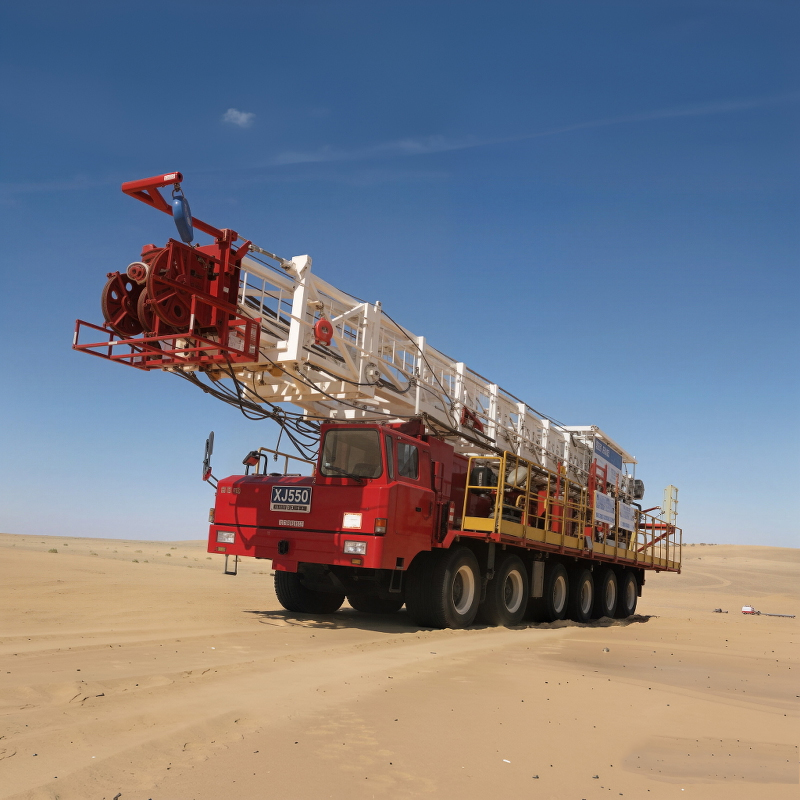
The right design depends on how often you move the rig and how heavy the BOP stack is:
The classic two-box design. Left and right boxes support the drill floor beams. Strong, simple, easy to erect. Best for rigs that stay on location for weeks or months. Standard for 2000m to 7000m rigs.
Breaks down into individual modules that fit on standard flatbed trucks. Each module is designed for crane lifting. Best for remote locations where road size limits matter. More bolt-up work but smaller loads.
Folds flat for transport and unfolds hydraulically on location. Fastest rig-up and rig-down. Common on mobile rigs and workover rigs that move frequently. Lower height capacity than box-type designs.
The height of the drill floor isn't arbitrary. It directly affects what you can do below it:
| Rig Class | Drill Floor Height | Rotary Beam Capacity | Number of Transport Loads |
|---|---|---|---|
| 1000m Workover Rig | 4.5 - 6.0 m | 150 - 250 tonnes | 2 - 4 loads (folding type) |
| 2000m Drilling Rig | 6.0 - 7.5 m | 250 - 350 tonnes | 4 - 6 loads (box type) |
| 4000m Drilling Rig | 7.5 - 8.5 m | 350 - 500 tonnes | 6 - 10 loads (modular) |
| 7000m+ Drilling Rig | 8.5 - 10.0 m | 500 - 750 tonnes | 10 - 16 loads (modular) |
Measure your full BOP stack height (wellhead connector + single ram + double ram + annular + spool). Then add 1.5 to 2.0 meters for installation working space and thread protection. For a standard 70 MPa BOP stack, total height is typically 4.5 to 5.5 meters. So you need a substructure with at least 6.5 to 7.5 meters of clear height under the rotary beam. For 105 MPa (15K psi) BOPs, add another meter. Always measure your actual BOP before specifying the substructure height.
Yes. Modern box-type substructures use hydraulic cylinders to lift the drill floor into position. The process is: bolt the box bases together, raise the drill floor beams with the cylinders, install the diagonal braces, then lower the mast. Typical raise time is 2-4 hours for a 4000m class rig. Older rigs used a gin pole and block and tackle —much slower. Hydraulic raise is standard on all our new builds.
For export markets where road width and height limits vary by country, a modular substructure is usually the best choice. Each module is designed to fit within standard transport dimensions (2.55 m wide, 4.0 m high, 12.5 m long). You can ship the substructure as containerized cargo and assemble it on location. Box-type substructures are simpler but their wide boxes may require special transport permits. Tell us your destination country's road limits and we'll design accordingly.
Tell us your BOP stack height, drill floor height requirement and how many transport loads you can handle. Our structural engineering team will design a substructure that fits your rig and your roads.