Small Diameter | High Precision | Continuous Deployment

Capillary Coiled Tubing Unit: Small Diameter, Precise, Continuous

Standard coiled tubing uses 1-3.5 inch diameter pipe for large-scale intervention: cleanouts, acid stimulation, milling. But some jobs need something much smaller: capillary tubing, typically 1/4 to 3/8 inch diameter, for precise chemical injection, downhole pressure and temperature monitoring, or continuous wax removal. A capillary coiled tubing unit is a specialized version of a CT unit —smaller reel, smaller injector head, lower weight, designed for the precision deployment of small-diameter capillary tubing. It's not for big intervention jobs; it's for the small, precise, continuous jobs that standard CT units are overkill for.

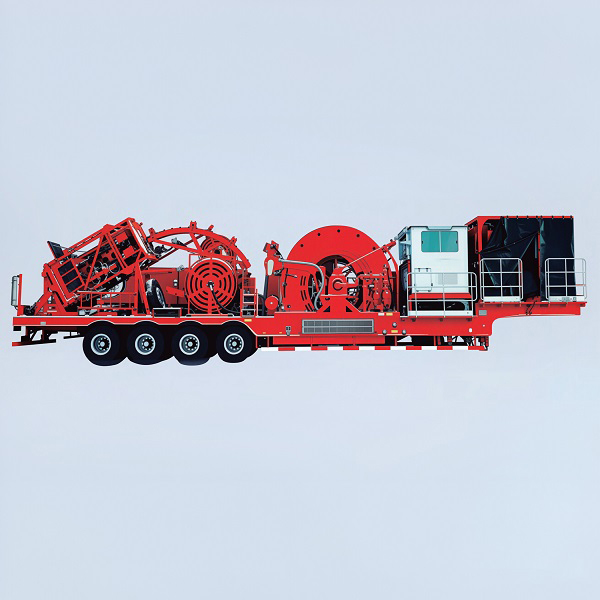
Capillary coiled tubing unit small diameter

Capillary vs Standard Coiled Tubing

Factor Capillary CT Unit Standard CT Unit
Tubing Diameter 1/4" - 3/8" (6 - 10 mm) 1" - 3.5" (25 - 89 mm)
Typical Depth 1,000 - 3,000 m 3,000 - 6,000 m+
Deployment Speed Slow, precise Faster, higher flow
Weight Light (truck or skid mount) Heavy (truck mount required)
Best For Chemical injection, monitoring, wax control Cleanouts, acidizing, milling, large intervention

Capillary CT Applications

Chemical Injection

Continuous injection of corrosion inhibitors, scale inhibitors, paraffin inhibitors, or demulsifiers directly downhole. Capillary tubing delivers chemicals precisely where needed, without requiring workover to install injection lines.

Downhole Monitoring

Capillary tubing can carry pressure and temperature sensors to permanent downhole locations. Real-time data on well conditions, reservoir pressure, and production performance.

Wax & Asphaltene Control

Continuous injection of wax solvents or inhibitors through capillary tubing prevents wax deposition in the tubing. This is especially valuable in subsea wells or wells where workover is expensive.

Hydraulic Control Lines

Capillary tubing serves as hydraulic control lines for subsurface safety valves (SCSSV). It provides the hydraulic pressure needed to operate the downhole safety valve from the surface.

Frequently Asked Questions

What's the difference between capillary tubing and conventional coiled tubing?

Size is the main difference. Capillary tubing is small (1/4 to 3/8 inch), thin-walled, and designed for low-flow, high-precision applications like chemical injection and monitoring. Conventional coiled tubing is larger (1 to 3.5 inches), thicker-walled, and designed for high-flow intervention jobs like cleanouts and acidizing. A capillary unit is smaller, lighter, and cheaper than a standard CT unit —but it can't do the same jobs.

Can a capillary CT unit be permanently installed in a well?

Yes. Capillary tubing is often permanently installed in the well —run downhole and left in place for years. The capillary unit runs the tubing down, connects it to the wellhead, and retrieves itself. The capillary stays in the well for continuous injection or monitoring. This is common in offshore wells and remote onshore wells where workover is expensive.

How deep can capillary tubing go?

Capillary tubing depth depends on tubing diameter, wall thickness, and well pressure. Typical capillary installations range from 1,000 to 3,000 meters. Special high-strength capillary can go deeper. Tell us your well depth and pressure conditions, and we'll recommend the right capillary tubing size and unit configuration.

Need a Capillary Coiled Tubing Unit?

Tell us your application (chemical injection, monitoring, wax control), well depth, and preferred mounting. We'll design and build a capillary CT unit —compact, precise, and built for your specific small-diameter intervention job.