Step 1: Rig-Up
The CTU is positioned next to the well. The injector head and BOP are installed on the wellhead. The reel is connected to the power pack and control system. All connections are checked and tested.
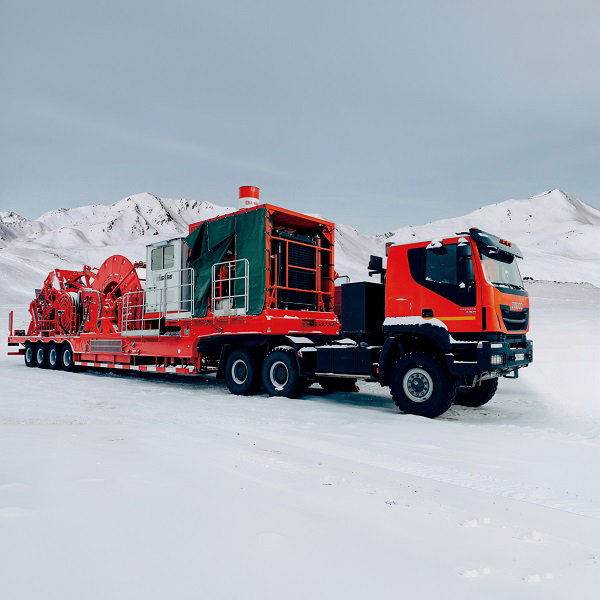
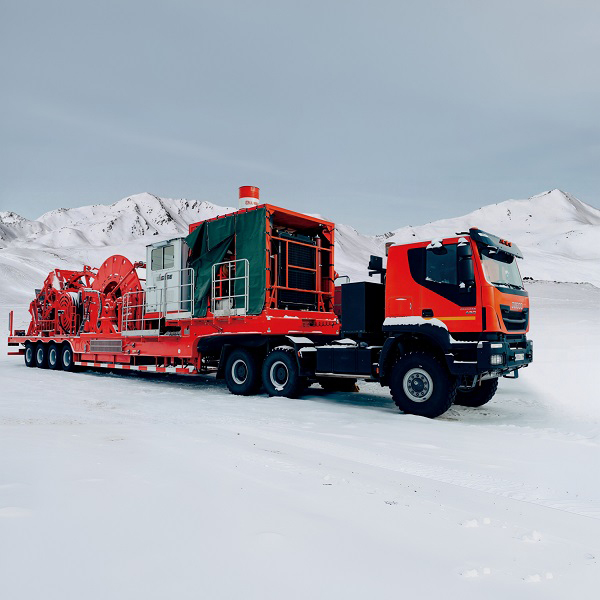
A coiled tubing unit (CTU) is a well intervention system that uses a continuous string of flexible steel pipe to perform operations downhole. Unlike jointed pipe that must be made up and broken apart, coiled tubing can be run in and out of the well continuously, making it faster and more efficient for many intervention operations.
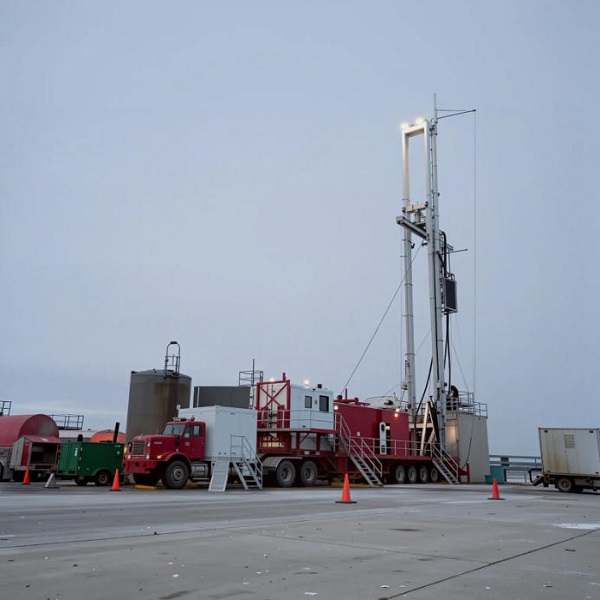
A coiled tubing unit (CTU) is a complete system for deploying continuous steel tubing into a wellbore. The tubing is stored on a large reel and fed into the well through an injector head. CTUs are used for a wide range of well intervention and workover operations.
Coiled tubing operates on a simple principle: a continuous string of flexible pipe is fed into the well by an injector head. Here is the step-by-step process:
The CTU is positioned next to the well. The injector head and BOP are installed on the wellhead. The reel is connected to the power pack and control system. All connections are checked and tested.
The coiled tubing is fed into the well by the injector head. The injector grips the tubing with caterpillar tracks and pushes it downhole. The weight of the tubing is monitored by the injector load cell.
As the tubing is run in, fluid is pumped down the inside of the coiled tubing. The fluid exits at the bottomhole and performs the desired operation: cleaning, stimulation, logging, or other intervention work.
At the target depth, the bottomhole tool (cleanout nozzle, logging tool, jetting head, etc.) performs the work. The operation is monitored from the control cabin.
When the operation is complete, the injector head reverses and pulls the tubing out of the well. The tubing is rewound onto the reel. The overpull (tension) on the tubing is monitored.
The BOP and injector head are removed from the wellhead. The CTU is rigged down and moved to the next location. The entire process is much faster than using jointed pipe.
CTUs are versatile tools used for a wide range of well operations:
One of the most common applications: using coiled tubing to wash out sand and debris that has accumulated in the wellbore. Fluid is pumped down the tubing and jets out the bottomhole nozzle, fluidizing the sand and carrying it up the annulus.
Coiled tubing is used to place acid or other stimulation fluids deep in the well. The CTU can spot the fluid precisely at the target zone, improving stimulation effectiveness and reducing fluid volume requirements.
Logging tools can be run on coiled tubing to gather downhole data: temperature, pressure, cement bond, production logging. CTU logging is faster than conventional wireline logging and can be performed on live wells.
If tools or parts are left in the well, coiled tubing can be used to retrieve them. Fishing tools (overshots, spears, magnets) are run on the end of the coiled tubing to fish out lost equipment.
Coiled tubing can be used to set or drill out cement plugs, bridge plugs, or other downhole barriers. This is commonly done during well abandonment or recompletion operations.
For gas lift wells, coiled tubing can be used to retrieve and reset gas lift valves. This avoids the need to pull the completion string, saving time and cost.
Why use coiled tubing instead of conventional jointed pipe? Here are the key advantages:
| Factor | Coiled Tubing | Jointed Pipe (Workover Rig) |
|---|---|---|
| Running speed | Fast (continuous run, no connections) | Slow (must make up/break connections) |
| Kill well required | No (can work on live wells) | Usually yes (more complex well control) |
| Crew size | Smaller (4-6 people) | Larger (8-15 people) |
| Footprint | Smaller (truck-mounted or skid-mounted) | Larger (larger rig, more equipment) |
| Fluid placement accuracy | High (can spot fluid precisely) | Lower (fluid circulated through entire string) |
| Cost per job | Lower (faster, smaller crew) | Higher (slower, larger crew) |
| Maximum depth | Up to 6,000-8,000 m depending on pipe size | Unlimited (limited only by rig capacity) |
| Lateral reach | Limited by pipe stiffness and weight | Better (jointed pipe is stiffer) |
Coiled tubing comes in various diameters, each suited for different applications:
| Diameter | Wall Thickness | Typical Length | Typical Application |
|---|---|---|---|
| 1.0" (25.4 mm) | 0.109" (2.74 mm) | 4,000-5,000 m | Well logging, plug setting, light intervention |
| 1.5" (38.1 mm) | 0.125" (3.18 mm) | 4,500-5,500 m | Sand cleanout, matrix stimulation, general intervention |
| 1.75" (44.5 mm) | 0.134" (3.40 mm) | 4,000-5,000 m | Medium-duty intervention, larger fluid rates |
| 2.0" (50.8 mm) | 0.156" (3.96 mm) | 3,500-4,500 m | Heavy-duty intervention, high flow rates |
| 2.375" (60.3 mm) | 0.156" (3.96 mm) | 3,000-4,000 m | Large-diameter CT, high-rate cleanout |
| 2.875" (73.0 mm) | 0.188" (4.78 mm) | 2,500-3,500 m | Super-large CT, drilling intervention, heavy workover |
Browse our coiled tubing unit lineup. All CTUs are available in truck-mounted or skid-mounted configuration and can be customized for specific applications.
Coiled tubing is a continuous pipe that can be used to pump fluids downhole and perform mechanical operations. Wireline is a cable used to lower logging tools or electronic devices into the well. CTUs are larger, more powerful and can perform physical work (cleanout, stimulation, fishing). Wireline units are smaller, faster and primarily used for data gathering (logging).
The maximum depth depends on the tubing diameter and wall thickness. Smaller diameter CTU (1.5") can reach 5,000-6,000 m. Larger CTU (2.0"+) typically reaches 4,000-5,000 m. Super-large CTU (2.875") can reach 3,000-3,500 m. The limiting factor is the tensile strength of the tubing —it must support its own weight plus any downhole loads.
Yes. Coiled tubing units are widely used on offshore platforms for well intervention and workover operations. Offshore CTUs are typically skid-mounted and designed to fit within the platform's deck space. They must meet offshore safety standards and be corrosion-resistant for the marine environment.
The life of a coiled tubing string depends on the number of runs, the operating conditions, and the fluid types used. A typical CT string lasts 50-200 runs before it needs replacement. Fatigue life is affected by: bend cycles (going over the gooseneck and injector), pressure cycling, fluid corrosion, and mechanical damage. Regular inspection (eddy current, ultrasonic) can detect fatigue cracks before they cause failure.
The cost depends on size, configuration and options. A small 1.5" CTU may start from USD 300,000-500,000. A standard 2.0" CTU typically costs USD 600,000-1,200,000. A large 2.875" CTU can cost USD 1.5-2.5 million. Offshore-rated or custom configurations add additional cost. The rental cost for a CTU is typically USD 15,000-30,000 per day, depending on size and location.
Tell us your target depth, tubing size and typical applications. Our engineering team will recommend the optimal CTU configuration and provide a detailed quotation within 48 hours.