1. Bulk Delivery
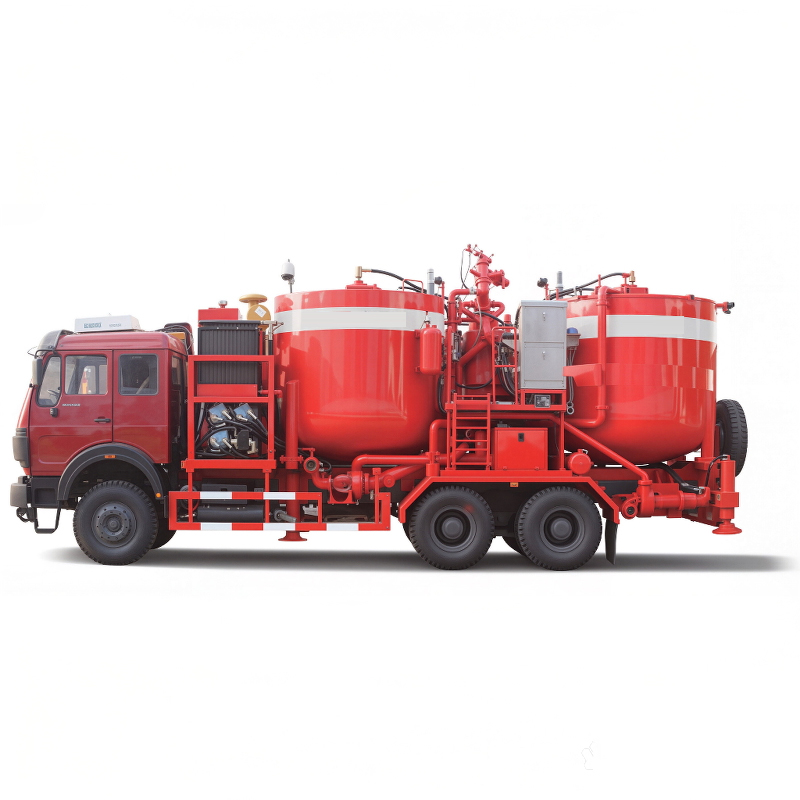
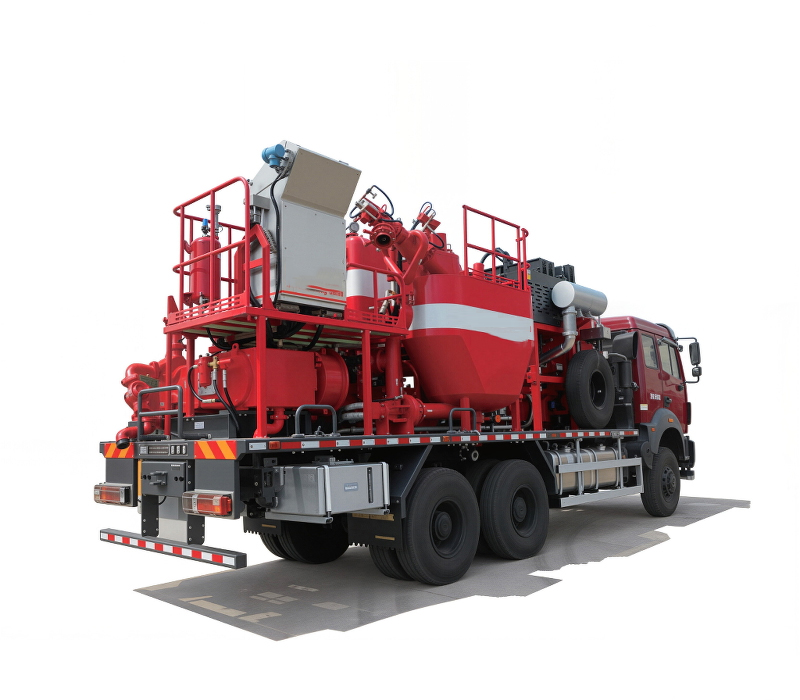
Cement is delivered by a bulk cement tanker truck or pneumatic trailer. The tanker connects to the silo inlet and blows cement into the storage tank using compressed air.
A bulk cement tank system stores cement powder in bulk and transfers it pneumatically to the mixing hopper. It eliminates manual bag handling, ensures cement quality and provides a reliable supply for continuous cementing operations.
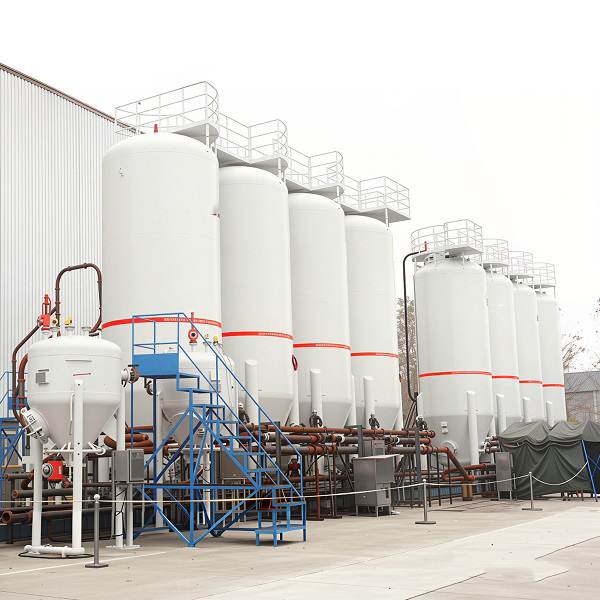
A bulk cement system uses compressed air to fluidize and transfer cement powder. The process is fully enclosed, dust-free and efficient:
Cement is delivered by a bulk cement tanker truck or pneumatic trailer. The tanker connects to the silo inlet and blows cement into the storage tank using compressed air.
The silo stores cement in a dry, sealed environment. A vent filter on top captures dust during filling. A fluidization pad at the bottom keeps cement free-flowing.
When needed, cement is fluidized with air and blown through a pipeline to the batch mixer or cementing unit hopper. Transfer rate is controlled by a rotary valve.
Manual bag handling is labor-intensive, messy and inconsistent. A bulk system provides significant operational advantages:
A single bulk system replaces 4-6 workers opening bags. One operator can manage the entire cement supply process from a control panel.
Bulk cement is stored in a sealed, dry environment. No moisture absorption, no contamination from bag material, no mixing of different cement grades.
A 30-ton silo holds enough cement for multiple jobs. No need to stop and open bags mid-job. Critical for large-volume primary cementing.
The entire system is enclosed. A vent filter captures dust during filling. No cement dust in the air, better working conditions for your crew.
Bulk cement is significantly cheaper per ton than bagged cement. For operations that use more than 100 tons per month, the savings quickly pay for the system.
Level indicators show exactly how much cement is in the silo. No guessing about when to order more. Better supply chain planning.
Our bulk cement systems are available in various sizes, from 20-ton portable silos to 100-ton permanent installations.
| Model | Silo Capacity | Transfer Rate | Max Transfer Distance | Mounting |
|---|---|---|---|---|
| BC-20 | 20 tons (14 m³) | 1.5 ton/min | 30 m | Skid / Trailer |
| BC-30 | 30 tons (21 m³) | 2.0 ton/min | 50 m | Skid / Trailer |
| BC-50 | 50 tons (35 m³) | 2.5 ton/min | 80 m | Skid / Permanent |
| BC-100 | 100 tons (70 m³) | 3.0 ton/min | 100 m | Permanent Installation |
In remote desert locations, transporting bagged cement is expensive and logistically challenging. A portable bulk silo on location ensures a reliable cement supply without frequent truck trips.
Offshore platforms use small-volume bulk silos integrated with the cementing unit. The silo receives cement by supply boat and feeds the batch mixer pneumatically.
Service company workshops use large permanent silos as a central cement storage point. Bulk cement is delivered by tanker truck and transferred to portable silos on the service truck.
On drilling rigs, a bulk cement silo is part of the rig's cementing system. It is positioned near the mud pit and connected to the cementing unit by pneumatic transfer line.
Vertical cylindrical tank with conical bottom. Made from steel with internal coating to prevent cement sticking. Includes level indicators and safety valves.
Electric or diesel-driven air compressor provides the air supply for fluidization and transfer. Typical pressure: 0.2-0.4 MPa for pneumatic conveying.
Porous media at the bottom of the silo. Compressed air passes through the pad, fluidizing the cement powder so it flows like a liquid.
Controls the feed rate of cement into the transfer line. Adjustable from 0.5 to 3 tons per minute depending on system size.
Baghouse filter on top of the silo. Captures cement dust during filling. Cleaned by compressed air pulse jets for continuous operation.
Dedicated pipeline for cement transfer. Made from abrasion-resistant material. Includes quick-disconnect couplings for easy repositioning.
Browse our standard bulk cement storage and transfer systems. All systems include the silo, air compressor, fluidization system and transfer controls.
Typical transfer distance is 30-100 meters depending on silo size and air pressure. The transfer rate decreases as distance increases. For longer distances, we recommend a secondary transfer system or positioning the silo closer to the mixer.
Yes, but you must fully empty and clean the silo between different cement grades. We provide a complete cleaning procedure. For operations that use multiple cement types simultaneously, we recommend multiple silos —one per grade.
Routine maintenance includes: checking the vent filter (replace every 6-12 months), inspecting the fluidization pad (replace every 2-3 years), checking the rotary valve for wear, and lubricating moving parts. We provide a detailed maintenance schedule with every system.
A typical bulk cement tanker truck delivers at 1.5-2.0 tons per minute. A 30-ton silo can be filled in approximately 15-20 minutes. This depends on the tanker's blower capacity and the silo vent filter condition.
Yes. Our BC-20 and BC-30 models are available on trailer or skid for easy transport between wellsites. They are designed to be quickly set up, filled, connected to the mixer, and then moved to the next location.
Tell us your cement usage volume, preferred silo size and site layout. Our engineering team will design a complete bulk storage and transfer system tailored to your operation.