
Drawworks
The mechanical heart. Drum, brakes, transmission and catheads. Pulls the drilling line to lift and lower the hook. Power from the rig's prime mover (diesel or electric).
The hoisting system is what pulls the drill string out of the hole, runs casing, and handles everything from routine tripping to stuck-pipe emergencies. It's not just one piece of equipment —it's a system: drawworks, drilling line, crown block, traveling block and hook, all working together. If any component is undersized or mismatched, the whole system is a bottleneck. We supply complete hoisting systems engineered to work together, with ratings matched to your rig's drilling depth and expected loads.
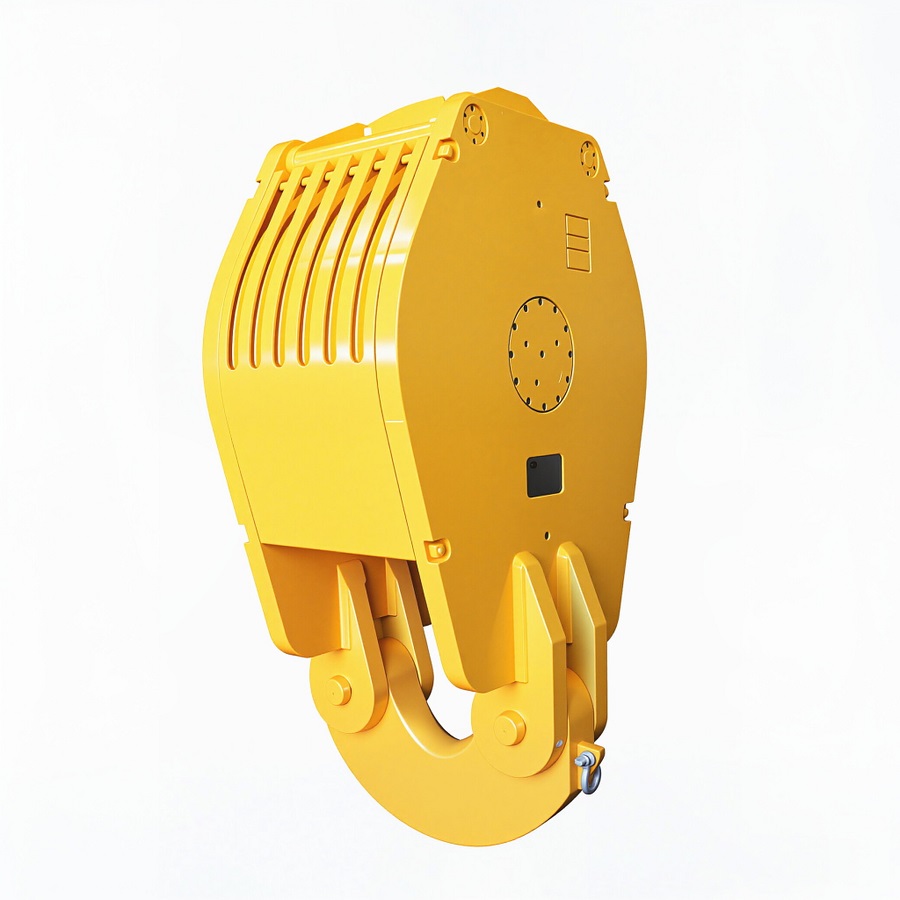
Each part matters. If one is undersized, the whole system limits you:
The mechanical heart. Drum, brakes, transmission and catheads. Pulls the drilling line to lift and lower the hook. Power from the rig's prime mover (diesel or electric).
The steel wire rope that runs over the crown block and down to the traveling block. Sizes from 1-1/8" to 1-5/8" diameter. Designed to API 9A / API 4E standards.
The set of sheaves at the top of the mast. Turns the vertical drilling line into the multi-part line that feeds the traveling block. Number of lines depends on load rating.
The moving set of sheaves that travels up and down the mast. Suspends the hook and drill string. Rated to API 8C. Number of sheaves matches the crown block.
Below the traveling block. Suspends the swivel, elevators and drill string. Has a latch and safety device. Some hooks combine with the swivel body (power swivels).
Where the dead (fixed) end of the drilling line anchors to the substructure. Includes a load cell for weight indication. Often overlooked but critical for safety.
The number of drilling line parts strung between crown and traveling block determines your lifting advantage:
The right number of lines depends on your expected drill string weight and how fast you want to trip. Too few lines and you can't lift the string. Too many lines and tripping takes forever.
| Rig Class | Hook Rating | Line Parts | Drilling Line Dia. | Drawworks Power |
|---|---|---|---|---|
| 1000m Workover | 150 - 225 tonnes | 6 | 28 mm (1-1/8") | 300 - 500 HP |
| 2000m Drilling | 225 - 315 tonnes | 8 | 32 mm (1-1/4") | 500 - 800 HP |
| 4000m Drilling | 315 - 450 tonnes | 8 - 10 | 35 mm (1-3/8") | 800 - 1200 HP |
| 7000m+ Drilling | 450 - 750 tonnes | 10 - 12 | 38 mm (1-1/2") | 1200 - 2000 HP |
Mechanical drawworks use a diesel engine and mechanical transmission (torque converter, chain drive). They're simpler, cheaper to maintain, and work well in remote locations without reliable power. AC drawworks use electric motors with VFD control. They offer smoother operation, better load control, and regenerative braking (which saves energy when lowering the string). AC is standard on modern new-build rigs, but mechanical is still widely used for workover and smaller drilling rigs. Choose AC if you have reliable power and want the latest technology; choose mechanical if you prioritize simplicity and lower capital cost.
Industry practice is to "cut and blow" (remove a section of dead line and reload) every 600 to 1200 hours of drilling, depending on line condition and drilling severity. The line should be replaced entirely when: the outer wire wear exceeds 30%, there are broken wires in one lay, the rope diameter has reduced by 5% or more, or there's kinking, corrosion or heat damage. Always inspect the line daily and follow API RP 9B guidelines for drilling line inspection and replacement.
Technically yes, but it's risky. A crown block from Manufacturer A, traveling block from Manufacturer B and drilling line from Manufacturer C may not be optimized as a system. The sheave groove diameters may not match the line diameter exactly. The ratings may not be conservative to the same margin. The best practice is to buy the complete hoisting system from one supplier who guarantees compatibility. If you must mix components, verify: sheave diameter matches line diameter (should be at least 25x line diameter), all components are API 8C certified, and the system line pull rating matches the weakest component.
Tell us your target hook load, drilling depth and preferred drawworks type (mechanical or AC). We'll design a complete hoisting system with matched components and API certification.