
Drilling Hoisting Hook: The Suspension Point of the Drill String
The drilling hoisting hook (or travelling hook) hangs below the travelling block and suspends the swivel, drill string, casing and other tools. It is the critical load-bearing component that transfers the weight of the drill string to the block and wire rope system.
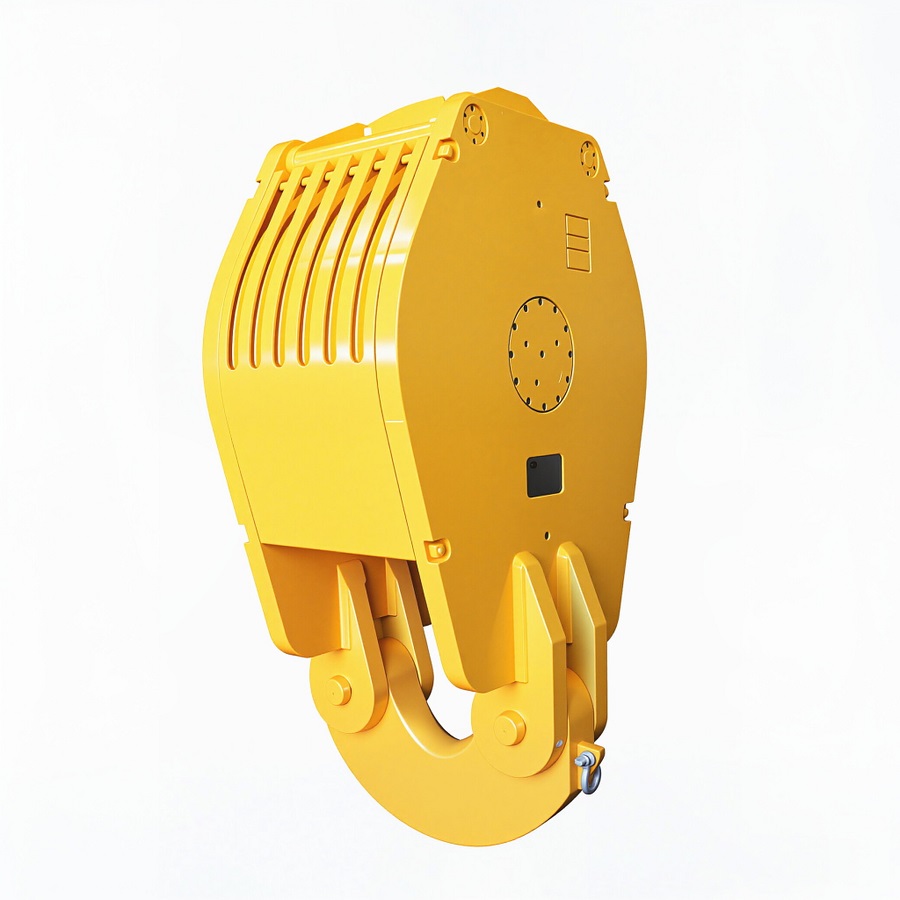
How the Drilling Hook Works
The drilling hook is suspended from the travelling block and provides a secure attachment point:
- Upper connection: The hook body hangs from the travelling block via a bail or swivel joint
- Hook body: Forged steel body with a safety latch to prevent accidental disengagement
- Suspension point: The swivel hangs from the hook, which in turn connects to the drill string
- Load path: Drill string weight -> swivel -> hook -> travelling block -> wire rope -> crown block -> derrick
- Rotary suspension: Many hooks include a rotary suspension bearing that allows the swivel to rotate freely
- Side door: The hook has a spring-loaded side door (latch) that opens for loading/closing to secure the load
The hook is rated for a maximum load and must not be overloaded. It is inspected regularly for cracks, wear and proper latch operation.
Typical Specifications
| Parameter | Typical Range |
|---|---|
| Rated load capacity | 150 - 750 tons (330,000 - 1,650,000 lbs) |
| Standard | API 8C (drilling and production hoisting equipment) |
| Hook type | Single hook or double hook (for casing and drill string simultaneously) |
| Suspension bearing | Thrust bearing for free rotation under load |
| Safety latch | Spring-loaded safety latch, manual or automatic |
| Weight | 0.5 - 3 tons (depends on capacity) |
Frequently Asked Questions
What is the difference between a travelling hook and a travelling block?
The travelling block is the pulley assembly that moves up and down in the derrick. The travelling hook hangs below the block and provides a point to attach the swivel and drill string. They are separate components that work together. The block contains the pulleys (sheaves) that the wire rope runs over. The hook is the load-bearing attachment point. In many rigs, the hook and block are combined into a single unit called a "block and hook" assembly.
How do I choose the right hook capacity?
The hook capacity must exceed the maximum expected hook load. Hook load = weight of drill string + casing + BHA + overpull allowance. For a 3000m drill string (about 150 tons of 5-inch drill pipe), you need a hook rated for at least 200 tons (with safety margin). For a 6000m drill string (about 300 tons), you need a 400+ ton hook. Always add 20-30% margin for overpull and safety. We can help you calculate the right capacity based on your well design.
What maintenance does the drilling hook need?
Regular inspection is critical: check the hook body for cracks (magnetic particle inspection), inspect the safety latch for proper operation, check the rotary suspension bearing for smooth rotation, inspect the bail attachment points for wear, and verify the load rating stamp is legible. Replace worn or damaged components immediately. Never use a hook with a cracked body or faulty latch. Keep a maintenance log and follow API inspection intervals.
Need a Drilling Hoisting Hook?
Tell us your required hook load capacity and rig type. Our engineering team will recommend the right hook and provide a quote within 48 hours.