
Step 1: Water Measurement
Water is measured precisely and added to the mixing tank. The water/cement ratio is critical —it directly affects slurry density and strength. Too much water = weak cement; too little water = un-pumpable cement.
A cement slurry mixing unit is the heart of any cementing operation. It combines water, cement powder and additives into a homogeneous slurry with the right density, viscosity and flow properties. The quality of the slurry directly determines the success of the cementing job —too thin and it won't hold; too thick and it won't pump.
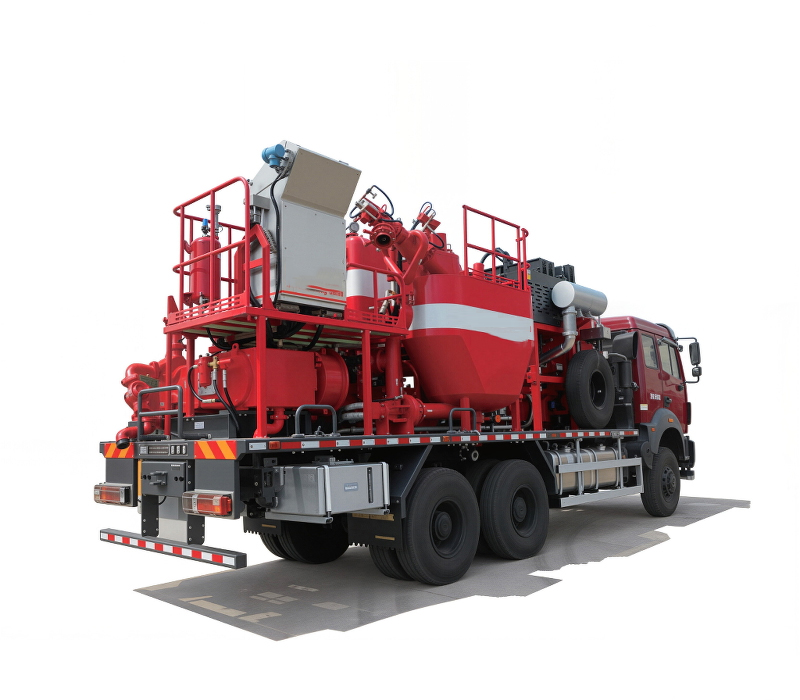
Good cement slurry needs the right balance of properties:
The mixing unit must produce slurry that meets all these specifications consistently, batch after batch.
Water is measured precisely and added to the mixing tank. The water/cement ratio is critical —it directly affects slurry density and strength. Too much water = weak cement; too little water = un-pumpable cement.
Liquid additives are metered into the water. Common additives include: dispersants (improve flow), retarders (slow setting), accelerators (speed setting), fluid loss agents (reduce water loss). Each additive affects specific slurry properties.
Cement powder is pneumatically transferred from the bulk storage silo into the mixing tank. The powder is dispersed into the water under agitation to prevent clumping and ensure complete hydration.
The slurry is agitated for a set period to achieve uniform properties. Density and viscosity checks are performed. Once specifications are met, the slurry is ready for pumping downhole.
Cementing casing strings in the wellbore. The mixing unit prepares the cement slurry that fills the annulus between casing and formation.
Repairing casing leaks or sealing unwanted zones. Smaller batches of precisely mixed slurry are squeezed into the target zone.
Placing cement plugs for abandonment, zone isolation or sidetracking. The plug slurry must have specific setting and strength properties.
| Parameter | Typical Range |
|---|---|
| Mixing tank capacity | 1.5 - 3.0 m³ (400 - 800 gallons) |
| Pump flow rate | 0.5 - 2.0 m³/min (130 - 530 gpm) |
| Pump pressure | 5 - 35 MPa (700 - 5,000 psi) |
| Density range | 1.5 - 2.0 g/cm³ (adjustable) |
| Engine power | 200 - 500 HP (diesel) |
| Mounting options | Truck, skid or trailer mounted |
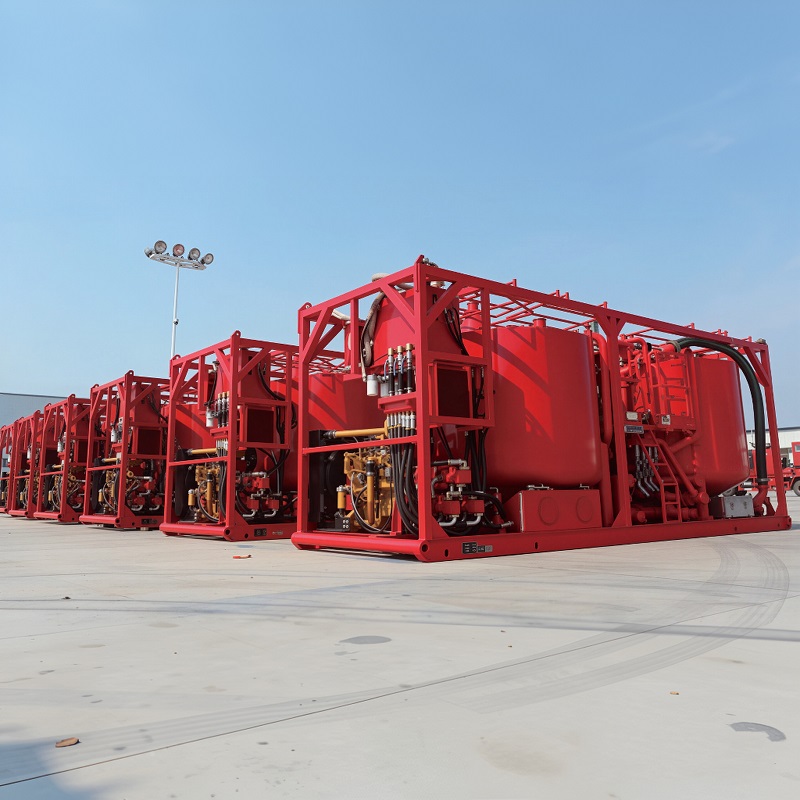
Single-pump cement slurry mixing unit for general cementing operations. Truck mounted.
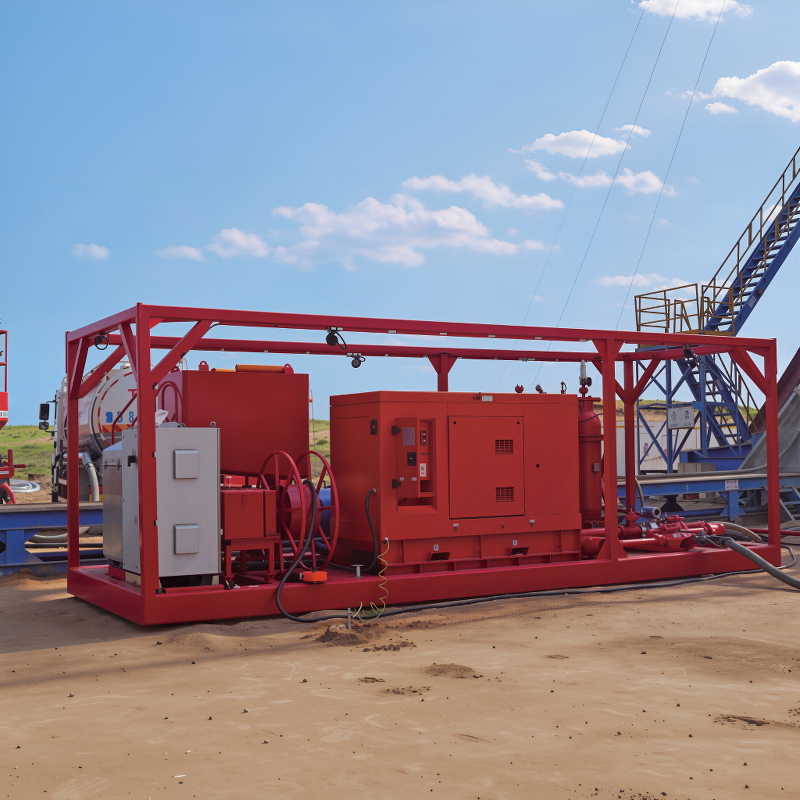
Dual-pump configuration for higher throughput and redundancy. For demanding cementing jobs.

Fully custom cement slurry mixing system designed to your specific well requirements.
Consider your typical job size, required mixing rate, and pressure requirements. If you mostly do smaller jobs, a single-pump truck-mounted unit will be sufficient. If you handle larger projects with multiple casing strings, a twin-pump unit might be worth the investment. Also consider portability: truck-mounted for on-the-go service, skid-mounted for fixed locations. Our engineering team can assess your operation and recommend the right configuration.
Batch mixing units prepare slurry in discrete batches: mix one batch, pump it, mix the next batch. Continuous mixing units combine cement and water on-the-fly in a continuous stream. Batch mixing offers precise control per batch but lower throughput. Continuous mixing offers higher throughput but less per-batch control. Choose based on your job requirements: smaller jobs with quality control focus = batch; larger jobs with speed focus = continuous.
Consistency comes from standard operating procedures: use calibrated measurement equipment, follow mixing recipes precisely, perform quality checks (density, viscosity) on every batch, and keep detailed mixing logs. Train operators on proper mixing techniques. With good procedures and well-maintained equipment, you can achieve very consistent slurry quality batch after batch. Don't skip quality checks —they're your insurance policy against bad cement jobs.
Tell us your required mixing rate, pump pressure and mounting preference. Our engineering team will recommend the right unit and provide a quote within 48 hours.