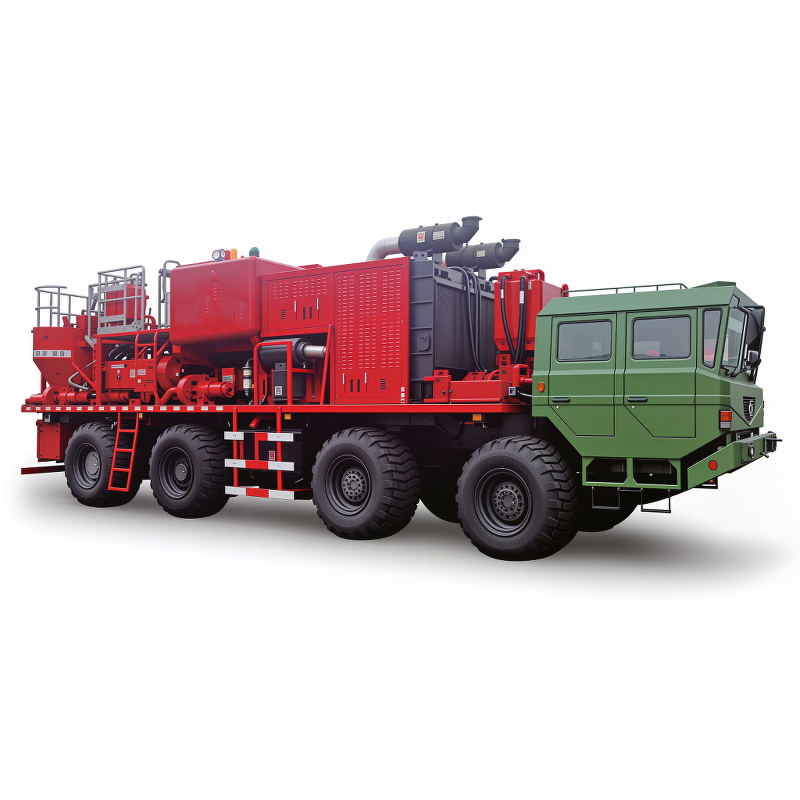
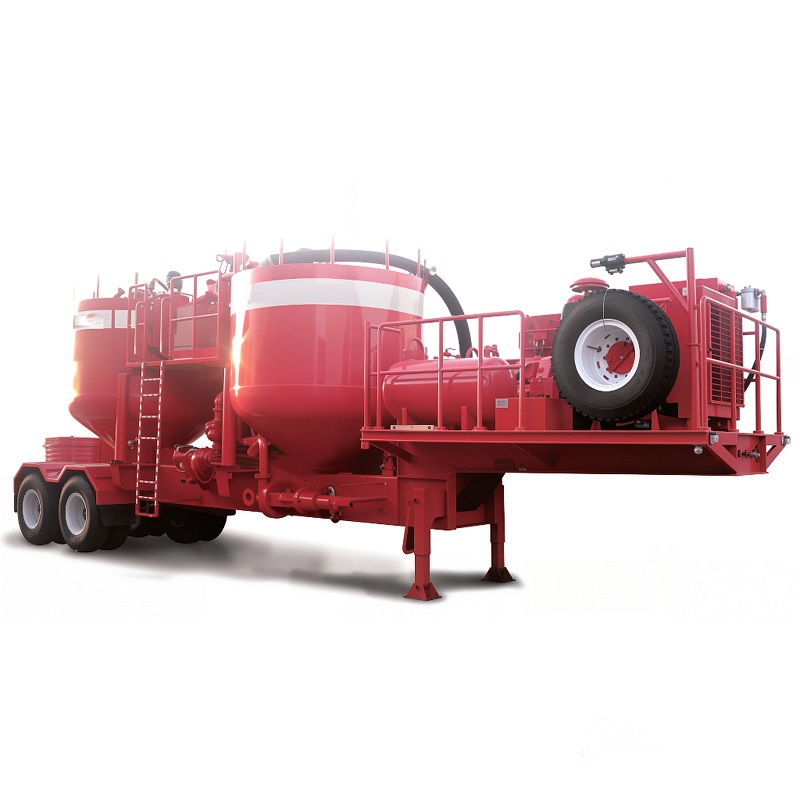
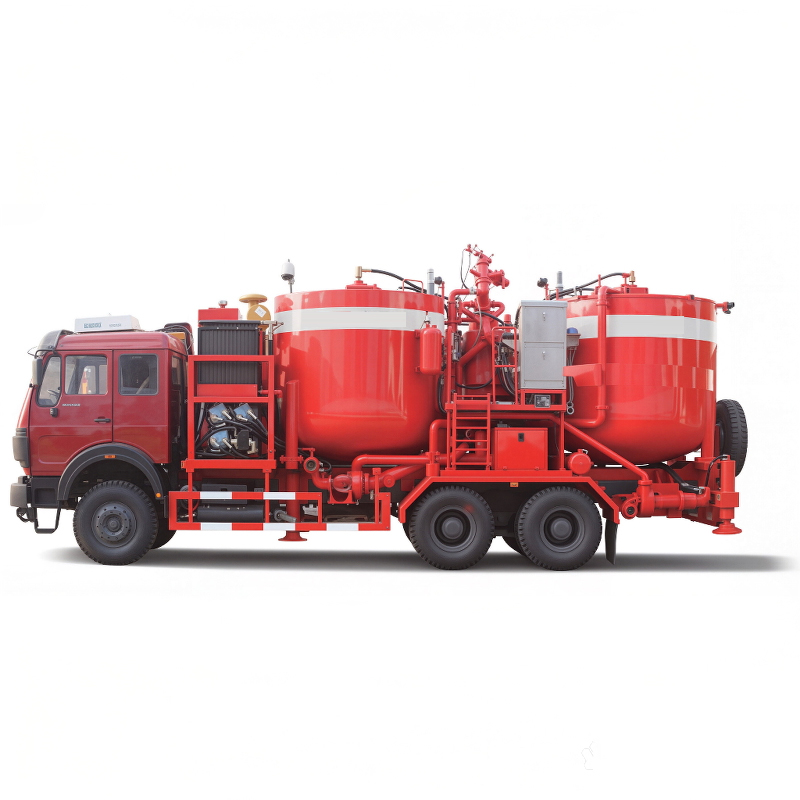
1. High-Pressure Plunger Pump
The heart of the cementing unit. A 5-cylinder triplex pump delivers high-pressure slurry from the mixing tank to the discharge line. Pump size determines pressure and displacement capacity.
A cementing unit is a complete integrated system that prepares, mixes and pumps cement slurry into the wellbore. It includes a high-pressure plunger pump, recirculation mixing system, additive injection, control cabin and bulk cement handling —all integrated into one operating package.
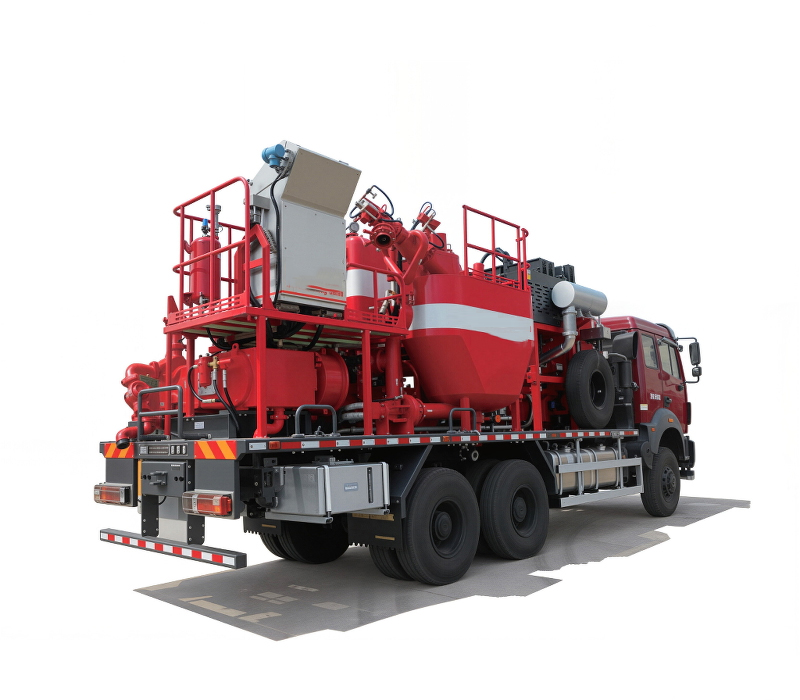
A professional cementing unit is more than just a pump. It is a complete system that integrates multiple subsystems to deliver consistent, controlled cement slurry to the wellbore.
The heart of the cementing unit. A 5-cylinder triplex pump delivers high-pressure slurry from the mixing tank to the discharge line. Pump size determines pressure and displacement capacity.
A recirculation mixer combines cement powder, water and additives to achieve the target density and rheology. A centrifugal mixer with recirculation loop ensures consistent slurry quality.
Chemical additives (dispersants, retarders, accelerators, fluid loss controllers) are precisely metered into the mixing system. Positive displacement pumps ensure accurate injection rates.
The operator cabin contains the control console, monitoring screens and safety systems. Modern units use PLC-based controls with real-time data logging for job records and post-job analysis.
Pneumatic transfer system moves cement powder from bulk silos or tanks to the mixing hopper. Includes air compressor, piping and dust collection for operator safety.
Diesel engine (Cummins/Weichai) or electric motor (VFD) drives the pump and auxiliary systems. Power rating determines maximum pump output and redundancy options.
Our cementing unit lineup covers the full spectrum from shallow workover to deep HPHT wells. Each model is available in truck-mounted, trailer-mounted or skid-mounted configuration.
| Model Series | Working Pressure | Max Displacement | Pump Type | Mounting Options |
|---|---|---|---|---|
| SGJ400 Series | 15 MPa (2,175 psi) | 1.2 m³/min | Single 5-cylinder plunger | Truck / Skid |
| SGJ600 Series | 21 MPa (3,045 psi) | 1.8–2.6 m³/min | Single 5-cylinder plunger | Truck / Trailer / Skid |
| SGJ1000 Series | 21 MPa (3,045 psi) | 2.6 m³/min | Single high-output plunger | Truck / Skid |
| SGJ1600 Series | 28 MPa (4,060 psi) | 2.8 m³/min | Single high-pressure plunger | Truck / Skid |
| SGJ350 Twin | 25 MPa (3,625 psi) | 2 × 1.5 m³/min | Twin plunger pumps | Truck / Trailer |
| SGJ2500 Series | 38 MPa (5,510 psi) | 3.2 m³/min | High-power single pump | Truck / Skid |
Cementing units are deployed across the entire well lifecycle. Here are the most common job categories:
The first cement job after casing is run. Requires consistent slurry density, controlled displacement rate and reliable zonal isolation. Typically the most critical cementing operation of a well's life.
High-pressure treatment to repair casing leaks, seal channeling or plug thief zones. Requires precise pressure control and metering —often performed after primary cementing evaluation shows poor zonal isolation.
Cement plug placement for well abandonment, sidetracking or temporary suspension. Multiple plug sequences may be required for long-term zonal isolation and environmental protection.
Remedial cementing during workover: liner hanger setting, perforation patching, water shutoff and squeeze treatments. Often performed in mature fields with production problems.
Browse our standard cementing units. Every model can be customized to match your specific well program, climate conditions and regulatory requirements.
We design and manufacture the complete cementing unit —pump, mixing, controls and power —in-house. No third-party integration headaches.
Over 500 cementing units operating in 30+ countries. Our units have completed thousands of cementing jobs across diverse operating environments.
From selection and configuration to commissioning and ongoing operation, our engineers support you throughout the equipment lifecycle.
Critical wear parts (valve seats, plungers, seals) are stocked in our warehouse and shipped within 48 hours of order confirmation.
Choose truck, trailer or skid mounting; diesel or electric drive; manual or PLC control. We adapt the unit to your specific requirements.
We work to API, ISO and common international standards. Third-party inspection (SGS/BV/DNV) can be arranged before export.
A cementing unit refers to the complete system (pump + mixing + controls + power). A cementing truck is a cementing unit mounted on a truck chassis. You can also have a trailer-mounted cementing unit or a skid-mounted cementing unit. The core pumping and mixing equipment is the same; the difference is how it is transported and installed.
Three factors determine unit size: well depth (determines required pressure), cement volume (determines displacement rate) and job criticality (determines whether you need redundant twin pumps). Provide your well depth, casing size and cement slurry volume, and our engineers will recommend the right model.
Yes. We supply complete cementing spreads consisting of multiple cementing units, batch mixers, bulk tanks and auxiliary equipment. We handle the entire package design, including hydraulic layout, control integration and operator training for your crew.
With proper maintenance, a cementing unit typically operates for 15–20 years in the field. The pump fluid end is the highest-wear component and requires periodic replacement of valves, plungers and seals. We provide a maintenance schedule and wear part kit recommendations.
We occasionally have near-new or lightly used units available at discounted pricing. These are typically demonstration units or cancelled orders. Contact us with your requirements and we will check current inventory.
Send us your well depth, casing program, cement requirements and operating conditions. Our engineering team will recommend the optimal cementing unit configuration and provide a detailed quotation within 48 hours.