Parts & Systems | Technical Reference

Drilling Rig Components: Complete Parts & Systems Guide

A drilling rig consists of hundreds of individual components grouped into major systems. This guide details the key drilling rig components, their functions, specifications and maintenance requirements —essential knowledge for drilling engineers, procurement managers and equipment operators.

Drilling rig components and parts guide

Hoisting System Components

The hoisting system is responsible for raising and lowering the drill string. It consists of these key components:

Drawworks

The drawworks is the winch of the drilling rig. It spools the drilling wire rope to raise and lower the traveling block. Modern drawworks use VFD electric motors with regenerative braking for precise control and high energy efficiency.

  • Capacity range: 500 - 5,000 kW
  • API standard: API 7K
  • Key wear parts: Brake pads, clutch plates, bearings, wire rope

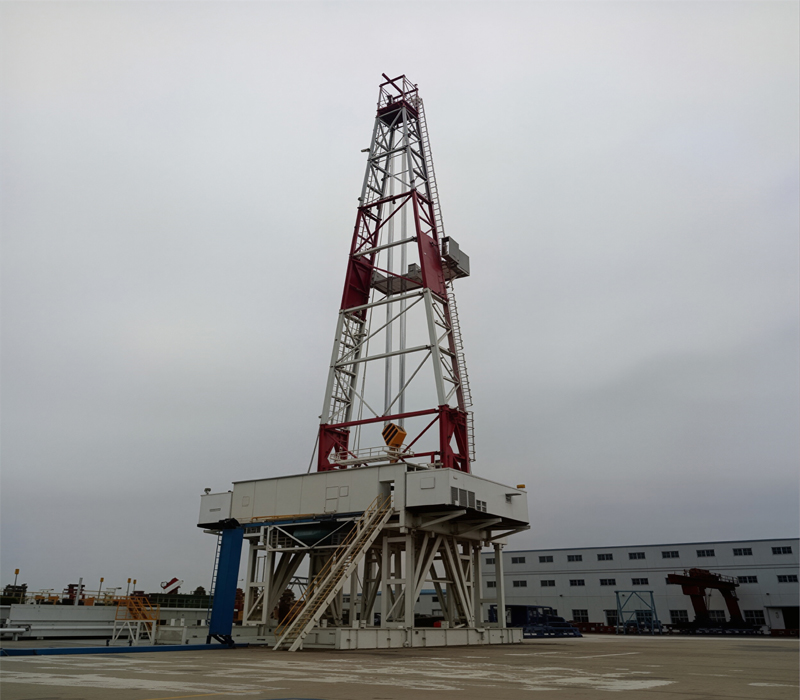
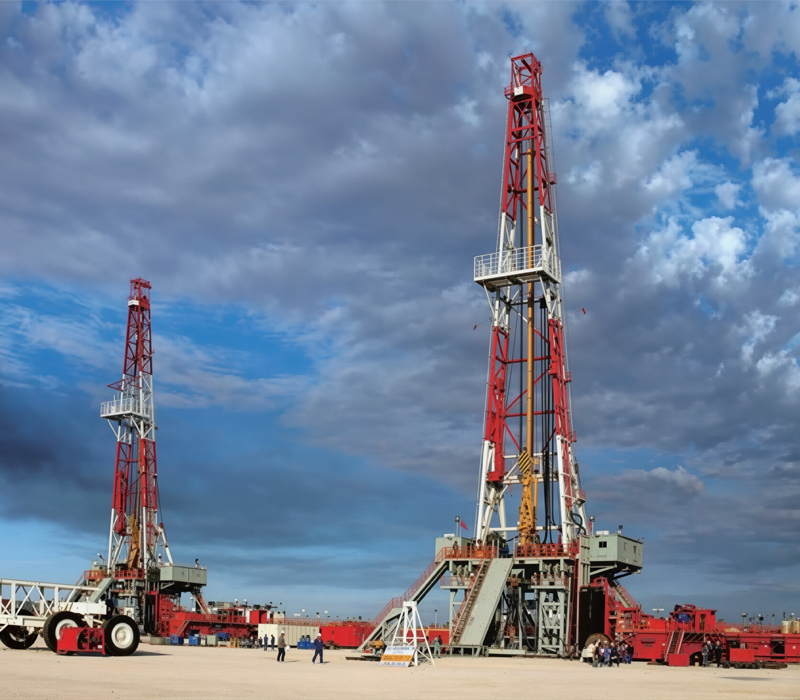
Mast / Derrick

The mast is the vertical steel structure that supports the hoisting system. It must withstand the full hook load plus wind loads and dynamic loads during tripping operations. Most drilling masts are designed to be raised and lowered hydraulically for transport.

  • Height range: 30 - 55 m
  • API standard: API 4F
  • Key components: Legs, braces, racking board, monkey board

Traveling Block

The traveling block contains multiple sheaves (pulleys) that the drilling line passes over. It moves up and down the mast as the drawworks spools line in or out. The number of sheaves depends on the hook load and drawworks capacity.

  • Capacity range: 150 - 900 ton
  • API standard: API 8C
  • Key wear parts: Sheaves, bearings, pins, lubrication system

Hook

The hook hangs from the traveling block and supports the drill string. It connects to the swivel or top drive. Modern drilling hooks have a safety latch and a load cell for weight measurement.

  • Capacity range: 150 - 900 ton
  • API standard: API 8C
  • Key features: Safety latch, load indicator, swivel joint

Rotary System Components

The rotary system rotates the drill string and bit to drill the wellbore:

Rotary Table

The rotary table is a large geared turntable that sits on the drill floor. It rotates the kelly, which in turn rotates the drill string. While top drives are becoming more common, rotary tables are still widely used, especially on older rigs and workover rigs.

  • Size range: 17.5" - 49.5" opening
  • API standard: API 7K
  • Key parts: Ring gear, pinion, bushings, kelly bushing

Top Drive

A top drive is a hydraulic or electric powered drilling machine that hangs from the traveling block. It rotates the drill string directly, eliminating the need for a kelly and rotary table. Top drives make tripping faster and enable longer stands to be pulled at once.

  • Power range: 350 - 1,000 kW
  • API standard: API 7K
  • Key benefits: Faster tripping, continuous circulation, easier directional drilling

Swivel

The swivel hangs from the hook and connects the mud hose to the drill string. It allows the drill string to rotate while mud is pumped down through the center. The swivel has a fluid passage that rotates within a stationary housing.

  • Pressure rating: 35 - 70 MPa
  • API standard: API 8C
  • Key wear parts: Main bearing, seal, swivel hose connection

Kelly

The kelly is a square or hexagonal steel pipe that passes through the rotary table. The rotary table turns the kelly via the kelly bushing, and the kelly turns the drill string. The kelly has a vertical travel that determines how much pipe can be drilled before adding another joint.

  • Length: 13 - 18 m
  • Cross-section: Square or hexagonal
  • Material: Alloy steel, heat-treated

Mud System Components

The mud (drilling fluid) system circulates fluid to cool the bit, carry cuttings and control pressure:

Mud Pumps

Mud pumps are large reciprocating piston or plunger pumps that circulate drilling fluid. They are typically triplex (3 cylinders) or duplex (2 cylinders). Mud pumps are among the largest consumers of power on a drilling rig.

  • Flow rate: Up to 5,000 L/min
  • Pressure rating: 35 - 70 MPa
  • API standard: API 7K
  • Key parts: Fluid end liners, pistons, valves, power end gears

Mud Tanks / Pit System

Mud tanks (also called mud pits) hold the drilling fluid. They are divided into compartments: suction pit, settling pit, suction pit for the pumps. The tank system includes agitators to keep solids suspended and mud guns to keep the fluid mixed.

  • Capacity: 100 - 500 m³ total
  • Construction: Steel tanks, modular design
  • Components: Agitators, mud guns, jets, degasser

Shale Shaker

The shale shaker is the first stage of solids control. It uses vibrating screens to remove large cuttings from the returning drilling fluid. The shale shaker is critical for maintaining mud properties and protecting downstream equipment.

  • Screen sizes: Multiple decks, various mesh sizes
  • Capacity: Up to 5,000 L/min
  • Key wear parts: Screens, vibrator motors, rubber mounts

Solids Control Equipment

Beyond the shale shaker, the solids control system includes: degasser (removes entrained gas), desander (removes sand-sized particles), desilter (removes silt-sized particles), and centrifuge (removes fine solids). Together these maintain mud quality.

  • Degasser: Removes entrained gas from mud
  • Desander: Hydrocyclones for sand removal
  • Desilter: Smaller hydrocyclones for silt removal
  • Centrifuge: Removes finest solids, recovers barite

Well Control Components

Well control equipment prevents blowouts and controls formation pressure:

Blowout Preventer (BOP)

The BOP stack is the primary well control barrier. It sits on top of the wellhead and can seal the annulus, close around the drill pipe, or shear the pipe. BOPs are tested regularly to ensure they function correctly in an emergency.

  • Pressure rating: 35 - 105 MPa
  • API standard: API 16A
  • Components: Annular BOP, pipe rams, blind rams, shear rams

Choke Manifold

The choke manifold controls the flow rate and pressure of fluid returning from the well during well control operations. It includes adjustable chokes and various valves to redirect flow. The choke manifold is critical for managing well pressure during a kick.

  • Pressure rating: 35 - 105 MPa
  • API standard: API 16C / API 6A
  • Components: Adjustable chokes, manifold valves, pressure gauges

Key Maintenance Considerations

Proper maintenance of drilling rig components is essential for safety and equipment life:

Regular Inspection

All critical components should be inspected regularly: hoisting equipment (daily), mud pumps (weekly), rotary system (daily during operation). Use API recommended inspection intervals as a guideline.

Lubrication

Proper lubrication extends component life dramatically. Follow manufacturer's lubrication schedules for all bearings, gears and sliding surfaces. Use the correct lubricant grade for the operating temperature range.

Wear Parts Replacement

Track wear part usage: mud pump liners and pistons, shale shaker screens, drawworks brake pads, traveling block bearings. Replace before failure to avoid unplanned downtime. Keep critical spares on location.

Frequently Asked Questions About Drilling Rig Components

Can you supply replacement parts for my existing drilling rig?

Yes. We supply replacement parts for most major drilling rig brands: National Oilwell, Varco, Cameron, Gardner Denver, Ideco and many others. Tell us the rig make, model and component you need, and we will source or manufacture the correct replacement part.

What is the most commonly replaced drilling rig component?

Mud pump fluid end parts (liners, pistons, valves) are the most frequently replaced items. They are exposed to high-pressure, abrasive drilling fluid. Depending on the mud type and formation, fluid end parts may need replacement every 100-500 hours of operation.

How do I know which API standard applies to a particular component?

The API standard is typically specified in the equipment manual or on the equipment nameplate. As a general guide: hoisting equipment (blocks, hooks, swivels) = API 8C; drawworks, mud pumps, rotary tables = API 7K; masts and substructures = API 4F; BOPs = API 16A; wellhead and valves = API 6A.

Do you offer component refurbishment services?

Yes. We offer refurbishment for major components: traveling blocks, hooks, swivels, drawworks. Refurbishment typically costs 40-60% of new equipment cost and can extend service life by 50-100%. All refurbished components are tested to API standards before return.

How quickly can you deliver spare parts?

Common wear parts (mud pump parts, shale shaker screens, etc.) are typically in stock and can be shipped within 1-3 days. Larger components (traveling blocks, drawworks) may take 4-8 weeks depending on configuration. We maintain a regional spare parts inventory for faster delivery.

Need Drilling Rig Components or Spare Parts?

Tell us which components you need or provide your rig make and model. Our parts team will identify the correct replacement parts and provide a competitive quotation within 48 hours.