Desert Rigs
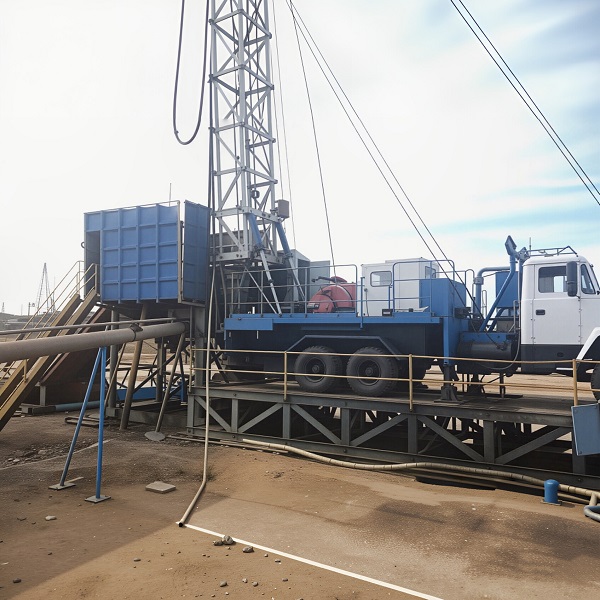
- Challenge: Extreme heat, sand/dust storms, limited water supply
- Adaptations: High-temperature cooling systems, air filtration, dust seals on all electrical enclosures
- Mobility: Wide-base tires or tracked undercarriage for soft sand
Land drilling rigs are the workhorses of onshore oil and gas exploration and production. They operate in diverse terrains —from flat plains to deserts, jungles and mountains —drilling wells that access underground hydrocarbon reservoirs.
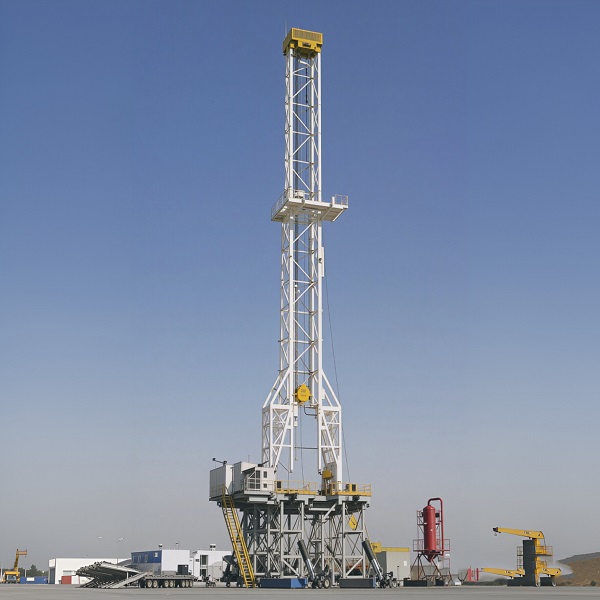
A land drilling rig is a self-contained drilling system designed to operate on land. Unlike offshore rigs, land rigs must be transported to the well location and assembled on site. Mobility and rapid rig-up are key characteristics of modern land drilling rigs.
Different terrains require different rig configurations. Here are the main terrain types and their equipment requirements:
Our land drilling rig lineup covers the full range from shallow exploration to ultra-deep development drilling:
| Model | Max Well Depth | Hook Load | Drawworks Power | Mast Height |
|---|---|---|---|---|
| SJL1000 | 1,000 m | 150 ton | 2 x 350 kW | 31.5 m |
| SJL2000 | 2,000 m | 250 ton | 2 x 500 kW | 38 m |
| SJL3000 | 3,000 m | 350 ton | 2 x 750 kW | 42 m |
| SJL4500 | 4,500 m | 500 ton | 3 x 750 kW | 45 m |
| SJL6000 | 6,000 m | 750 ton | 4 x 1000 kW | 48 m |
| SJL8000 | 8,000 m | 900 ton | 4 x 1300 kW | 52 m |
Land drilling rigs come in different mounting configurations depending on mobility requirements:
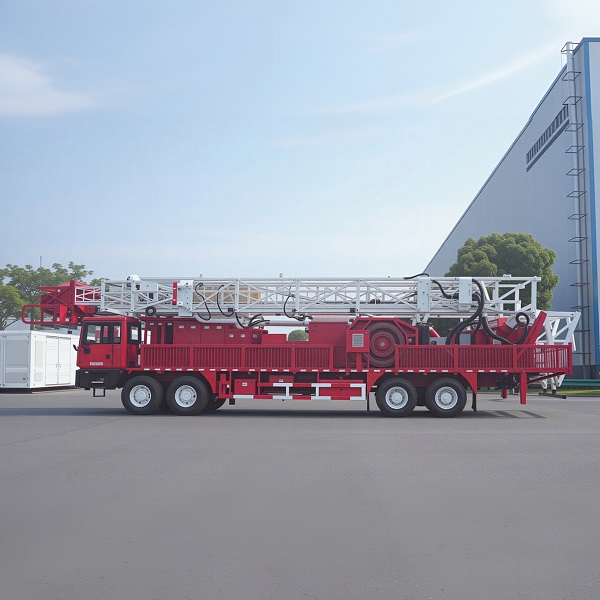
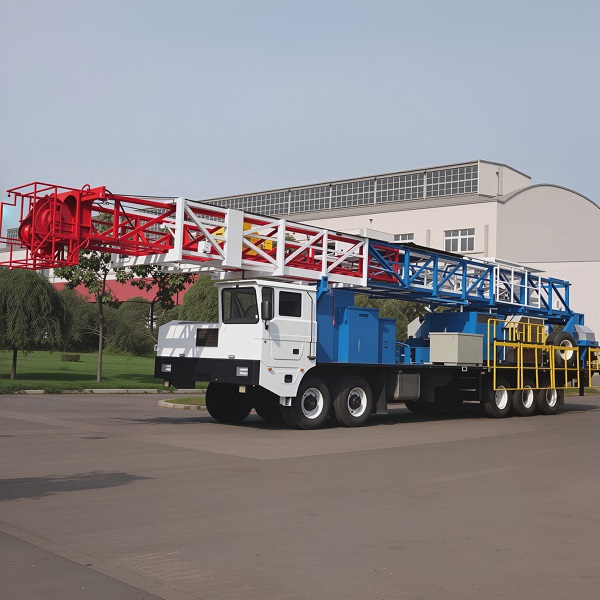
Best for: Frequent moves between well sites, road-accessible locations.
Advantages: Self-propelled, rapid rig-up/down, minimal transport equipment needed.
Limitations: Limited to medium-depth wells (=?4,500 m), weight restrictions on roads.
Best for: Medium-distance moves, locations accessible by trailer.
Advantages: Towed by tractor, more compact than truck-mounted, easier to transport heavy loads.
Limitations: Requires prime mover, slower than self-propelled, limited to certain road weights.
Best for: Permanent well sites, offshore platforms, locations where mobility is not critical.
Advantages: Can handle larger capacity (deep wells), more stable operation, lower initial cost.
Limitations: Requires crane for installation and relocation, slower mobilization.
Browse our standard land drilling rigs. All models are available in truck, trailer or skid-mounted configuration with mechanical or VFD electric drive.
Our land rigs are designed for rapid rig-up and rig-down. The mast can be raised hydraulically without additional crane. Reduces mobilization time between well sites from days to hours.
All major components are modular and standardized. This simplifies transport, maintenance and spare parts management. Components are interchangeable across rig models.
For customers who prefer electric drive, we offer VFD (Variable Frequency Drive) configurations. Electric motors provide better control, higher efficiency and lower fuel consumption compared to mechanical drive.
We offer specialized packages for different environments: desert (dust protection), arctic (cold weather), jungle (pest control), offshore (corrosion protection). Each package is tailored to local conditions.
All rigs include a PLC-based drilling control system with touchscreen HMI. Monitors key parameters in real-time: weight on bit, torque, RPM, pump pressure, mud flow rate.
Our engineers provide commissioning, operator training and troubleshooting support worldwide. Critical spare parts are stocked in regional warehouses for fast delivery to any oilfield location.
The cost depends on rig capacity, configuration and options. A small 1000m rig may start from USD 2-3 million. A medium 3000m rig typically costs USD 5-10 million. A large 6000m+ deep drilling rig can cost USD 15-30 million or more. Custom configurations add additional cost.
Modern truck-mounted or trailer-mounted land rigs can be rigged up in 1-3 days with a crew of 4-6 people. Skid-mounted rigs require crane assistance and typically take 5-10 days to rig up. Rapid rig-up designs can reduce this further.
Land rigs operate on land and must be transported to the location. Offshore rigs operate on or over water and include platforms, jack-up rigs, semi-submersibles and drillships. Offshore rigs must withstand harsh marine environments, have corrosion protection, and include living quarters for the crew who stay on board for weeks or months.
Yes. We offer a wide range of terrain-specific customization: desert dust protection packages, arctic cold-weather packages, jungle pest control systems, mountainous compact footprint designs. Tell us your operating environment and we will recommend the right configuration.
Standard configuration land rigs take approximately 12-18 months from order confirmation. Custom configurations (special capacity, unique terrain package, offshore-rated) may require 18-24 months. Refurbished or near-stock rigs can be delivered in 3-6 months.
Tell us your target well depth, operating terrain and mobility requirements. Our engineering team will recommend the optimal land rig configuration and provide a detailed quotation within 48 hours.