1. Fill Water
A measured volume of mixing water is pumped from the onboard water tank into the mixing tub. Water volume is controlled by flow meter.
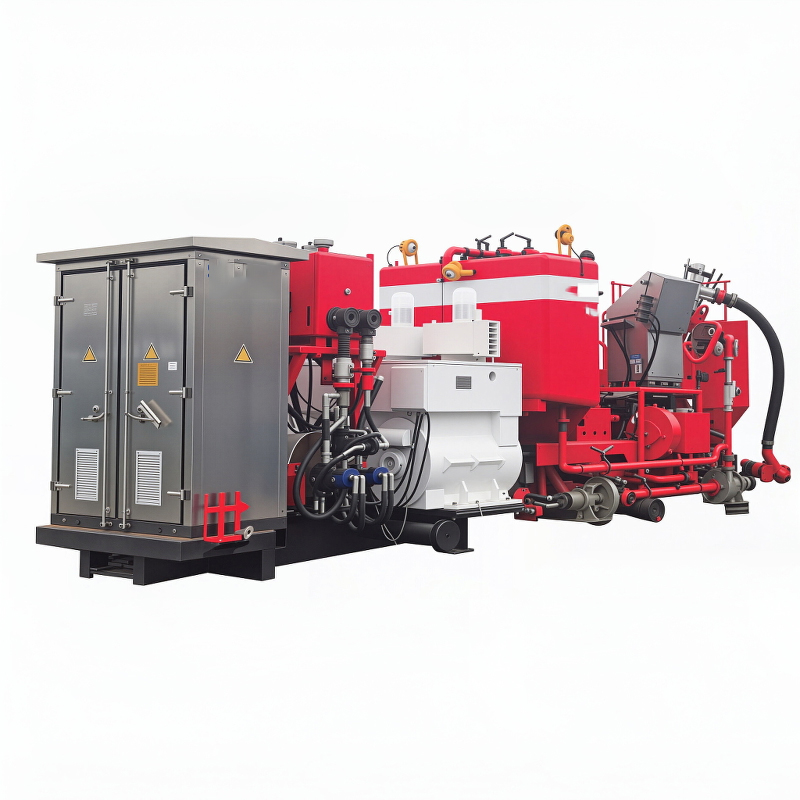
A batch mixer truck prepares consistent-density cement slurry in controlled batches. It combines cement powder, water and chemical additives through a recirculation mixing system, ensuring uniform slurry quality before it is pumped downhole by the cementing unit.
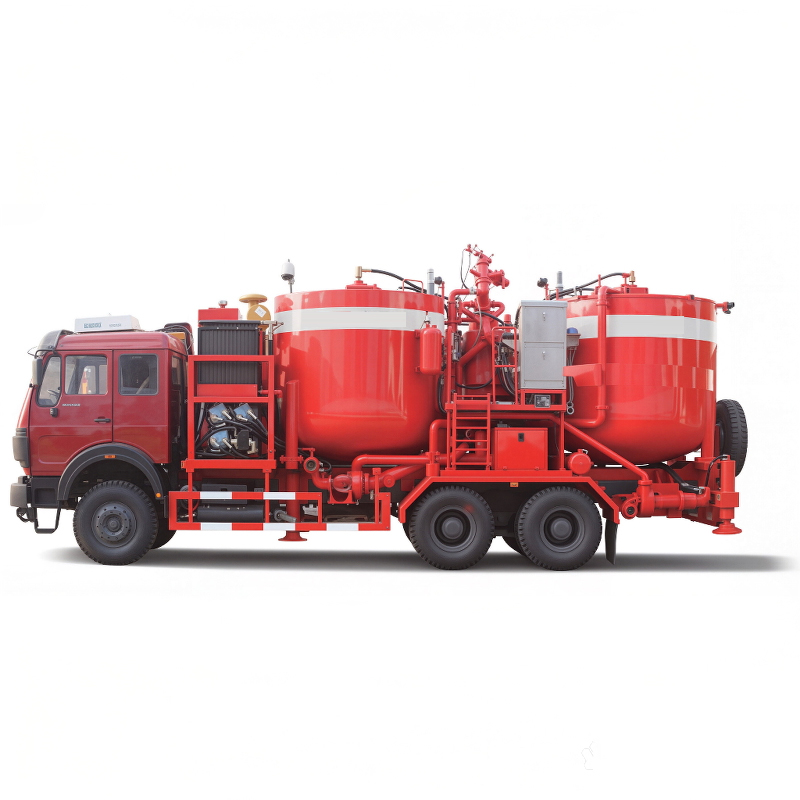
There are two primary methods for preparing cement slurry: batch mixing and continuous mixing. Each has advantages depending on the job size and quality requirements.
| Factor | Batch Mixing | Continuous Mixing |
|---|---|---|
| Method | Mix a fixed batch volume, test quality, then pump | Cement and water are mixed continuously as they are pumped |
| Quality Control | Each batch is tested (density, rheology) before pumping | Real-time density monitoring; no batch-level testing |
| Typical Volume | 1.6 - 3.0 m³ per batch | Unlimited, but depends on feed rate |
| Best For | Critical wells, HPHT, squeeze jobs requiring precise quality | Large-volume primary cementing, shallow wells, high throughput |
| Equipment Cost | Lower (simpler system) | Higher (requires precision metering controls) |
| Operator Skill | Standard training | Requires more training on metering and control |
| Waste Generation | Minimal (exact batch volume) | More waste (startup/shutdown adjustment) |
A batch mixer truck follows a sequential process to produce consistent cement slurry for each batch:
A measured volume of mixing water is pumped from the onboard water tank into the mixing tub. Water volume is controlled by flow meter.
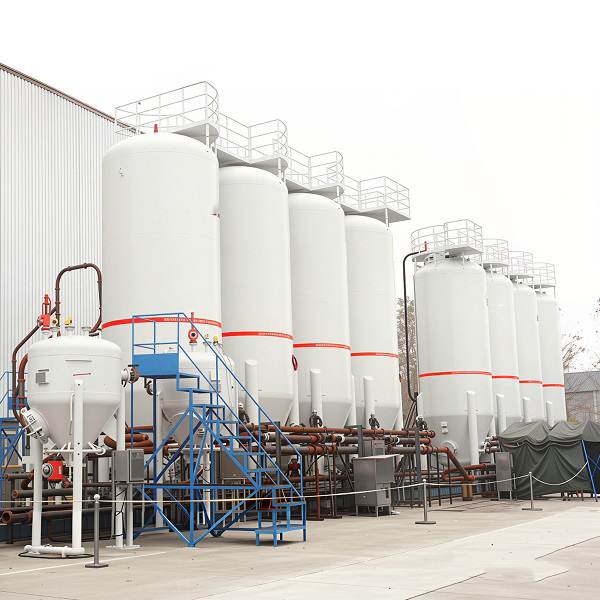
Bulk cement powder is pneumatically transferred from the bulk silo to the mixing tub. Cement weight is measured by load cells on the tub.
Liquid additives (dispersants, retarders, accelerators) are precisely metered into the mixing tub. Powder additives are added manually or via automatic dispenser.
A centrifugal pump circulates slurry through the mixing tub for 3-5 minutes. This recirculation action ensures uniform density and eliminates lumps.
Slurry density and rheology are measured. If parameters are off-spec, the batch is adjusted before pumping.
The mixed slurry is transferred to the suction tank of the cementing unit for high-pressure pumping downhole.
Our batch mixer lineup covers 1.6 m³ to 3.0 m³ batch volume, available in truck, trailer or skid configuration.
| Model | Batch Volume | Mixing Method | Density Accuracy | Mounting Options |
|---|---|---|---|---|
| SHJC16 | 1.6 m³ (1600 L) | Recirculation + centrifugal mixer | ± 0.02 g/cm³ | Truck / Trailer / Skid |
| SHJC20 | 2.0 m³ (2000 L) | Recirculation + high-shear mixer | ± 0.02 g/cm³ | Truck / Trailer |
| SHJC30 | 3.0 m³ (3000 L) | Dual recirculation + agitator | ± 0.01 g/cm³ | Truck / Trailer / Skid |
Batch mixer trucks are essential equipment in any cementing spread. They are particularly valuable in these scenarios:
When zonal isolation is critical (production casing, intermediate casing), batch mixing provides the quality control needed to ensure the cement meets design specifications.
Squeeze jobs require precise slurry properties. Batch mixing allows the engineer to test and adjust the slurry properties before squeezing at high pressure.
High-temperature high-pressure wells require specialized cement blends with additives. Batch mixing ensures the blend is consistent and properly mixed.
On offshore platforms, space is limited and quality requirements are strict. Skid-mounted batch mixers provide reliable, compact slurry preparation in a small footprint.
Browse our standard batch mixer trucks. All models include load cell measurement, density monitoring and recirculation mixing as standard features.
Four-point load cell system measures cement weight with ±0.5% accuracy. No more guesswork on cement-to-water ratio.
Continuous density measurement during recirculation. The operator knows exactly when the slurry has reached target density.
Our high-shear centrifugal mixer breaks up cement agglomerates, ensuring complete hydration and consistent slurry properties.
A baghouse dust collector captures cement dust during powder transfer, protecting operator health and the environment.
Every batch's volume, density and mixing time is logged. You have a complete quality record for each cement job.
All wetted parts are easy to access for cleaning between batches. Fast changeover between different cement blends.
A standard spread typically uses 1 batch mixer truck to supply 2 cementing units. For large-volume jobs or when mixing multiple blends, a second batch mixer can be added to ensure continuous supply. The ratio depends on job size and cement density requirements.
Our batch mixers can be configured for continuous operation by bypassing the batch tub and feeding the cementing unit directly through the recirculation loop. However, for true continuous mixing with precision density control, a dedicated continuous mixing system is recommended.
A typical 1.6 m³ batch takes 8-12 minutes from start to finish: water fill (2 min), cement addition (3 min), recirculation mixing (3-5 min), and quality check (1 min). This translates to approximately 8-12 m³/hour throughput.
Yes. We offer skid-mounted batch mixers designed for offshore platform installation. They include DNV-rated lifting lugs, compact footprint, electric drive options and stainless steel wetted parts for corrosion resistance.
Each batch is tested for density and rheology before pumping. Our batch mixer includes inline density monitoring, and we provide a portable rheometer for lab-quality testing. All data is logged for quality records and post-job review.
Tell us your required batch volume, mounting preference and operating environment. Our engineering team will recommend the right batch mixer configuration and provide a detailed quotation within 48 hours.