
Single Axle Trailer
For smaller cementing units (1 pump trip, lower pressure). Lightweight, easy to tow with a standard truck. Ideal for shallow wells, squeeze jobs, and small workover cementing.
A truck-mounted cementing unit is self-propelled: it drives itself to the well site, ready to work. But a truck chassis is expensive —30-50% of the total cost of the unit. If your cementing operations are relatively concentrated (you work from a field base and move between nearby wells), you don't need a dedicated truck chassis. A trailer-mounted cementing unit puts the cementing equipment on a towable trailer. You use a standard truck or tractor to move it between locations. It's the same cementing capability, without the cost of a dedicated heavy-duty truck chassis. This is the cost-effective choice for operators who have their own prime movers, or who work from a central base with relatively short moves.
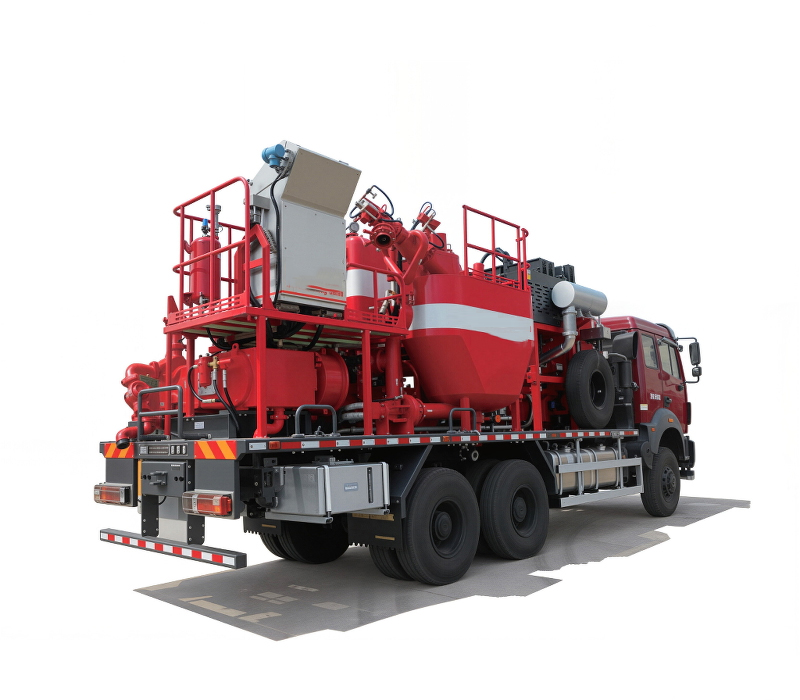
| Factor | Trailer Mounted | Truck Mounted |
|---|---|---|
| Upfront Cost | Lower (no dedicated truck chassis) | Higher (includes heavy-duty truck) |
| Mobility | Requires prime mover (truck/tractor) | Self-propelled, ready to go |
| Setup Time | Slightly longer (detach prime mover) | Quick (just park and work) |
| Best For | Concentrated operations, field base, short moves | Service companies, long-distance moves, fast turnaround |
For smaller cementing units (1 pump trip, lower pressure). Lightweight, easy to tow with a standard truck. Ideal for shallow wells, squeeze jobs, and small workover cementing.
For medium-sized units (2 pump trips, 70 MPa pressure). Higher payload capacity. The most common configuration for standard primary cementing operations.
For large units (3 pump trips, bulk cement storage, full additive system). Maximum payload. For deep wells, large-volume cementing, and complete cementing spreads on wheels.
If you don't need mobility at all, a skid-mounted cementing unit is even more economical. Permanent installation at a central cementing base. Can be moved occasionally with a crane.
It depends on the trailer weight. A single-axle trailer (small unit) can be towed by a standard 4x2 or 6x4 truck. A tandem axle trailer (medium unit) needs a 6x4 or 8x4 tractor. A tri-axle trailer (large unit) needs a heavy-duty tractor. Tell us the weight of the unit you're considering, and we'll recommend the right prime mover specifications. Most operators already have suitable trucks in their fleet.
It's possible but not recommended. The cementing equipment is designed to be mounted on a specific chassis. Converting from truck to trailer requires re-engineering the mounting points, suspension, and electrical system. It's usually better to choose the right configuration from the start. Tell us your mobility requirements, and we'll help you decide whether trailer or truck is the better choice for your operation.
Yes. The pressure rating depends on the pump and fluid end, not on whether it's mounted on a truck or a trailer. We offer trailer cementing units with the same 70 MPa pressure rating and same pump configurations as our truck units. The only difference is the mounting platform —the cementing performance is identical.
If your cementing operations are concentrated around a field base, a trailer-mounted unit gives you the same cementing capability at a lower upfront cost. Tell us your job requirements and what prime movers you have available, and we'll design the right trailer cementing unit for your operation.