
Frac Pumps (Trucks)
The workhorses. Each pump truck delivers 1500 to 2500 HP. A typical stage uses 4 to 8 pumps running in parallel. These are the most visible —and most expensive —part of the fleet.
A successful fracturing operation isn't just about the biggest pump on location. It's about the whole system working together: pumps delivering the right pressure and rate, the sand blender mixing proppant accurately, the manifold distributing flow safely, and the control system monitoring everything in real time. Buy from multiple suppliers and you get compatibility headaches. Buy a complete frac package from one source and everything fits, everything is covered by one warranty, and you know the system was designed to work as a unit.
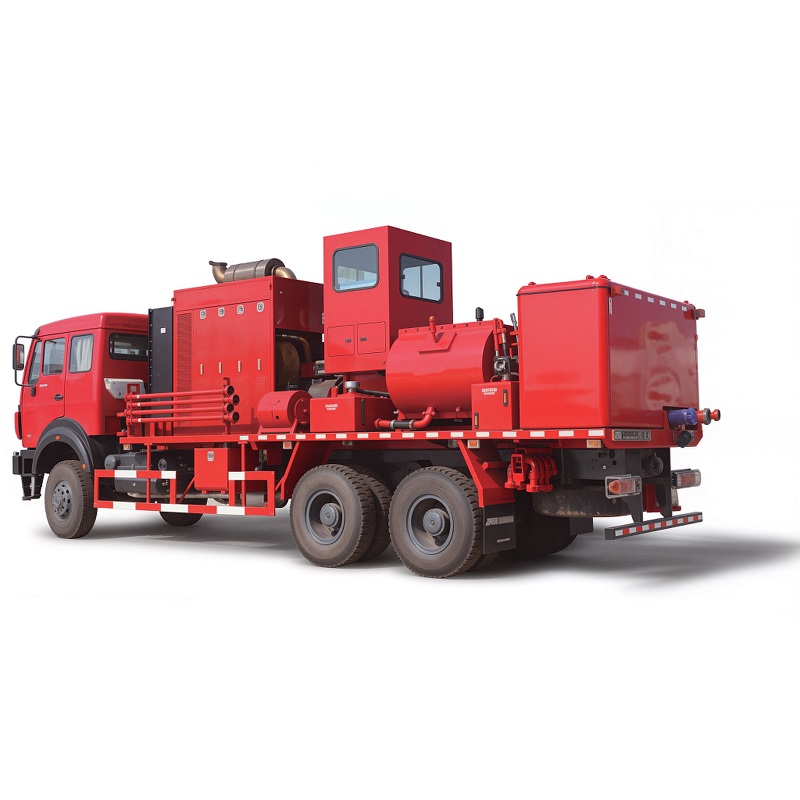
When people say "frac equipment," they're usually talking about more than just the pumps. Here's the full picture:
The workhorses. Each pump truck delivers 1500 to 2500 HP. A typical stage uses 4 to 8 pumps running in parallel. These are the most visible —and most expensive —part of the fleet.
Mixes proppant (sand) with the fluid. Precise blending is critical —too much sand and you block the line, too little and you don't get enough proppant in the fracture. The blender is the heart of the slurry preparation.
The high-pressure piping that collects flow from all the pumps and sends it down the well. Includes the missile, tees, elbows and the wellhead connection. Rated to 70-105 MPa (10K-15K psi).
Prepares the base fluid —typically guar or polymer hydration. The fluid needs time to hydrate before it can carry sand. The hydration unit stores and conditions the fluid before it goes to the blender.
The nerve center. Operators monitor pressure, rate, sand concentration, and adjust the treatment in real time. Digital recording for post-job analysis and regulatory reporting.
Water storage (tanks or bladders), chemical additive units, air compressors (for pneumatic controls), and maintenance trucks. Not as glamorous but just as necessary.
Not every frac job needs the same setup. Here's how fleets scale:
| Job Type | Pumps | Total HP | Flow Rate | Proppant per Stage |
|---|---|---|---|---|
| Small Well Stimulation | 2 - 3 | 3,000 - 5,000 HP | 1.0 - 2.0 m³/min | 10 - 30 tonnes |
| Medium Frac Job | 4 - 6 | 8,000 - 12,000 HP | 2.0 - 4.0 m³/min | 30 - 80 tonnes |
| Shale Frac (Plug & Perf) | 6 - 12 | 12,000 - 25,000 HP | 4.0 - 8.0 m³/min | 80 - 200 tonnes |
| Massive Deepwater/HPHT | 12+ | 25,000+ HP | 8.0+ m³/min | 200+ tonnes |
Yes, that's common —especially for larger service companies who already have blenders, manifolds and control vans from previous purchases. If you already have existing equipment, we can supply just the pumps to match your existing system. Just tell us the communication protocol (CAN bus, analog signals) and pressure rating of your existing manifold, and we'll configure the pumps to match. The key is to make sure the new pumps talk to your existing control system.
In common usage, they're the same thing. Both mean the complete set of equipment needed to perform a hydraulic fracturing operation. You'll hear both terms used interchangeably. "Frac fleet" tends to be more common in North America, while "frac spread" is used more internationally. Either way, you're talking about pumps + blender + manifold + control + support equipment.
A standard 4-pump package (pumps + blender + manifold + control van) is typically delivered in 120-180 days from order. Larger fleets (8+ pumps) take 180-240 days. Custom configurations with special pressure ratings or electric drive may take longer. We provide detailed milestone schedules during production, with regular updates on fabrication, assembly and testing.
Tell us your target job type (well stimulation, shale gas, tight oil), required total horsepower and mounting preference (truck, trailer, skid). We'll design the right frac fleet for your operation.