
Shale Gas Fracturing: Different Game, Different Equipment
Fracturing a shale well isn't like fracturing a conventional oil well. Shale has ultra-low permeability —the gas doesn't flow naturally, no matter how big the fracture. You need a massive fracture network (volume fracturing), dozens of stages along a horizontal lateral, and huge volumes of fluid and sand pumped at very high rates. This is why shale frac fleets look different: more pumps, higher flow rates, more sand storage, and slickwater as the primary fluid instead of crosslinked gel. The equipment has to keep up with 24/7 operations over weeks, not days.
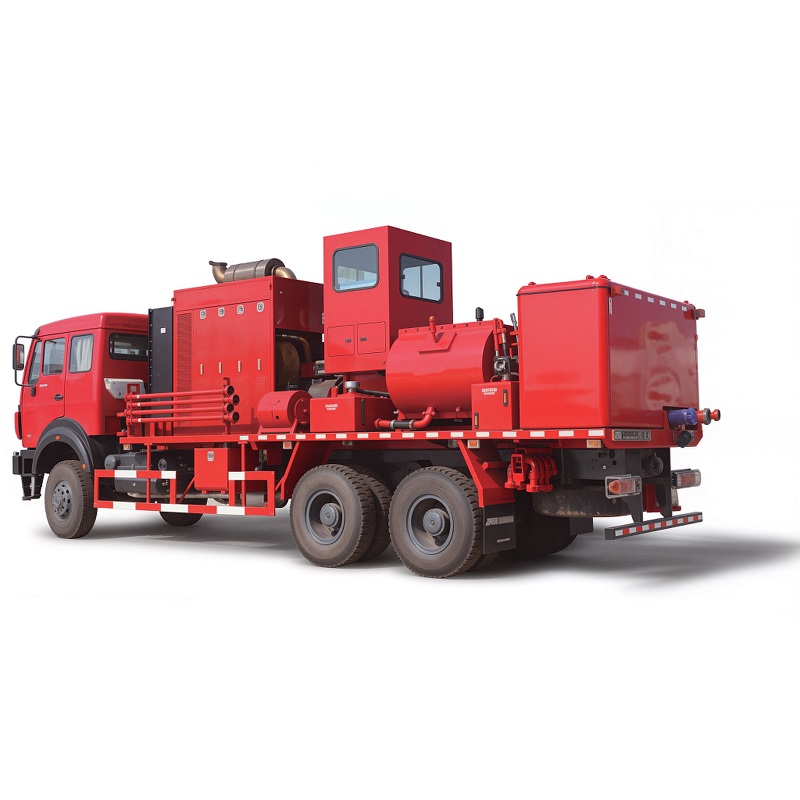
Shale Frac vs Conventional Frac: What's Different
The equipment requirements are fundamentally different:
| Parameter | Conventional Oil Well Frac | Shale Gas / Tight Oil Frac |
|---|---|---|
| Pumps per job | 2 - 6 | 8 - 16+ |
| Total horsepower | 3,000 - 12,000 HP | 15,000 - 30,000+ HP |
| Flow rate | 1 - 4 m³/min | 6 - 16 m³/min |
| Fluid type | Crosslinked gel (guar-based) | Slickwater (low viscosity, high rate) |
| Proppant per stage | 10 - 50 tonnes | 50 - 200+ tonnes |
| Number of stages | 1 - 5 | 20 - 60+ (horizontal lateral) |
| Job duration | 1 - 3 days | 2 - 4 weeks (continuous) |
Why Slickwater for Shale
Shale operators use slickwater (water + friction reducer) instead of gel for specific engineering reasons:
- Higher Rate Creates More Fractures: Low-viscosity slickwater can be pumped at very high rates. Higher rates create more complex fracture networks (multiple fractures propagating at once), which is exactly what you need in shale —you want to contact as much rock surface as possible.
- Less Formation Damage: Gel leaves residue that can plug the tiny pore throats in shale. Slickwater leaves almost no residue. In a shale formation where every Darcy of permeability matters, minimizing damage is critical.
- Lower Cost: Slickwater is cheaper than crosslinked gel. When you're pumping 20,000+ cubic meters of fluid per well, the cost difference adds up fast.
- Better Sand Transport: Counter-intuitively, high-rate slickwater carries sand just as well as gel —because the velocity keeps the sand suspended. It's the turbulence, not the viscosity, that keeps sand moving.
Typical Shale Frac Fleet Configuration
| Component | Typical Count / Size |
|---|---|
| Frac pumps (2,500 HP each) | 8 - 12 units |
| Sand blender | 1 - 2 units (high rate, 10+ ppa) |
| Hydration unit | 1 - 2 units (high rate mixing) |
| Sand storage (silos or conveyors) | 2,000 - 5,000 tonnes on location |
| Water storage (tanks + bladders) | 2,000 - 5,000 m³ on location |
| Control / data van | 1 unit (real-time monitoring) |
Frequently Asked Questions
Can I use a conventional frac fleet for shale operations?
Technically yes, but you'll be severely limited. A conventional fleet (4-6 pumps) can do small shale wells, but for a multi-stage horizontal shale well you need the higher rate and sand capacity. The main bottleneck is rate: shale fracs need 8-12 m³/min or more, and a conventional fleet tops out at 3-4 m³/min. You can pad out a conventional fleet with extra pumps if you have them, but the blender, hydration unit and sand delivery also need to scale up. It's usually better to configure a dedicated shale frac fleet from the start.
What about water sourcing and flowback for shale operations?
Water is the biggest logistical challenge in shale fracturing. A single shale well might use 20,000-50,000 m³ of water. Options: source from nearby rivers or aquifers, recycle flowback water from previous wells, or use brackish water if available. Flowback water (the fluid that returns after the job) is usually treated and reused. Many shale operators now run closed-loop water systems —recycle and reuse. We can help design the water management side of your frac spread, including storage and filtration.
How many stages can I do in a day with a typical shale fleet?
Average is 2-3 stages per day for a 10-pump shale fleet. Each stage takes 6-10 hours: pump the stage (2-4 hours), then wireline or coiled tubing to plug and perforate the next stage (4-6 hours). The total cycle time per stage includes both the pumping and the interstage intervention. A 30-stage lateral takes about 10-14 days of continuous operation. Larger fleets (14+ pumps) can push 3-4 stages per day, depending on the intervention method.
Need a Shale Gas Fracturing Fleet?
Tell us your target stages per well, desired pump rate and local water/sand logistics. We'll design a shale frac package that matches your production plan.