1. Water Feed
Treated water enters the blender from a low-pressure supply line. A flow meter measures the water rate, and a control valve adjusts it to maintain the target total flow rate.
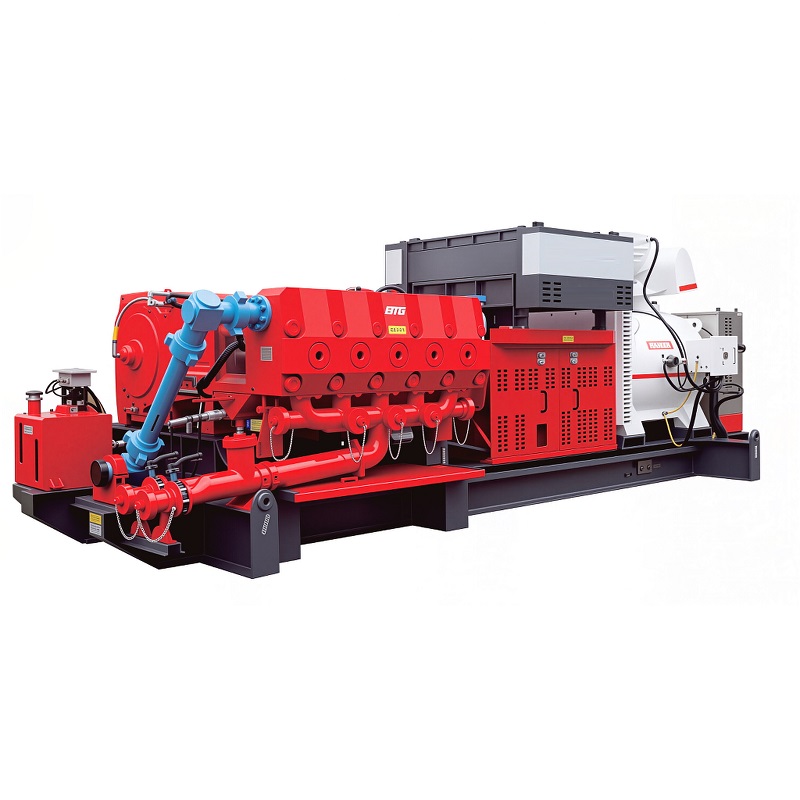
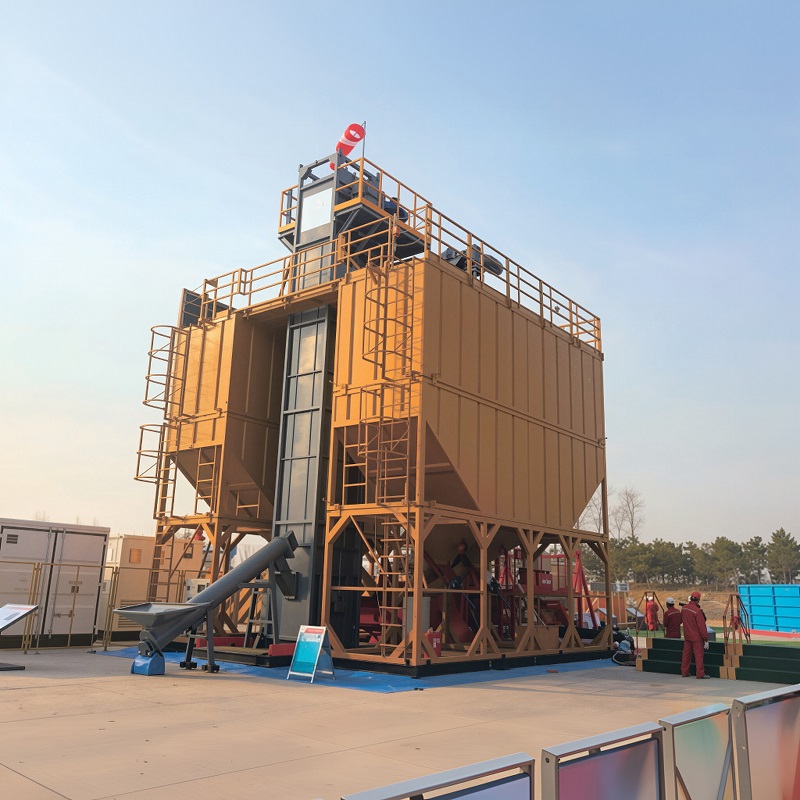
A continuous mixing fracturing unit (also called a blender) prepares consistent proppant-laden slurry in real-time. It controls fluid density, sand concentration and chemical dosage while feeding multiple high-pressure frac pumps simultaneously.
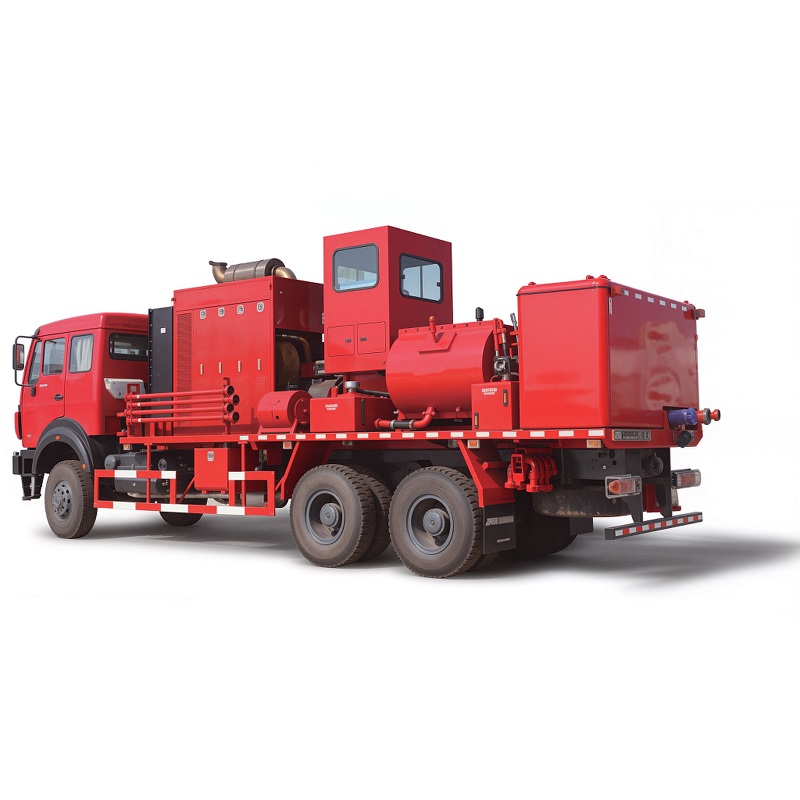
A blender operates on a continuous flow basis —water, sand and chemicals are metered simultaneously and mixed as they flow through the system:
Treated water enters the blender from a low-pressure supply line. A flow meter measures the water rate, and a control valve adjusts it to maintain the target total flow rate.
Sand or ceramic proppant is fed from a sand hopper or conveyor. A sand metering device (belt scale, screw feeder) precisely controls the proppant mass flow rate.
Chemical additives (gelling agent, friction reducer, biocide) are injected into the water stream before mixing. Metering pumps ensure precise chemical concentration throughout the job.
Water, sand and chemicals combine in a mixing tub or inline mixer. Recirculation pumps ensure uniform slurry density and prevent sand settling in the suction lines.
A gamma densitometer or Coriolis meter continuously measures slurry density. The control system adjusts sand feed rate automatically to maintain the target density.
The blended slurry flows by gravity to the suction manifold. Multiple frac pumps draw from the same suction line simultaneously, each receiving consistent slurry quality.
In cementing, batch mixing is common. In fracturing, continuous mixing is the standard due to the large volumes involved:
| Factor | Batch Mixing | Continuous Mixing |
|---|---|---|
| Volume Handling | Limited by batch size (1-3 m³) | Unlimited, runs for hours continuously |
| Throughput | 2-5 m³/min typical | 10-25 m³/min typical |
| Quality Control | Each batch tested individually | Real-time monitoring, automatic adjustment |
| Waste Generation | More waste (startup/shutdown batches) | Minimal waste, consistent output |
| Best For | Cementing, small-volume jobs | Hydraulic fracturing, large-volume stimulation |
| Equipment Complexity | Simpler, lower cost | More complex, higher cost |
Our blender lineup covers a range of throughput capacities to match different spread sizes:
| Model | Throughput | Sand Capacity | Density Accuracy | Typical Spread Size |
|---|---|---|---|---|
| SJB10 | 10 m³/min | 0-3,000 kg/min | ± 0.02 g/cm³ | 4-6 frac pumps (10,000-15,000 HHP) |
| SJB15 | 15 m³/min | 0-4,500 kg/min | ± 0.02 g/cm³ | 6-10 frac pumps (15,000-25,000 HHP) |
| SJB20 | 20 m³/min | 0-6,000 kg/min | ± 0.01 g/cm³ | 10-15 frac pumps (25,000-40,000 HHP) |
| SJB25 | 25 m³/min | 0-7,500 kg/min | ± 0.01 g/cm³ | 15-20 frac pumps (40,000-50,000+ HHP) |
Horizontal shale gas wells require continuous high-volume fracturing. A single blender feeds 10-20 frac pumps simultaneously throughout each stage.
Tight oil fracturing uses higher sand concentrations (up to 2,000 kg/m³). The blender must precisely control proppant concentration to ensure consistent proppant placement.
Offshore fracturing operations use skid-mounted blenders on the platform. Compact footprint, electric drive and DNV certification are required.
Refracturing older wells requires precise fluid and proppant control. The blender's real-time monitoring allows operators to adjust the treatment on the fly based on surface pressure response.
Non-invasive gamma densitometer provides continuous slurry density measurement. No moving parts in the flow path, no wear from proppant.
The control system automatically adjusts sand feed rate to maintain target density. If water flow changes, the sand rate compensates automatically.
Store multiple fracturing fluid recipes. Recall a recipe by stage type or proppant schedule. No need to re-enter parameters for every stage.
All job data is logged: water rate, sand rate, density, chemical dosage. Export as CSV for post-job analysis and regulatory reporting.
Dual sand hoppers or conveyors ensure continuous proppant supply. If one feeder needs cleaning, the second can continue without interrupting the job.
All wetted parts are easy to access for flushing between stages or between wells. Fast changeover between different fluid systems.
Browse our standard blender units. All models include density monitoring, chemical injection and data logging as standard features.
Most spreads use one blender per frac spread. The blender feeds all frac pumps simultaneously. For very large spreads (20+ pumps), two blenders may be used for redundancy —if one needs maintenance, the second can continue at reduced rate.
A blender mixes continuously —water, sand and chemicals flow through the system simultaneously at a controlled rate. A batch mixer prepares a fixed volume of slurry, tests it, then pumps it. Blenders are used for fracturing (large volumes, continuous flow), while batch mixers are used for cementing (smaller volumes, precise quality control per batch).
Modern blenders with gamma density measurement and closed-loop control maintain slurry density within ±0.02 g/cm³ of setpoint. This is significantly more accurate than older volumetric systems, which could vary by 5-10%.
Yes. Our blenders can handle any proppant type: Ottawa sand, northern white sand, ceramic proppant, resin-coated sand. The sand metering system measures mass flow, so density control is independent of proppant type or bulk density.
Routine maintenance includes: flushing the system between stages, inspecting the sand conveyor/belt scale, checking chemical injection pumps, and calibrating the density meter annually. Wear parts include pump liners, valve seats and seals in the suction recirculation pumps.
Tell us your target throughput, sand capacity and spread size. Our engineering team will recommend the right blender configuration and provide a detailed quotation within 48 hours.