
Platform Well Intervention
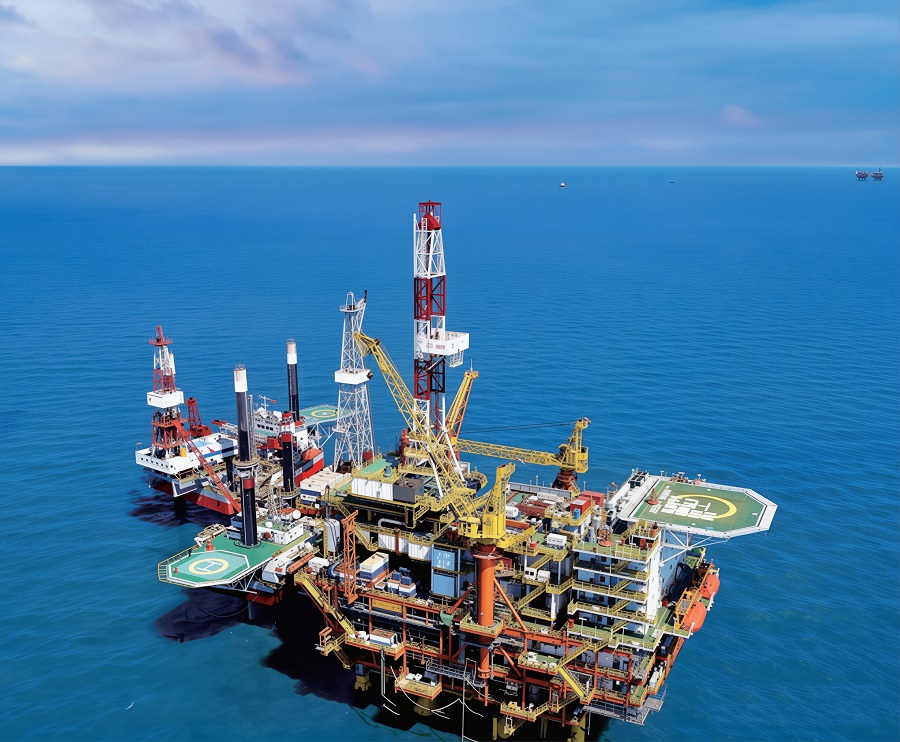
Cleanouts, acid stimulation, plug drilling on platform wells. The CT unit is lifted onto the platform deck, positioned over the well, and performs intervention without a workover rig.
Offshore coiled tubing is different from onshore CT in almost every way. On land, a CT unit is a big truck —long, heavy, with a large reel. On a platform, deck space is measured in square meters, not acres. Every kilogram counts because the platform crane has a lift limit. Salt spray will corrode standard steel in months. Electrical systems must be explosion-proof for hazardous zones. And the CT unit must be skid-mounted so it can be lifted onto the platform by crane. Offshore CT units are engineered for these constraints: compact reel designs, weight-optimized structures, marine-grade materials, explosion-proof controls, and standard skid dimensions that fit through platform doors. We design and manufacture offshore coiled tubing units for fixed platforms, jack-up rigs, and floating production units —built to marine specifications, certified for offshore use, and ready for platform installation.
| Factor | Offshore CT Unit | Onshore CT Unit |
|---|---|---|
| Mounting | Skid-mounted (crane lift) | Truck-mounted (self-propelled) |
| Footprint | Compact, space-optimized | Large truck footprint |
| Weight | Weight-optimized (deck crane limit) | No weight constraint |
| Materials | Marine-grade, corrosion-resistant | Standard carbon steel |
| Electrical | Explosion-proof (Zone 1/2) | Standard industrial |
Cleanouts, acid stimulation, plug drilling on platform wells. The CT unit is lifted onto the platform deck, positioned over the well, and performs intervention without a workover rig.
For subsea wells, CT is deployed from a floating rig or intervention vessel. The CT unit is part of the riser system, running coiled tubing down to the subsea wellhead.
Removing scale, wax, sand, or debris from offshore wells. Especially valuable on subsea wells where intervention is expensive —CT gets in and out quickly.
Permanent capillary installations for chemical injection or downhole monitoring. Common on offshore wells where workover is costly.
It depends on the reel size. A compact offshore CT unit (1-2 inch tubing, 3000m depth) typically requires about 6m x 4m of deck space. A larger unit (2-3/8 inch tubing, 5000m depth) requires about 8m x 5m. We design the skid to fit your platform's available deck space. Tell us how much deck space you have, and we'll size the CT unit to fit.
Yes. Offshore CT units are skid-mounted so they can be lifted off one platform, transported by supply vessel or crane, and lifted onto another platform. This is common for offshore service companies who move CT units between platforms in a field. The skid design includes lifting points and forklift pockets for easy relocation.
Offshore CT equipment typically requires: (1) marine-grade material certificates, (2) explosion-proof electrical certification (ATEX, IECEx, or local equivalent), (3) pressure vessel certification for fluid ends and tanks, (4) lifting equipment certification (slings, eyes), and (5) third-party inspection (DNV, ABS, BV) if your operator requires it. We provide all standard documentation and can arrange third-party certification on request.
Tell us your platform type, available deck space, crane lift capacity, and intervention requirements. We'll design a compact, marine-grade CT unit —skid-mounted, certified, and ready for platform installation.