Complete guide to plunger pumps: working principle, types (triplex, quintuplex, duplex), components, materials and applications. Oilfield plunger pumps for cementing, fracturing, workover and mud pumping.">
Reciprocating Positive Displacement | Oilfield Standard

Plunger Pump: How It Works, Types & Applications

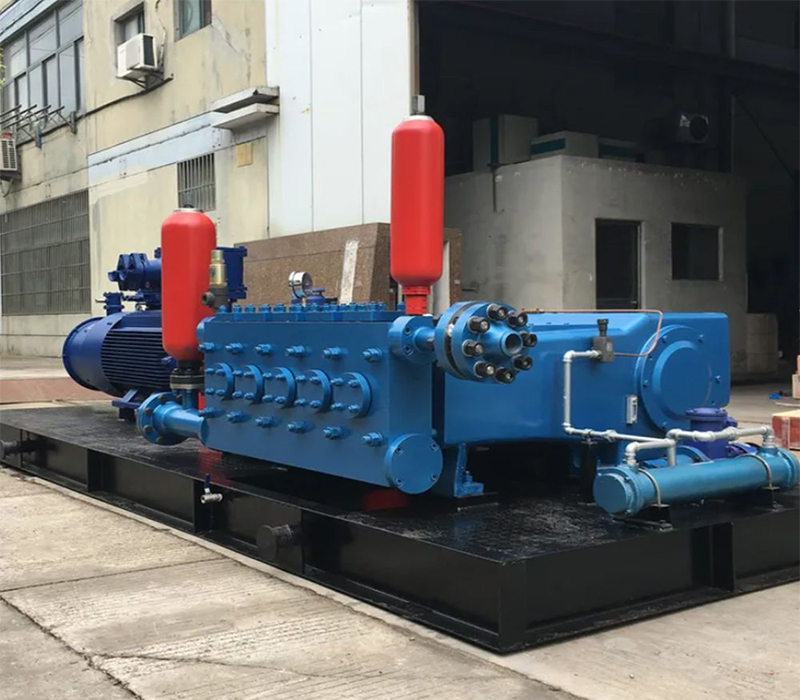
A plunger pump is a reciprocating positive displacement pump that uses a cylindrical plunger to pressurize fluid. It is the most common type of high-pressure pump in the oil and gas industry. Plunger pumps are used for cementing, fracturing, mud circulation, workover and many other applications.

Plunger pump reciprocating positive displacement pump

How Does a Plunger Pump Work?

A plunger pump operates on a simple reciprocating principle:

Suction Stroke

  • The plunger moves backward (away from the discharge chamber)
  • This creates a partial vacuum in the fluid chamber
  • The pressure difference causes the suction valve to open
  • Fluid flows from the suction manifold into the chamber
  • The discharge valve remains closed (back pressure keeps it shut)

Discharge Stroke

  • The plunger moves forward (into the discharge chamber)
  • This compresses the fluid in the chamber
  • Pressure builds up, closing the suction valve
  • When pressure exceeds discharge pressure, the discharge valve opens
  • Fluid is pushed out through the discharge manifold at high pressure

Types of Plunger Pumps

Plunger pumps are classified by the number of plungers and their arrangement:

Duplex Pump (2 Plungers)

Two plungers operate 180 degrees out of phase. Duplex pumps are typically double-acting (each plunger pumps on both forward and backward strokes). Common for older-style mud pumps and some cementing units. Less common today due to pulsation and lower efficiency.

Triplex Pump (3 Plungers)

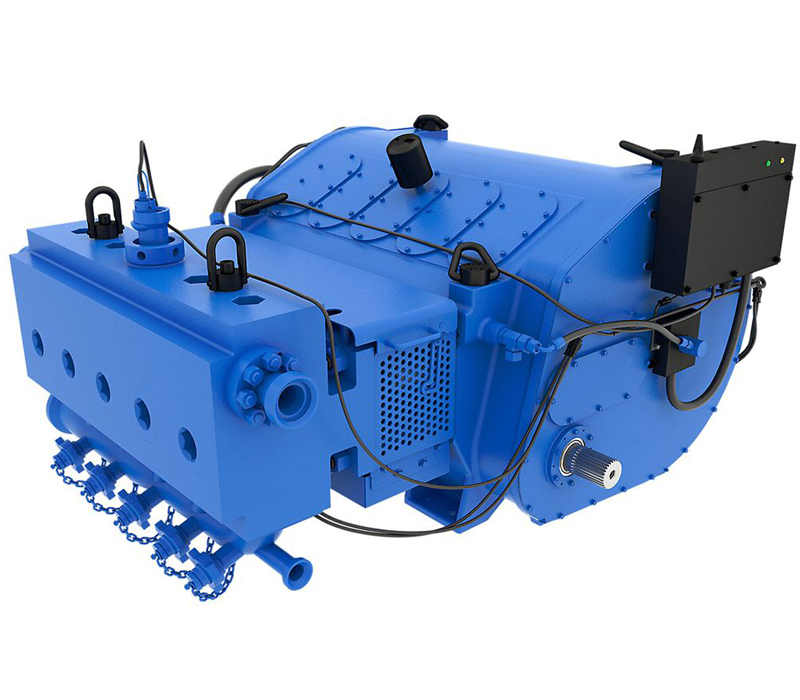
Three plungers operate 120 degrees out of phase. Triplex pumps are the most common type of oilfield plunger pump. They provide relatively smooth flow and are simpler and cheaper than quintuplex pumps. Used for cementing, workover, and general high-pressure service.

Quintuplex Pump (5 Plungers)

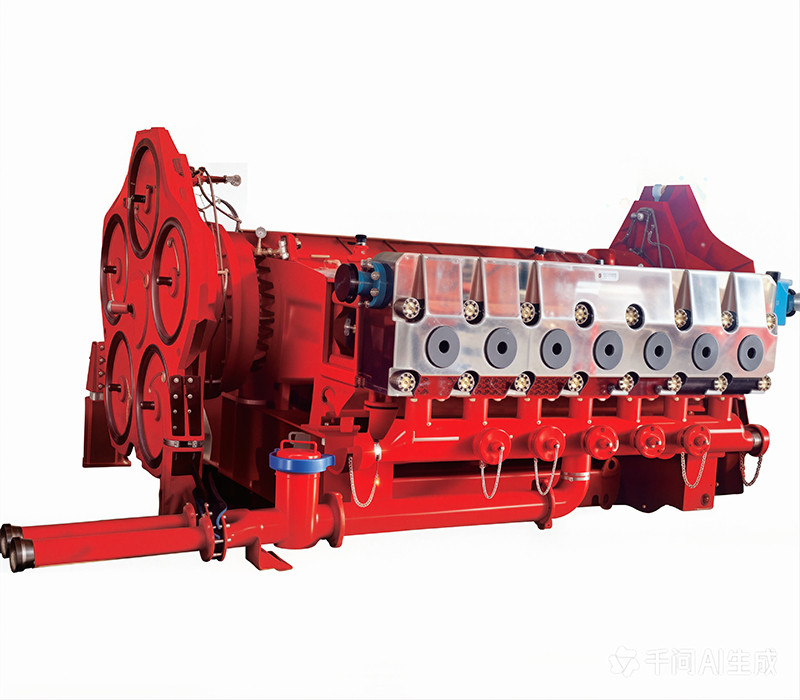
Five plungers operate 72 degrees out of phase. Quintuplex pumps provide very smooth flow with minimal pulsation. They are used for high-flow applications like hydraulic fracturing. More complex and expensive than triplex pumps but handle larger flow rates.

Main Components of a Plunger Pump

Power End

The power end is the drive mechanism. It includes: the crankshaft (with eccentrics), connecting rods, crossheads, and the gearbox. The power end converts rotary motion from the engine/motor into the reciprocating motion of the plungers. It is oil-lubricated and designed for long service life.

Fluid End

The fluid end is the wetted part of the pump. It includes: plungers, liners, suction valves, discharge valves, valve seats, packing, and the fluid manifold. The fluid end handles the pumped fluid and is the most maintenance-intensive part of the pump. Wear parts need periodic replacement.

Plungers

The plungers are the cylindrical rods that move back and forth inside the liners. They are typically chrome-plated for wear resistance, or ceramic for extreme service. Plunger diameter determines the flow rate vs pressure trade-off. Different sizes are interchangeable on most pumps.

Valves

Suction and discharge valves are check valves that control flow direction. They typically consist of a valve body, valve seat, valve spring, and sealing element. Valves are the most frequently replaced wear part. They must seal tightly to maintain pressure and efficiency.

Plunger Pump vs Piston Pump

What is the difference between a plunger pump and a piston pump?

Factor Plunger Pump Piston Pump
Design Stationary liner, moving plunger Moving piston, stationary cylinder
Sealing Packing seals around the plunger (stationary) Piston rings seal on the cylinder wall (moving)
Pressure capability Higher (up to 105 MPa+) Lower (typically up to 35 MPa)
Flow rate Moderate Higher
Maintenance Replace packing, valves, plungers Replace piston rings, valves, liners
Typical use High-pressure service (cementing, fracturing) Medium-pressure, high-flow service (mud, water transfer)

Materials of Construction

Pump Body (Power End)

Cast steel or ductile iron. Designed for strength and durability. The power end housing is a heavy casting that withstands the high forces generated during pumping. It is designed for decades of service with minimal wear.

Fluid End Body

Forged steel (AISI 4140 or similar). Heat-treated for strength and toughness. The fluid end body must withstand high internal pressures. It is typically a forging (not a casting) for maximum strength. NACE-compliant materials are available for sour service.

Plungers

Chrome-plated steel is standard. Ceramic plungers are available for abrasive service. The plunger surface must be hard and smooth to minimize packing wear. Chrome plating provides a hard, smooth surface that lasts well in normal service.

Valves & Seats

Hardened steel, often with Stellite or tungsten carbide coating on sealing surfaces. Valves and seats must withstand repeated impact and abrasive wear. The sealing surface is the most critical part —it must seal perfectly every cycle.

Liners

Hardened steel, chrome-plated for wear resistance. Liners are replaceable cylinders that the plungers move inside. The liner inner surface must be straight and smooth to minimize plunger and packing wear.

Packing

Various materials depending on service: rubber, PTFE, graphite. Packing seals around the plungers. It is a consumable item that needs periodic replacement. The packing material must be compatible with the pumped fluid and operating temperature.

Performance Parameters

Flow Rate (Q)

The volume of fluid pumped per unit of time. Determined by: plunger area x stroke length x pump speed. Larger plungers, longer strokes, and faster speeds all increase flow rate. Flow rate is typically measured in L/min or bbl/min.

Pressure (P)

The discharge pressure of the pump. Determined by the system resistance (the pressure required to push fluid through the piping and into the well). The pump generates whatever pressure is needed to achieve the flow rate, up to its maximum rating.

Hydraulic Horsepower (HHP)

The power delivered to the fluid. Formula: HHP = (Q x P) / 1714 (US units: gpm x psi / 1714). The prime mover must have enough horsepower to drive the pump at the desired flow and pressure. HHP is the key parameter for sizing the engine or motor.

Efficiency

The ratio of hydraulic power output to mechanical power input. Volumetric efficiency accounts for internal leakage. Mechanical efficiency accounts for friction losses. Typical overall efficiency for a plunger pump is 85-92%.

Frequently Asked Questions About Plunger Pumps

What is the difference between a plunger pump and a piston pump?

In a plunger pump, the plunger moves inside a stationary liner, and the packing seals are stationary (they seal around the moving plunger). In a piston pump, the piston moves inside a cylinder, and the piston rings move with the piston (they seal against the cylinder wall). Plunger pumps can achieve higher pressures because the stationary seals can be more robust. Piston pumps typically have higher flow rates at lower pressures.

How do I choose the right plunger size?

Start with your required flow rate and pressure. Calculate the required horsepower. Then choose a plunger size that gives you the right balance of flow and pressure. Larger plungers give more flow but lower pressure. Smaller plungers give higher pressure but lower flow. You can always change plunger size later —most pumps allow swapping plungers easily.

What is the typical lifespan of a plunger pump?

With proper maintenance, the power end (crankshaft, gears, bearings) typically lasts 15-20 years or more. The fluid end components (valves, plungers, packing, liners) are wear parts that need periodic replacement. Valve life is typically 50-500 hours depending on the fluid. Plunger life is typically 500-2,000 hours. Packing life is typically 200-1,000 hours. Regular maintenance is key to long pump life.

Can I run a plunger pump dry?

No. Running a plunger pump without fluid will damage the valves, plungers and packing very quickly. The fluid provides lubrication and cooling for the seals and valves. Always ensure the suction line is primed and fluid is flowing before starting the pump. If the pump runs dry, inspect all wetted parts before putting it back into service.

What fluids can a plunger pump handle?

Plunger pumps can handle a wide range of fluids: water, mud, cement slurry, acids, chemicals, oil. The key is choosing the right wetted materials for the fluid: standard steel for water, hardened steel for abrasive fluids, stainless steel for corrosive fluids, special elastomers for chemical compatibility. Always check fluid compatibility before using a pump with a new fluid type.

Need a Plunger Pump?

Tell us your required flow rate, pressure rating and typical application. Our engineering team will recommend the optimal plunger pump configuration and provide a detailed quotation within 48 hours.