
Pulling Force
Maximum upward force the unit can apply to pull pipe out of the well. For deep wells with heavy pipe strings, pulling force ratings range from 60,000 lbf to 300,000 lbf (27 to 136 tonnes).
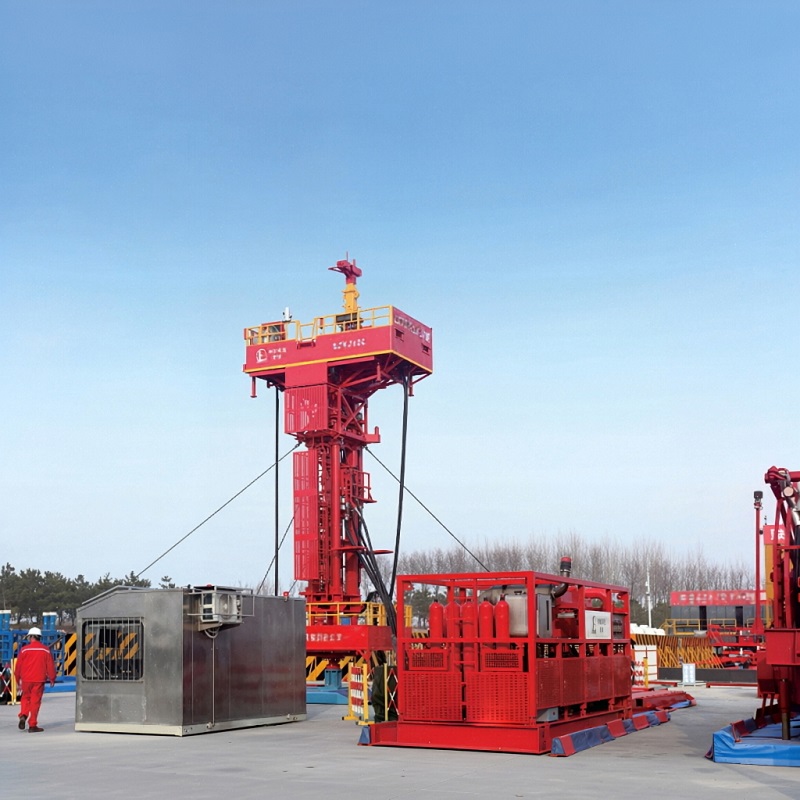
Conventional workover requires killing the well —pumping heavy mud to bring it under control. But killing a gas well can damage the formation, reduce productivity, and cost thousands in lost production. Snubbing (hydraulic workover) lets you work on the well while it's still under pressure: you run and pull pipe with the well live, using hydraulic rams and pressure-control equipment. For deep gas wells, high-pressure oil wells, and underbalanced drilling operations, snubbing is the only way to intervene without killing the well. We design and manufacture snubbing units for deep well intervention —built to handle high well pressure and heavy pipe strings.
| Factor | Conventional Workover | Snubbing (Hydraulic Workover) |
|---|---|---|
| Well Status | Killed (pressure removed) | Live (well pressure maintained) |
| Formation Damage | High risk (mud invasion) | Minimal (no heavy mud pumped) |
| Production Loss | Days to weeks of lost production | Minimal (well stays on production) |
| Equipment Complexity | Standard workover rig | Snubbing unit + BOP stack + control system |
| Best For | Low-pressure wells, routine workover | High-pressure gas wells, deep wells, underbalanced ops |
Maximum upward force the unit can apply to pull pipe out of the well. For deep wells with heavy pipe strings, pulling force ratings range from 60,000 lbf to 300,000 lbf (27 to 136 tonnes).
Maximum downward force to push pipe into a live well (overcoming well pressure). Critical for light pipe strings that would be pushed out by well pressure. Snubbing force ratings match pulling force ratings.
Maximum well pressure the unit can handle. Deep gas wells can have 5,000-10,000 psi wellhead pressure. Snubbing units are rated to match the well pressure they'll encounter.
Length of the hydraulic ram stroke. Longer strokes mean fewer cycles to run pipe in or out. Typical snubbing units have 10-20 foot strokes, depending on pipe joint length.
Snubbing makes sense when: (1) the well is high-pressure gas and killing it would damage the formation, (2) you need to minimize production downtime, (3) you're doing underbalanced drilling or workover, or (4) the well has low bottomhole pressure that can't support a kill weight mud. If the well is low-pressure and you don't mind killing it, conventional workover is simpler and cheaper. Tell us your well conditions, and we'll recommend the right approach.
Both work on live wells, but they're different tools. Coiled tubing uses a continuous reel of small-diameter tubing (1-3 inches) —good for cleanouts, acid stimulation, and logging. Snubbing uses conventional jointed pipe (2-4.5 inches) —good for pulling and running tubing, changing downhole equipment, and heavier intervention. Snubbing can handle larger pipe and heavier loads; coiled tubing is more flexible and can reach deviated wells easier. Tell us what you need to do, and we'll recommend the right method.
Snubbing units can work at any depth where conventional jointed pipe can reach —from 1,000m to 6,000m+. The limiting factor is pipe weight and pulling force, not the snubbing unit itself. For deeper wells, you need higher pulling capacity to handle the heavier pipe string. Tell us your well depth and pipe size, and we'll specify the right snubbing unit capacity.
Tell us your well pressure, pipe size, and intervention scope. We'll recommend the right snubbing unit capacity and configuration for your deep well operation —keeping the well live, protecting the formation, and minimizing production loss.