
Coiled Tubing BOP Stack
Specialized blowout preventer stack designed for coiled tubing. Contains annular preventers, pipe rams, and shear rams —all rated to the well pressure. Seals around the coiled tubing as it moves in and out.
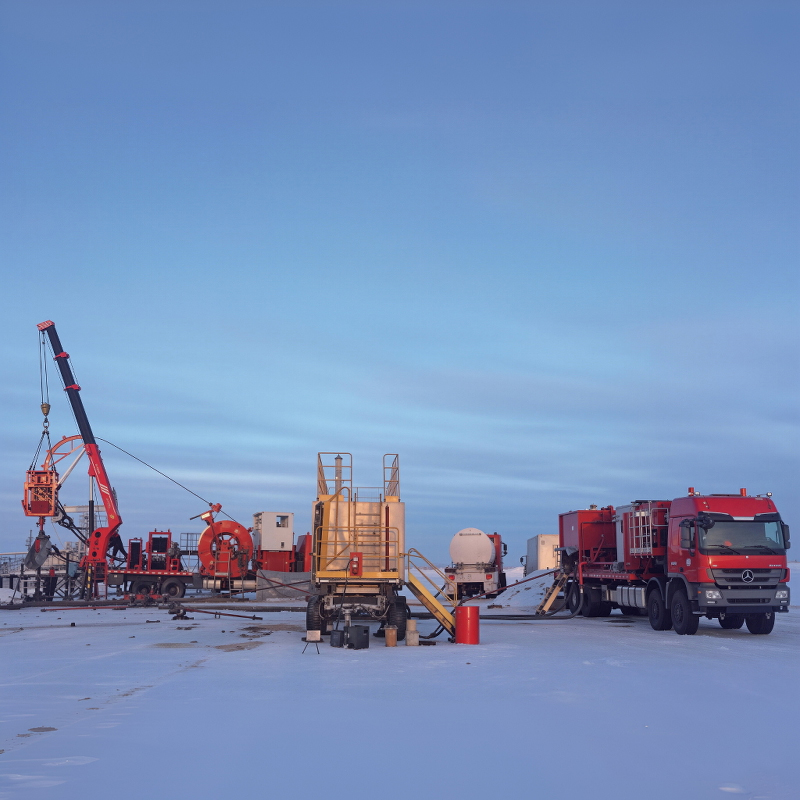
Conventional well intervention starts with killing the well: pump heavy mud to overbalance the reservoir, stop production, then work. But killing a well damages the reservoir: mud filtrate invades the formation, scale and clay swell, and productivity can drop permanently. Gas wells are especially sensitive —killing a gas well can reduce deliverability for months. Live well intervention (also called snubbing or underbalanced intervention) means working on the well while it's still pressurized and producing. You don't kill the well; you control pressure with blowout preventers and an injector head. Coiled tubing is the most common method for live well intervention: the continuous pipe seals against well pressure as it's run in and out. We design and manufacture coiled tubing units configured for live well intervention, with the BOP stacks and pressure control systems required for safe pressurized operations.
| Factor | Live Well Intervention | Conventional (Killed Well) |
|---|---|---|
| Reservoir Damage | Minimal (no kill mud invasion) | Significant (mud filtrate, clay swelling) |
| Production Loss | Minimal (well stays pressurized) | Days to weeks of lost production |
| Water Usage | Low (no large mud system) | High (large volume of kill mud) |
| Equipment Complexity | Higher (BOPs, pressure control) | Lower (standard workover equipment) |
| Best For | Gas wells, sensitive reservoirs, critical wells | Oil wells, low-pressure wells, simple workover |
Specialized blowout preventer stack designed for coiled tubing. Contains annular preventers, pipe rams, and shear rams —all rated to the well pressure. Seals around the coiled tubing as it moves in and out.
The injector head grips the coiled tubing and forces it into the well. The stripper prevents well pressure from escaping around the moving tubing. Critical for live well operations —any leak means a safety incident.
Enclosed control cabin with pressure monitoring, emergency shutdown, and hydraulic controls. The operator controls injector speed, BOP functions, and well pressure from a safe location.
High-pressure manifold for well control: kill line for pumping heavy fluid if needed, choke line for controlled pressure management. Standard well control equipment, but sized for CT operations.
Both work on pressurized wells without killing them. Coiled tubing uses continuous pipe on a reel —run in and out without making connections. Snubbing units use jointed pipe, pushed into the well by hydraulic jacks. Coiled tubing is faster and simpler for most intervention jobs. Snubbing units handle heavier pipe and higher pressures, and can do work that coiled tubing can't (e.g., running downhole tools that are too large for CT). For most live well intervention jobs, coiled tubing is the preferred method. Tell us your job requirements, and we'll recommend the right approach.
It depends on the BOP stack and wellhead rating. Our standard live well CT packages are rated for 35 MPa (5,000 psi) working pressure. For higher pressure wells (70 MPa / 10,000 psi), we offer upgraded BOP stacks and well control equipment. Tell us your well pressure and temperature, and we'll specify the right pressure control system for your live well CT operation.
It's a trade-off. Killing the well is simpler and more familiar to most crews —but it damages the reservoir and loses production. Live well intervention is more technically complex, with higher pressure control requirements —but it protects the reservoir and preserves production. When done with properly trained crews and certified equipment, live well intervention is safe. It's standard practice in gas fields and sensitive reservoirs worldwide. Safety comes from equipment quality, crew training, and proper procedures —not from killing or not killing the well.
Tell us your well pressure, well type (gas/oil), and intervention requirements. We'll design a coiled tubing unit configured for live well operations —with the BOP stacks, injector head, and control systems needed to work safely on pressurized wells.