Wellhead Assembly | Christmas Tree | API 6A

Surface Wellhead: The Interface Between Well and Surface

The surface wellhead is the assembly of equipment at the top of the well that provides the structural and pressure-containing interface between the casing/tubing strings and the surface production, injection or workover equipment. It's the critical connection point that keeps well pressure controlled while allowing access for operations.

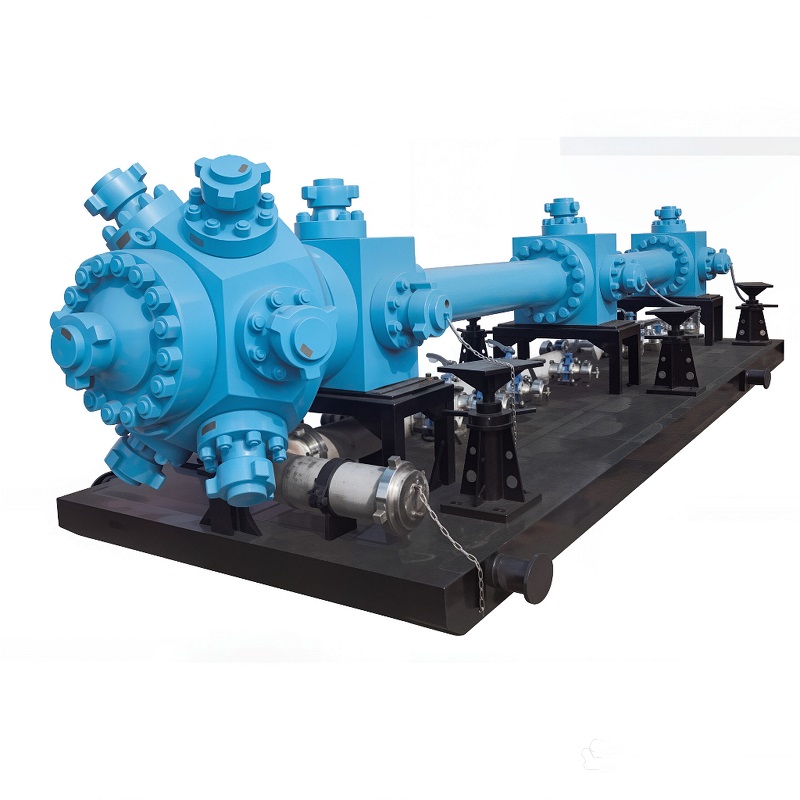
Surface wellhead christmas tree assembly

Key Components of a Surface Wellhead

A complete surface wellhead assembly typically includes:

  • Casing head (casing spool): The bottom component that connects to the surface casing and provides a hanger and sealing point for intermediate casing.
  • Tubing head (tubing spool): Sits above the casing head. Provides a hanger and seal for the production tubing string.
  • Christmas tree (production tree): The assembly of valves, chokes and fittings on top of the tubing head. Controls flow from the well and provides access for well intervention.
  • Swab valve (main valve): The topmost valve on the tree. Used for well control and swabbing operations.
  • Production wing valve: Controls flow from the well to the production line.
  • Kill wing valve: Connection point for pumping kill fluid into the well during well control events.
  • Choke: Adjustable or fixed choke that controls well flow rate and pressure.

Additional components may include: pressure gauges, sensors, flanges, adapters and retrofit connections for various well operations.

What Does a Surface Wellhead Do?

Structural Support

The wellhead provides structural support for the casing and tubing strings. It transfers the weight of the downhole tubulars to the surface foundation. Without a wellhead, the casing and tubing would have no structural connection at the surface.

Pressure Containment

The wellhead contains well pressure and prevents uncontrolled flow. It's a critical barrier between the wellbore and the environment. All connections are pressure-tested and designed to contain well pressure safely.

Flow Control

The christmas tree on top of the wellhead controls fluid flow from the well. Operators can start, stop, and regulate production through the tree's valves and chokes. It's the control point for well production.

Intervention Access

The wellhead provides access points for well intervention: wireline, coiled tubing, snubbing, logging, etc. Operators can run tools downhole through the wellhead stack. It's the gateway between surface equipment and the wellbore.

Types of Surface Wellhead

Production Wellhead

Used on producing oil and gas wells. Designed for production service with appropriate pressure rating and material selection. Includes full christmas tree for flow control and monitoring.

Injection Wellhead

Used on injection wells (water injection, gas injection, disposal). Similar to production wellhead but oriented for injection service. May have different valve configuration and rating.

Workover Wellhead

Temporary wellhead used during workover operations. Designed for rapid installation and removal. May be lighter duty than permanent production wellheads.

Typical Specifications

Parameter Typical Range
Pressure rating 2,000 - 15,000 psi (140 - 105 MPa)
Size range 1 - 7-1/16 inch (bore size)
Standard API 6A (wellhead and christmas tree equipment)
Material class AA, BB, CC, DD (depending on H2S/CO2 service)
Temperature class K, L, P, R, S, T (from -60F to +250F)
End connections Flanged, threaded, welded

Frequently Asked Questions

What's the difference between a wellhead and a christmas tree?

The terms are often used interchangeably, but technically they're different parts. The "wellhead" refers to the casing head and tubing head assembly —the structural base that supports the casing and tubing. The "christmas tree" (or "tree") is the assembly of valves, chokes and fittings on top of the wellhead that controls flow. Together, the wellhead + christmas tree form the complete wellhead assembly. People often say "wellhead" when they mean the whole thing, but strictly speaking, the tree is on top of the wellhead.

How do I choose the right wellhead pressure rating?

The wellhead pressure rating must exceed the maximum expected surface pressure. This includes: formation pressure, well testing pressure, kick/bottom hole pressure converted to surface, and any stimulation or workover pressures. Always add a safety margin (typically 20-30%). If you expect 5,000 psi max surface pressure, choose a 7,500 psi or 10,000 psi rated wellhead. Our engineering team can help you calculate the right rating based on your well design and operating conditions.

What is NACE MR0175 and why does it matter?

NACE MR0175 (now ISO 15156) is a standard for materials used in sour oilfield service (H2S-containing environments). If your well produces H2S (sour gas), the wellhead materials must be resistant to sulfide stress cracking (SSC) and hydrogen-induced cracking (HIC). This requires specific steel chemistries, heat treatments and hardness limits. Sour service equipment is more expensive, but it's essential for safety and equipment longevity in H2S service. We supply both standard and NACE-compliant wellhead equipment.

Need a Surface Wellhead?

Tell us your well conditions, required pressure rating and end connections. Our engineering team will recommend the right wellhead assembly and provide a quote within 48 hours.