
Adjustable Choke Valve
The primary control element. Can be manual or hydraulic actuated. The operator adjusts the opening to control flow and pressure. Hydraulic chokes allow remote operation from the driller's cabin or remote control station.
A choke manifold is a critical well control component that controls and regulates well pressure during well kill operations. It allows the driller to safely control flow from the well while maintaining bottom hole pressure balance. It's the interface between the well and the mud/gas separator during well control events.
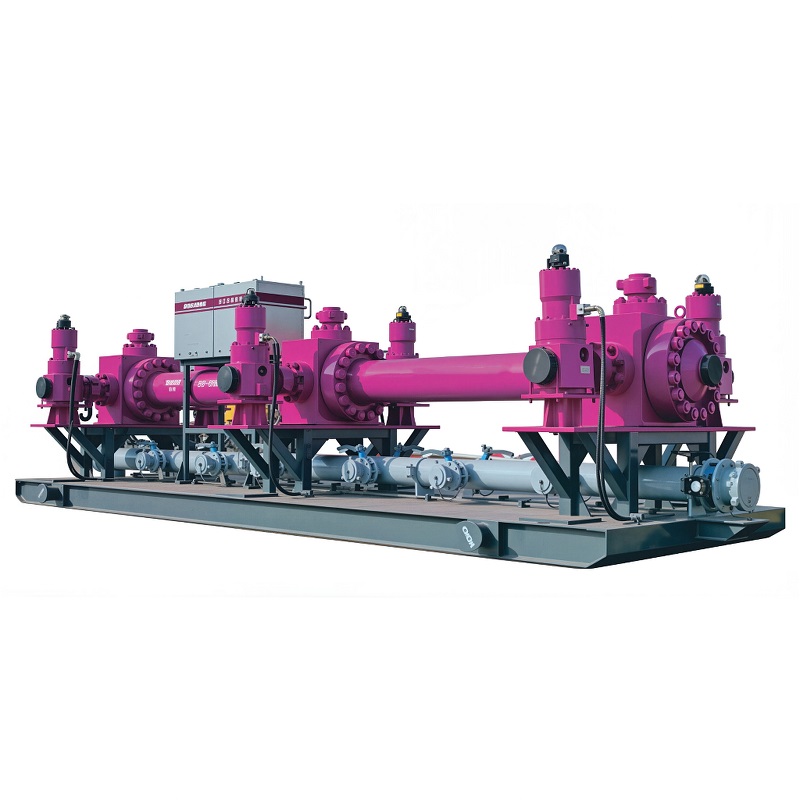
The choke manifold provides controlled flow paths during well control:
The choke manifold is positioned between the BOP stack and the mud/gas separator. When well control is activated, flow from the well is directed through the choke manifold, where pressure is controlled before going to the separator and flare.
The primary control element. Can be manual or hydraulic actuated. The operator adjusts the opening to control flow and pressure. Hydraulic chokes allow remote operation from the driller's cabin or remote control station.
A fixed orifice choke used as a backup. Provides a known flow rate at a given pressure. Used when the adjustable choke needs maintenance or as a redundant path during critical operations.
API 6A gate valves on each line for isolation. Allow the operator to direct flow through specific chokes or bypass lines. Also allow maintenance on individual components without shutting down the entire system.
The complete choke manifold is mounted on a skid frame for mobility. The skid includes lifting eyes for crane handling and fork pockets for transport. Compact design fits on most drilling rigs.
| Parameter | Typical Range |
|---|---|
| Working pressure | 35 - 105 MPa (5,000 - 15,000 psi) |
| Line size | 2 - 4 inch (50 - 100 mm) |
| Choke type | Adjustable (manual or hydraulic) + positive |
| Standard | API 16C (choke and kill systems) |
| Valve type | API 6A gate valves |
| Mounting | Skid mounted, portable |
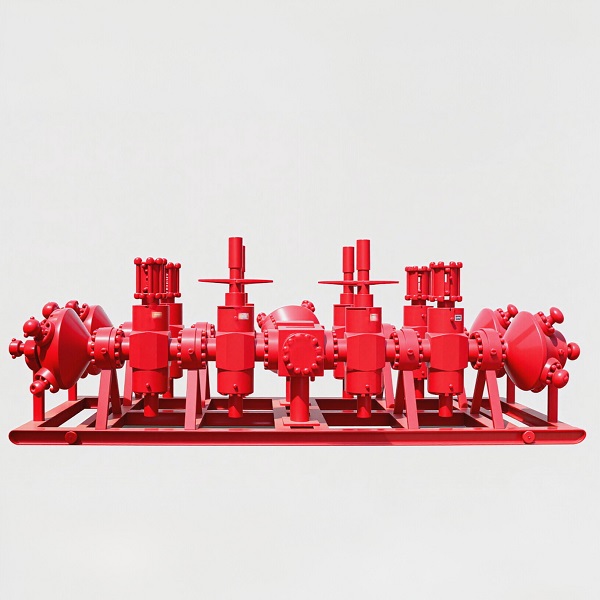
35-70 MPa choke manifold for general drilling operations. Manual choke control.
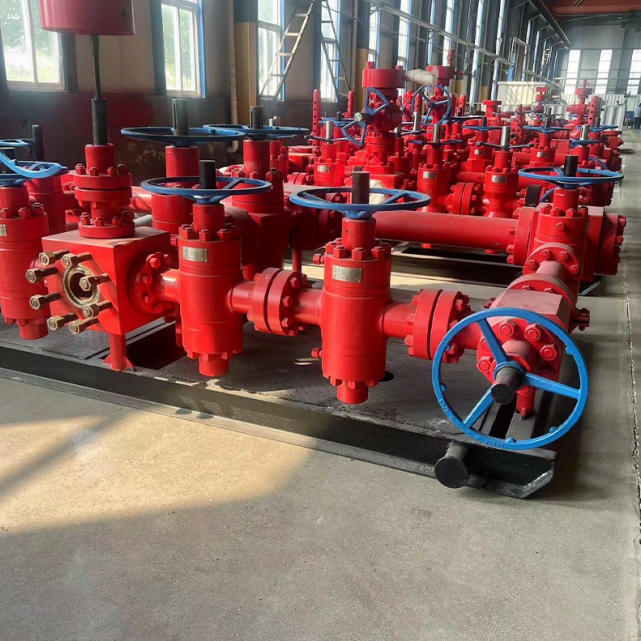
70-105 MPa choke manifold for deep drilling and HPHT applications. Hydraulic choke control.
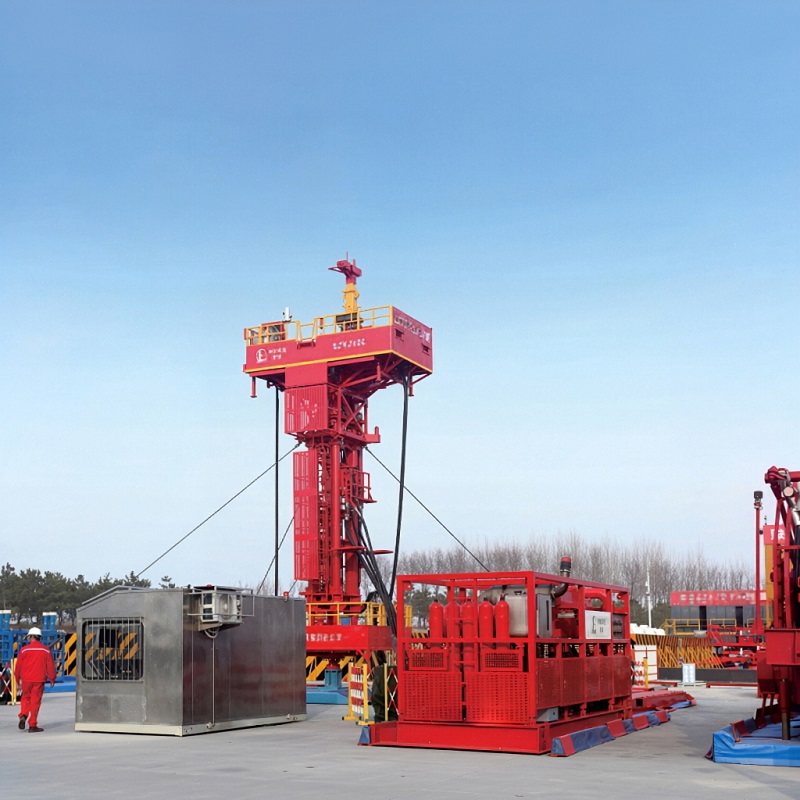
Fully custom choke manifold designed to your specific well control requirements.
The choke manifold controls flow OUT of the well (during well control). The kill manifold controls flow INTO the well (for pumping kill fluid). They're both part of the well control system, but they serve opposite functions. The choke manifold regulates well pressure by controlling outflow. The kill manifold directs kill fluid into the well to increase bottom hole pressure. On many rigs, they share a common skid but have separate flow paths and valves.
The choke size depends on the maximum expected flow rate and the pressure drop you need to control. Larger chokes handle more flow but provide less fine control. Smaller chokes provide better pressure control but have lower flow capacity. The choke should be sized to handle the maximum expected kick flow without exceeding the separator capacity. Our engineering team can help you select the right choke size based on your well design and operating conditions.
The choke manifold should be inspected regularly —before every well control operation and after. Check choke operation, inspect valves for leaks, verify pressure gauge accuracy, and inspect the skid frame for damage. After a well control event, the manifold should be thoroughly inspected for erosion or damage caused by high-velocity flow. Keep a maintenance log and replace worn components promptly. The choke manifold is safety-critical equipment —don't skip inspections.
Tell us your required working pressure and flow rate. Our engineering team will recommend the right choke manifold and provide a quote within 48 hours.