
Hoisting Block: The Moving Pulley of the Drilling Hoist
The hoisting block (travelling block) is the movable pulley assembly that travels up and down the derrick. It works with the crown block (fixed at the top) and the wire rope to provide mechanical advantage for lifting the drill string. It is the heart of the drawworks hoisting system.
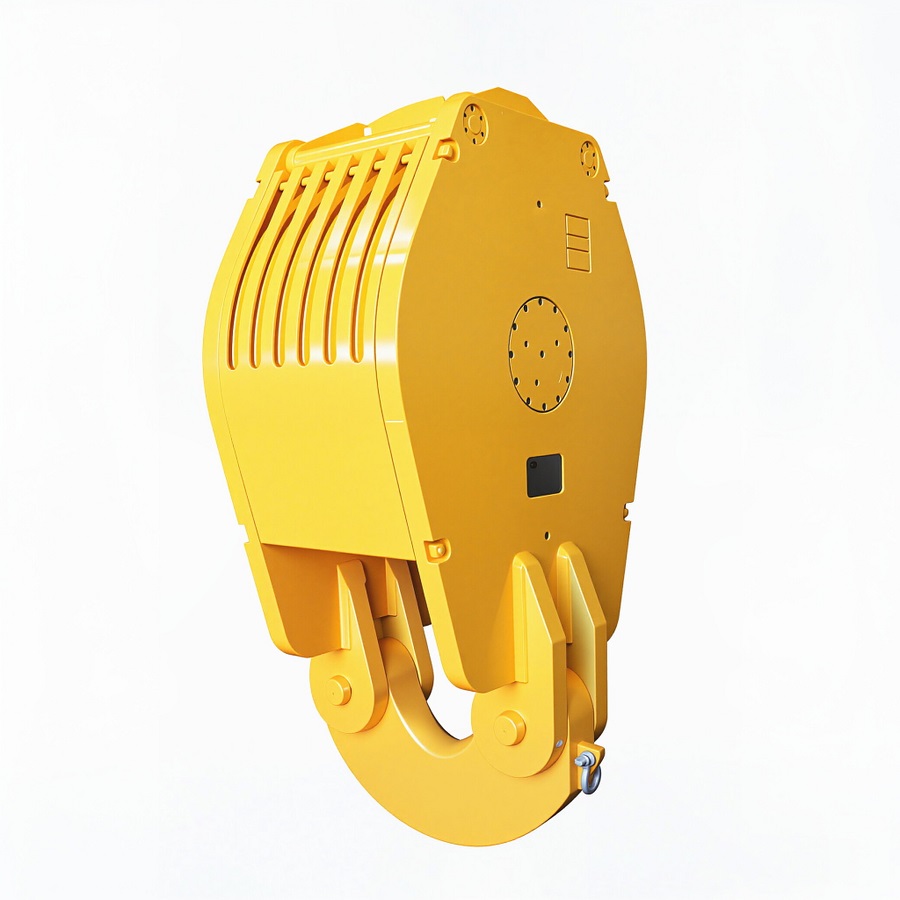
How the Hoisting Block Works
The hoisting block is part of the block and tackle system:
- Sheaves (pulleys): Multiple grooved wheels inside the block body that the wire rope runs over
- Wire rope: Runs from the drawworks, up to the crown block, down through the travelling block, back up to the crown, and anchors at the dead line anchor
- Mechanical advantage: Each sheave pair multiplies the lifting force —6 lines means 6x mechanical advantage
- Hook attachment: The hook hangs below the block and suspends the swivel and drill string
- Motion: As the drawworks pulls the wire rope, the travelling block moves up; as it lets out rope, the block moves down
- Bearing: Each sheave rotates on sealed bearings to minimize friction and wear
The more lines (sheaves) in the system, the greater the mechanical advantage —but the slower the block travels. Deep drilling rigs use more lines (8-12) to lift heavier drill strings.
Typical Specifications
| Parameter | Typical Range |
|---|---|
| Number of sheaves | 3 - 8 (matching crown block sheave count) |
| Rated load capacity | 150 - 750 tons |
| Wire rope diameter | 26 - 38 mm (1 - 1.5 inch) |
| Standard | API 8C (drilling and production hoisting equipment) |
| Sheave material | Forged steel, dynamically balanced |
| Bearing type | Sealed spherical roller bearings |
Frequently Asked Questions
What is the difference between a hoisting block and a crown block?
The crown block is fixed at the top of the derrick. The travelling block (hoisting block) moves up and down. They work as a pair: the wire rope runs back and forth between them to create the block and tackle system. The crown block is stationary; the travelling block is the moving part. They must have the same number of sheaves to work properly.
How many lines do I need for my drilling rig?
The number of lines depends on the maximum hook load. Each line carries roughly equal tension. For a 500-ton hook load, with a 1-inch wire rope rated at about 50 tons per line, you need 10 lines. For a 250-ton hook load, 5-6 lines suffice. The drawworks drum capacity also limits the number of lines —more lines mean more wire rope on the drum. We can calculate the right line count based on your rig's derrick capacity, drawworks rating and expected hook load.
What maintenance does the hoisting block need?
Regular inspection: check sheave grooves for wear or damage, inspect sheave bearings for smooth rotation and unusual noise, inspect the block body for cracks, check the hook bail attachment points, and verify the load rating stamp. Sheave grooves wear over time —if the groove diameter exceeds the wire rope diameter by more than 5%, replace the sheave. Keep spare sheaves and bearings on hand. Follow API inspection intervals and keep a maintenance log.
Need a Hoisting Block?
Tell us your required load capacity and number of sheaves. Our engineering team will recommend the right block and provide a quote within 48 hours.