
Corrosion Inhibitor
Injected into produced fluid pipelines to prevent internal corrosion. Typical dosage: 10-50 ppm. Too little and you get pipe corrosion; too much and you're wasting expensive chemical. Precision dosing matters.
Most oilfield pumps move thousands of liters of fluid at high pressure. A chemical injection pump does the opposite: it moves tiny, precisely measured volumes of chemical —maybe a few liters per hour —but at high pressure, into a flowing pipeline or wellbore. Get the dosing wrong and you're either wasting expensive chemicals (too much) or not getting the corrosion/scale inhibition you need (too little). Chemical injection pumps are metering pumps, not transfer pumps. The key spec isn't how much flow you can achieve —it's how accurately you can control that flow, hour after hour, day after day, in the harsh oilfield environment.
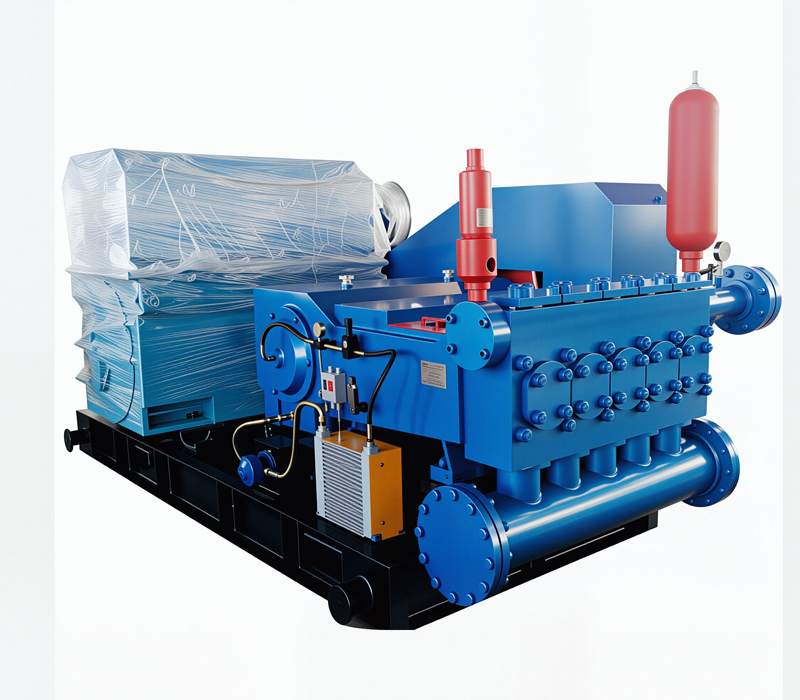
Chemical injection pumps are used for a range of oilfield dosing applications:
Injected into produced fluid pipelines to prevent internal corrosion. Typical dosage: 10-50 ppm. Too little and you get pipe corrosion; too much and you're wasting expensive chemical. Precision dosing matters.
Injected to prevent mineral scale (calcium carbonate, barium sulfate) from forming in tubing and pipelines. Scale buildup reduces flow and can block wells. Correct dosage is critical for effectiveness.
Injected into water injection systems or produced water lines to control bacterial growth (SRB —sulfate reducing bacteria). Bacteria cause corrosion and reservoir souring. Precise dosing needed for biocidal effectiveness.
Injected into crude oil lines to break oil-water emulsions. Helps separate water from oil at the processing facility. Dosage affects dehydration efficiency and downstream processing costs.
A chemical injection pump isn't judged by how much fluid it can move. It's judged by how accurately it can move small amounts:
| Parameter | Typical Range |
|---|---|
| Flow rate | 0.5 - 50 liters/hour (adjustable) |
| Maximum discharge pressure | 1,000 - 5,000 psi (7 - 35 MPa) |
| Metering accuracy | ± 1% to ± 2% of setpoint |
| Turndown ratio | 10:1 (10% to 100% flow range) |
| Pump type | Plunger / piston metering pump (positive displacement) |
| Construction | 304/316 stainless steel, PTFE seals |
| Mounting | Skid mounted with chemical tank, agitator and control panel |
Because centrifugal pumps can't maintain accurate flow against backpressure. If you inject into a pressurized pipeline, the centrifugal pump's flow rate varies with the line pressure —it's not positive displacement. You can't control the dosage precisely. A metering pump (positive displacement plunger or piston pump) delivers a fixed volume per stroke, regardless of discharge pressure. That's what makes it accurate. For chemical dosing, accuracy is everything —centrifugal pumps are for transfer, not for metering.
Depends on dosage rate and how often you want to refill. A typical offshore or remote well site wants 7-30 days of chemical storage before refilling. If you're dosing 10 liters/day, a 250-liter tank gives you 25 days. On offshore platforms, tank size is constrained by deck space. At remote onshore sites, you might use 1,000-liter IBC totes. We can size the tank to match your dosage rate and refill schedule.
Not with a single pump head —one pump head = one chemical. But you can have a multi-head metering skid: 2, 4, or 6 pump heads on the same skid, each injecting a different chemical at its own rate. This is common on production facilities: one skid with separate pumps for corrosion inhibitor, scale inhibitor, biocide and demulsifier. All controlled from one panel. We supply multi-head chemical injection skids configured to your specific chemical program.
Tell us what chemicals you're injecting, desired flow rate range, discharge pressure, and how many pump heads you need. We'll configure a metering skid that matches your chemical program.