Step 1: Well Preparation
The wellbore is cleaned and prepared for completion. This may involve wiper trips, mud conditioning and wellbore integrity testing. The workover rig is used to run and pull the cleaning tools.
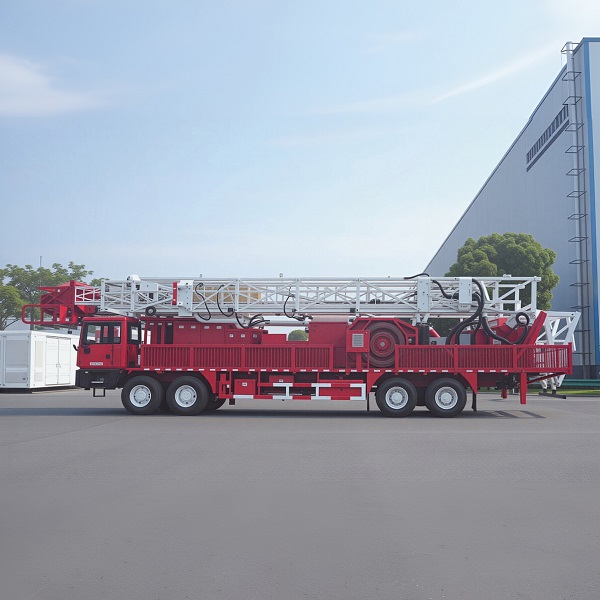
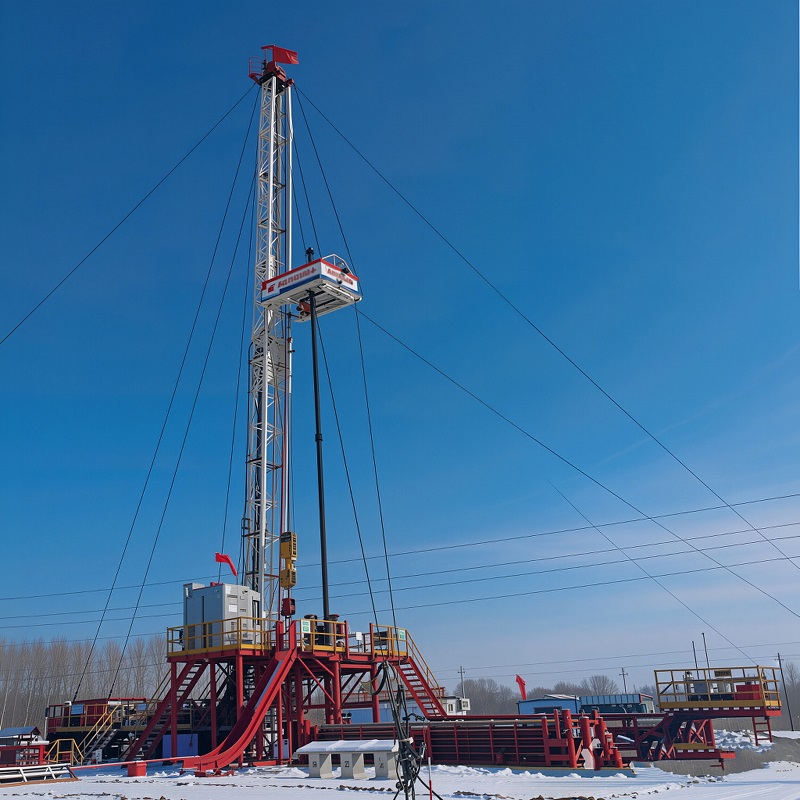
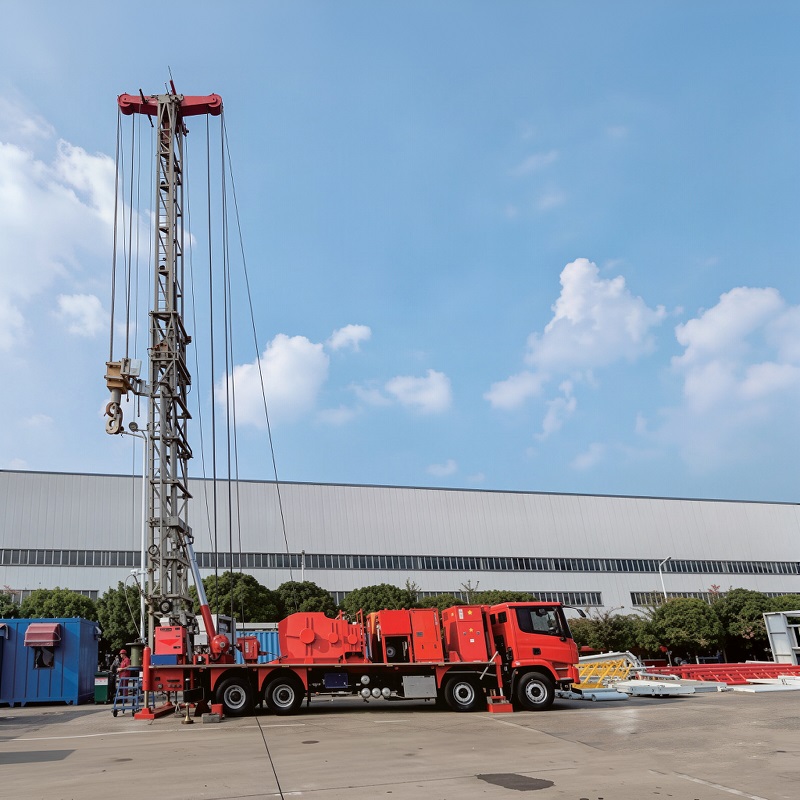
After a well is drilled, it must be completed —the process of running production tubing, setting packers, installing downhole equipment and preparing the well for production. A workover rig provides the hoisting capability needed to run the completion string and install all downhole components.
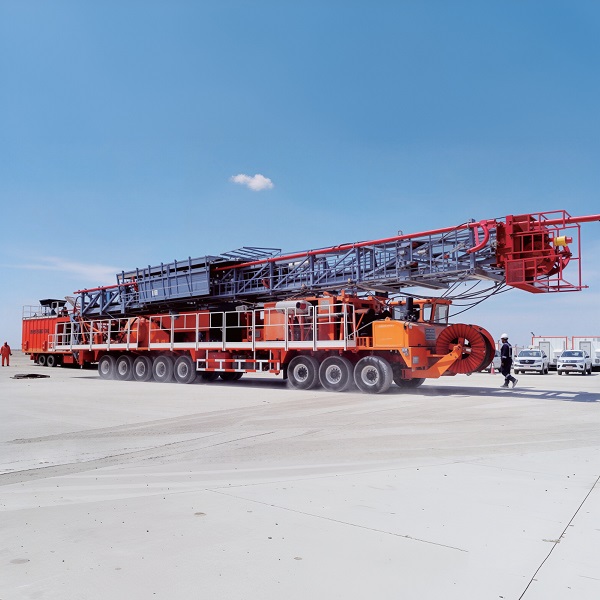
Well completion is the process of making a well ready for production after drilling is complete. It involves running the production string and installing equipment that controls how hydrocarbons flow from the reservoir to surface.
A typical completion operation follows these steps, each requiring the workover rig's hoisting capability:
The wellbore is cleaned and prepared for completion. This may involve wiper trips, mud conditioning and wellbore integrity testing. The workover rig is used to run and pull the cleaning tools.
The workover rig runs the production tubing string into the well. Each joint of tubing is made up, lowered into the well, and the process repeated until the tubing reaches the desired depth.
The packer is run on the tubing string and set at the desired depth. Setting methods vary: hydraulic setting, mechanical setting, or wireline setting. The workover rig provides the pull and weight needed to set the packer.
Additional downhole equipment is installed: downhole safety valve, gas lift mandrels, side pocket mandrels, downhole gauges, etc. Each component is run on the tubing string.
The tubing hanger is landed in the wellhead. The tubing string weight is transferred from the workover rig to the wellhead. The Christmas tree is then installed on top of the wellhead.
The completed well is tested for flow rate, pressure and fluid properties. Once testing is complete, the well is placed on production. The workover rig is then rigged down and moved to the next well.
Completion work has specific rig requirements compared to routine workover:
The rig must handle the total weight of the tubing string plus a safety margin. For a 3,000 m well with 3-1/2" tubing, the tubing string weight is approximately 60-80 tons. The rig should have 150-225 ton lifting capacity for typical completion work.
Precise depth control is critical for setting packers and positioning downhole equipment. The rig should have accurate weight indicators and depth counters. Modern VFD winches provide fine control for sensitive operations.
Running and pulling tubing must be done at controlled speeds. Too fast can cause surge pressures or stuck pipe. The rig should have variable speed control —fast for long pulls, slow for making up connections.
Completion work involves live well operations (if the well is already flowing). The rig should be equipped with well control equipment or have access to a BOP stack on location. Safety systems are critical.
Different well types require different completion designs. The workover rig must be configured for the specific completion type:
The well is cased and cemented, then perforations are shot through the casing and cement to allow hydrocarbons to flow. This is the most common completion type for oil and gas wells.
The production interval is left open (no casing). A liner or screen is run to support the wellbore. Used in consolidated formations where the rock is strong enough to stand without casing.
For unconsolidated formations that produce sand, a sand control completion is installed: gravel pack, screen, or slotted liner. This prevents sand production that can damage surface equipment.
Horizontal wells require specialized completion design: multiple fracturing stages, liner hanger, packer systems. The workover rig runs the liner and completion string through the horizontal section.
Multilateral wells have multiple branches from the main wellbore. The completion must allow production from multiple laterals while maintaining well integrity. Complex completion design.
If reservoir pressure is insufficient to lift hydrocarbons to surface, artificial lift is installed: beam pump, ESP, gas lift, or hydraulic pump. The workover rig runs the artificial lift equipment on the tubing string.
Our workover rigs are ideal for completion operations. Here are our recommended models:
Our VFD electric winches provide precise hoisting control for sensitive completion operations. Fine speed adjustment allows you to set packers carefully and position downhole equipment accurately.
All our rigs include accurate weight indicators and depth counters. Critical for setting packers at the correct depth and monitoring tubing weight during running and pulling operations.
In development drilling campaigns, many wells are completed in sequence. Our truck mounted workover rigs rig up in hours, enabling rapid movement between wells. Maximizes completion crew productivity.
Our rigs include comprehensive safety systems: overload protection, emergency stop, winch brake monitoring, and mast limit switches. Safety is critical when running expensive downhole equipment.
Our engineers understand completion operations. We can recommend the right rig configuration for your specific completion type, well depth and tubing size. We provide on-site support during critical operations.
We provide commissioning, operator training and after-sales support worldwide. Critical spare parts are stocked in regional warehouses for fast delivery to any completion location.
The required rig size depends on the tubing string weight. As a general guide: shallow wells (< 2,000 m) need 100-150 ton rig; medium wells (2,000-4,000 m) need 150-225 ton rig; deep wells (> 4,000 m) need 225-300+ ton rig. Always add a 20-30% safety margin. Contact us with your well details for a specific recommendation.
A typical completion operation takes 3-7 days with a workover rig. This includes: well preparation, running tubing, setting packer, installing downhole equipment, landing tubing hanger, and well testing. Complex completions (horizontal, multilateral, sand control) may take 1-2 weeks.
Yes, but it is overkill and more expensive. Drilling rigs are larger, more powerful and cost much more to operate. A workover rig is specifically designed for well intervention and completion work —it is smaller, cheaper to operate and rigs up faster. Use a drilling rig only if you also need to drill the well.
Yes, if the well is live (already flowing or pressurized). A BOP stack or other well control equipment must be in place. Even for dead wells, well control equipment is recommended as a safety precaution. Our rigs can be configured with well control equipment or work with your existing BOP stack.
Yes. We can supply a complete completion package: workover rig, completion tools (tubing tongs, elevators, slips, packer setting tools), downhole equipment, and consumables (tubing, packers, seals). One supplier, one point of contact, fully integrated package.
Tell us your well depth, tubing size and completion type. Our engineering team will recommend the optimal workover rig configuration and provide a detailed quotation within 48 hours.