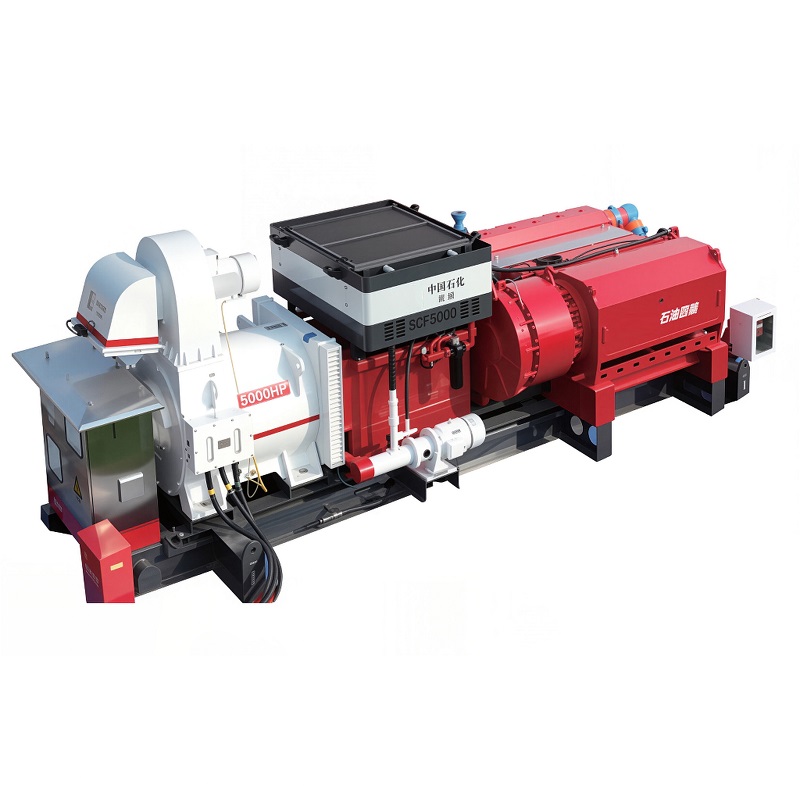
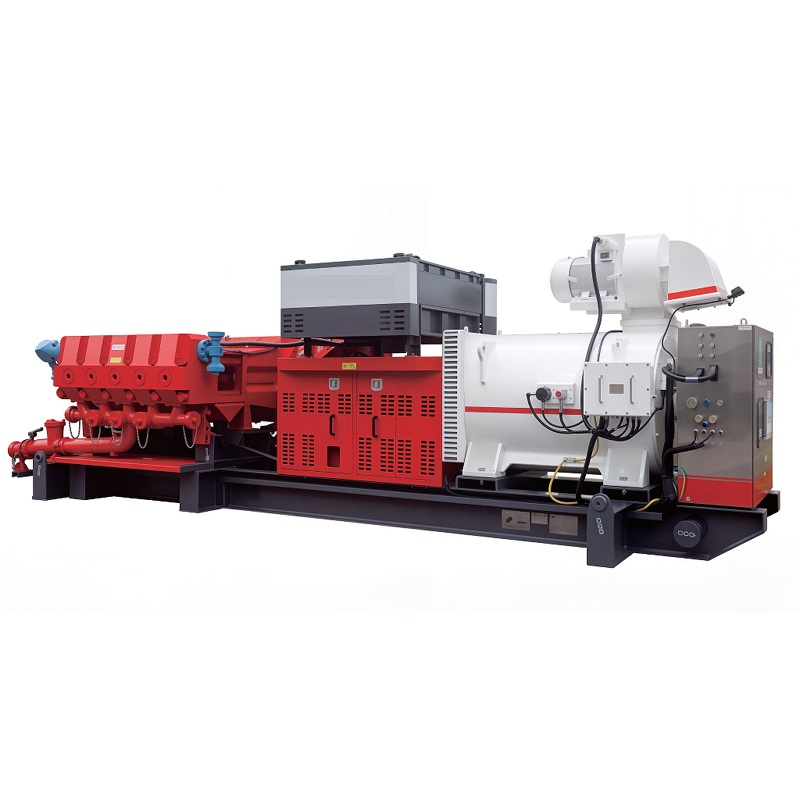
1. Fracturing Pumps (Quintuplex Units)
The heart of the spread. Multiple high-pressure pumps run in parallel to deliver the total required flow rate. Typical spreads use 10-20 pumps, each rated 2000-5000 HHP.
Hydraulic fracturing equipment is a coordinated system of high-pressure pumps, fluid blenders, proppant handling and surface control equipment. Each component plays a critical role in creating, propagating and propping open fractures in the reservoir.
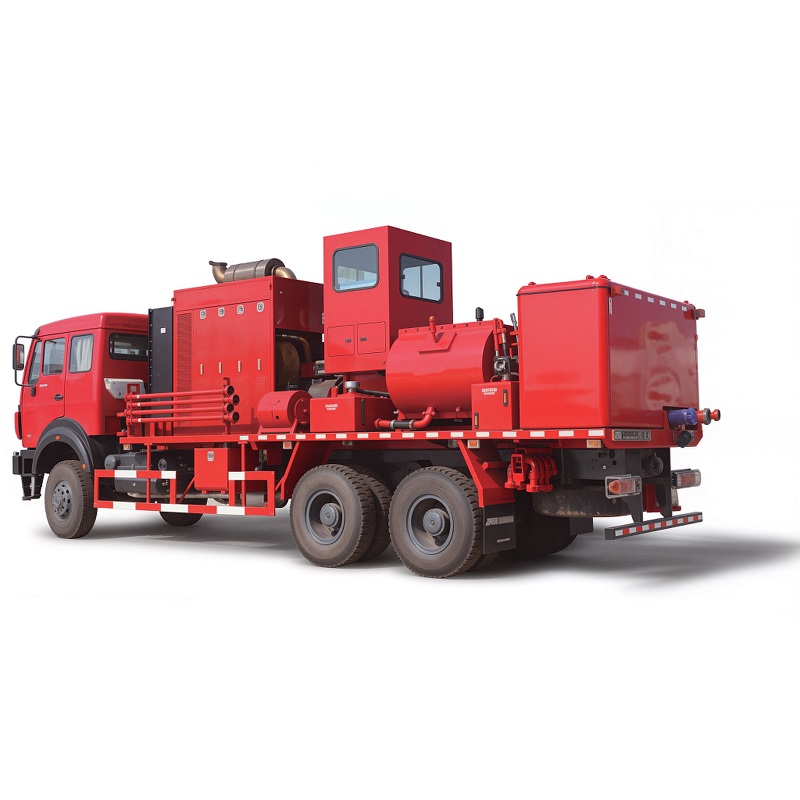
A modern fracturing spread consists of several coordinated vehicle types. Each component performs a specific function in the fracturing process:
The heart of the spread. Multiple high-pressure pumps run in parallel to deliver the total required flow rate. Typical spreads use 10-20 pumps, each rated 2000-5000 HHP.
The blender mixes water, chemicals and proppant (sand) into a consistent slurry. It controls the slurry density and feeds the suction side of all frac pumps simultaneously.
Convey proppant sand from storage silos to the blender. Includes sand conveyors, pneumatic transfer and sand monitoring systems for accurate proppant concentration control.
The manifold combines discharge from all frac pumps into a single high-pressure line to the wellhead. Includes shutoff valves, pressure gauges and flare connections for well control.
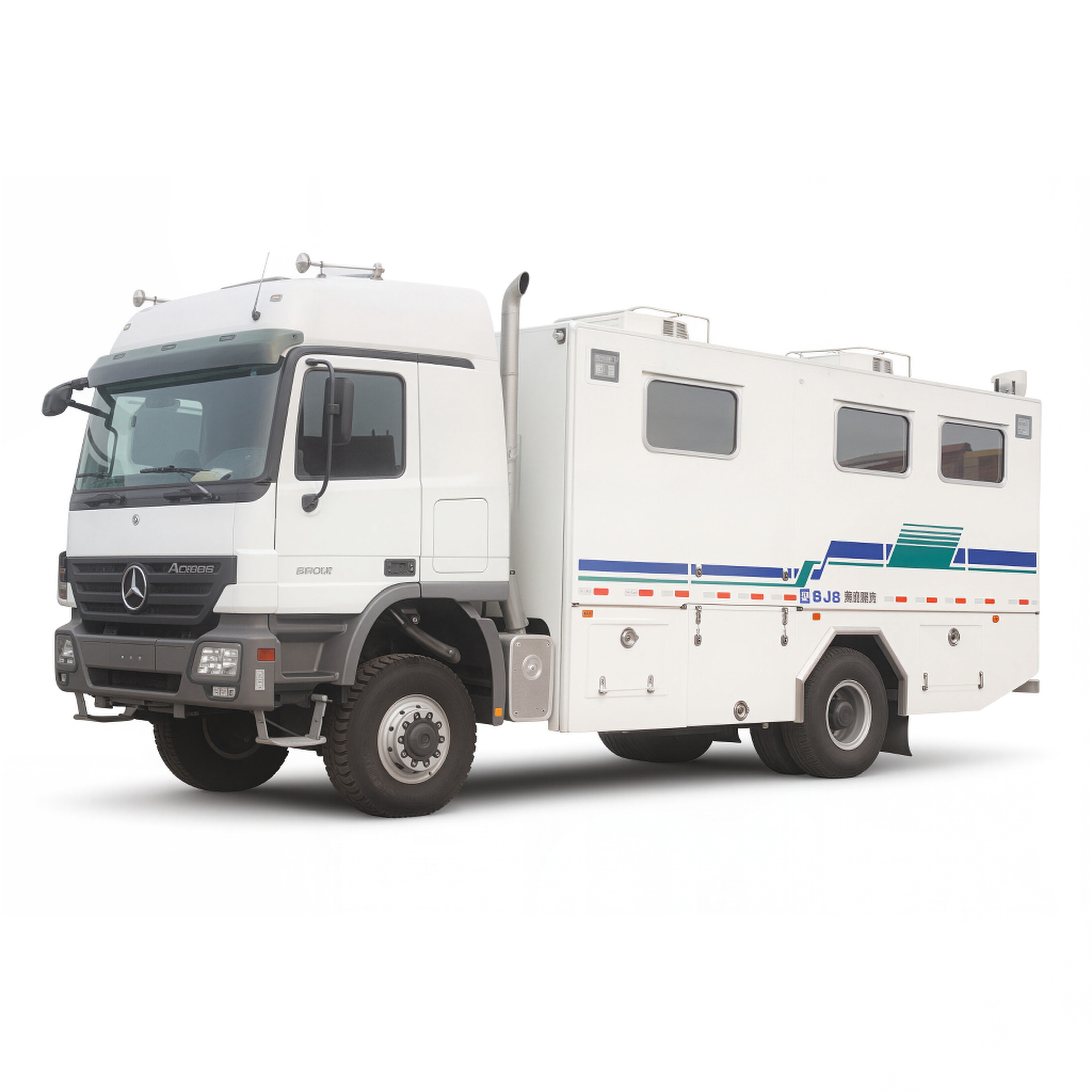
The central command center. Operators monitor and control all equipment from a climate-controlled cabin. Real-time data includes pressure, rate, density and proppant concentration.
Inject friction reducers, gelling agents, biocides and other chemicals into the water stream before blending. Precision metering ensures consistent chemical dosage throughout the job.
Understanding the flow of fluid through the system helps clarify each component's role:
Water is sourced from storage tanks or pipelines. Chemical additives (friction reducer, biocide) are metered in at the desired concentration. The treated water flows to the blender suction.
In the blender, proppant sand is added to the water stream. The blender recirculates and mixes to ensure uniform sand concentration. The slurry density is continuously monitored and controlled.
The blended slurry flows by gravity to the suction of all frac pumps. Each pump boosts the pressure to the required level. Pump discharges combine at the frac manifold.
High-pressure slurry flows through the manifold, treating iron and wellhead into the wellbore. The pressure exceeds the fracture gradient, creating and propagating fractures in the reservoir rock.
Sand-laden slurry fills the fractures. When pumping stops and pressure declines, the proppant remains behind, holding the fractures open. This creates high-permeability pathways for hydrocarbon flow.
After the job, pressure is bled off and fluid returns to the surface. Flowback water is captured, treated and either recycled or disposed of according to local regulations.
We supply the complete range of fracturing equipment, from individual pumps to full integrated spreads. All equipment is built to API standards and supported by our global service network.
The right spread size depends on your well type, reservoir characteristics and treatment design. Here is a quick guide:
We supply the complete spread: pumps, blenders, sand units, manifolds and controls. One vendor, one point of contact, one warranty.
Our fracturing equipment operates in shale gas fields across China, Central Asia and the Middle East. Thousands of stages pumped with our equipment.
All pressure-containing components meet API 6A and API 16C standards. Third-party inspection (SGS/BV/DNV) available on request.
Common fluid end components across our pump line. One spare parts inventory supports your entire fleet.
Our engineers provide commissioning, operator training and troubleshooting. Critical wear parts stocked in regional warehouses.
Diesel or electric drive, truck/trailer/skid mounting, manual or automatic control. We adapt the equipment to your operating conditions.
Frac pumps operate at higher pressure (105-140 MPa vs 15-38 MPa) and higher flow rates (2-3 m³/min vs 1-3 m³/min). They must also handle proppant-laden fluid, which requires specialized wear-resistant fluid ends. Cementing pumps handle clean cement slurry and operate at lower pressures and rates.
A standard 10-pump spread (10 x 2500 HHP pumps + blender + sand units + manifold + control van) typically costs $15-25 million USD depending on configuration. Smaller spreads for vertical wells start at $2-5 million. We provide detailed quotations based on your specific equipment list.
Yes. Electric-driven frac pumps (powered by turbine generators or grid power) produce zero on-site emissions. They are becoming increasingly popular in environmentally sensitive areas and urban proximity projects. The capital cost is higher, but fuel savings and emission compliance often justify the investment.
Standard fluid ends in proppant service typically last 200-400 hours before major overhaul. With tungsten carbide coated plungers and valve seats, this can extend to 800-1200 hours. Valve seats and plungers are routine wear items that may need replacement every 100-200 hours of operation.
Yes. We offer complete refurbishment services for used frac pumps, blenders and other equipment. This includes fluid end rebuild, power transmission overhaul, control system upgrade and cosmetic refurbishment. A refurbished unit typically costs 40-60% of a new equivalent.
Tell us about your well types, target stage rates and operating region. Our engineering team will design a complete fracturing equipment package tailored to your business and provide a detailed quotation.