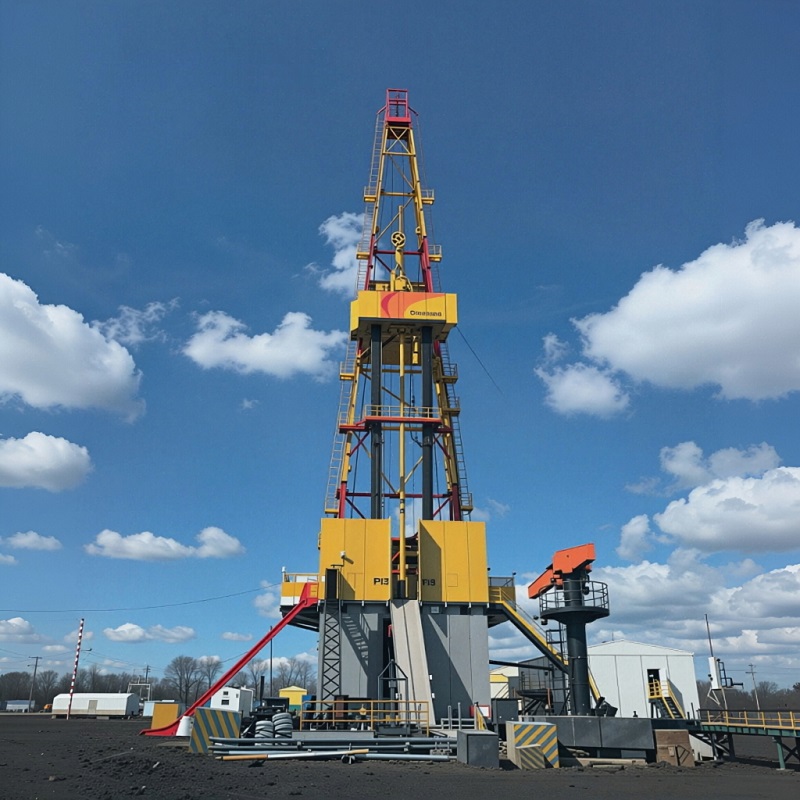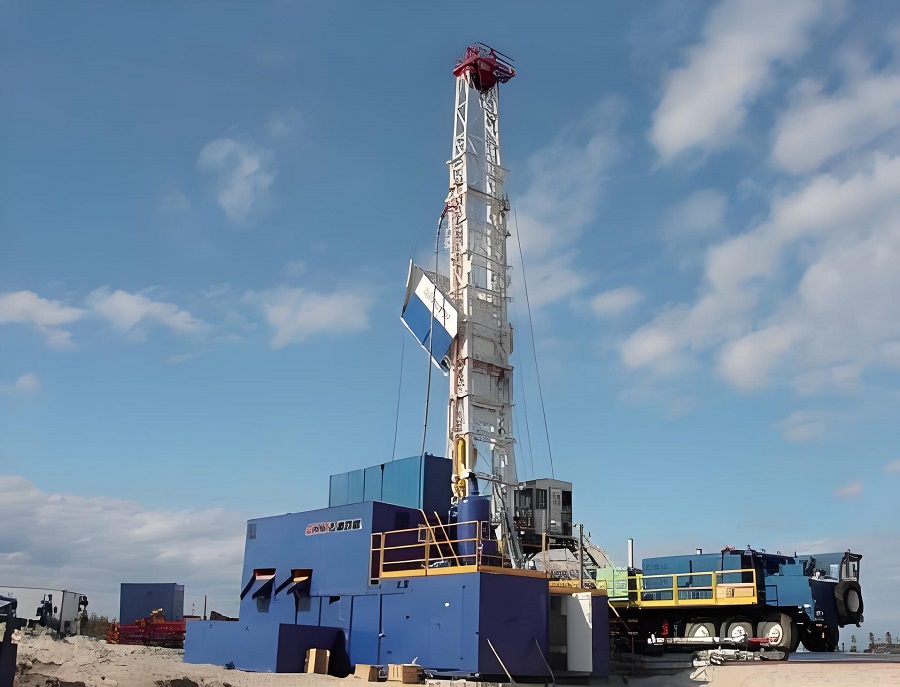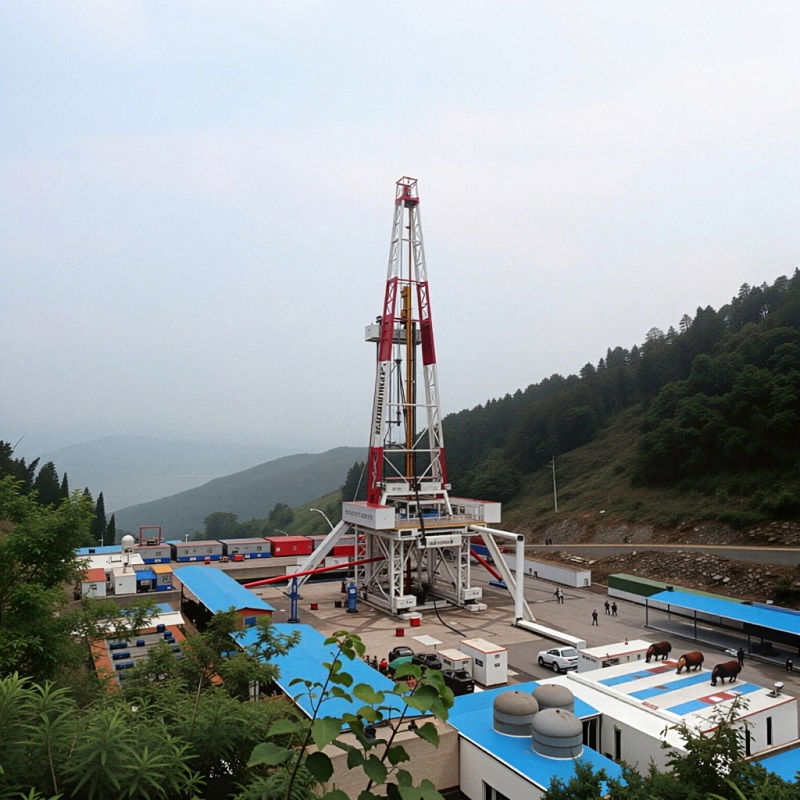
Stepping-Type Drilling Rig for Cluster Wells
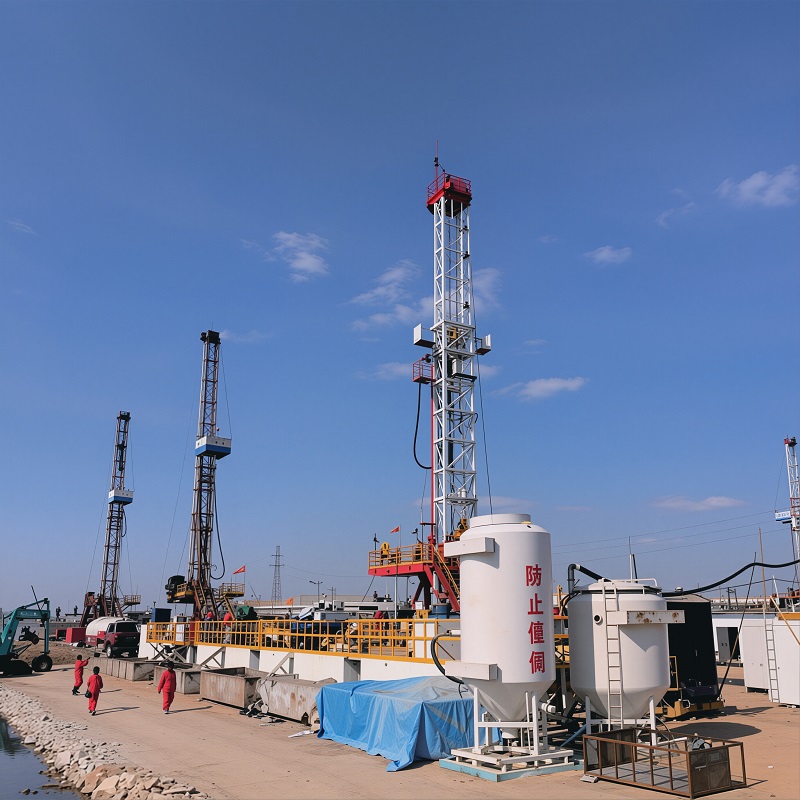
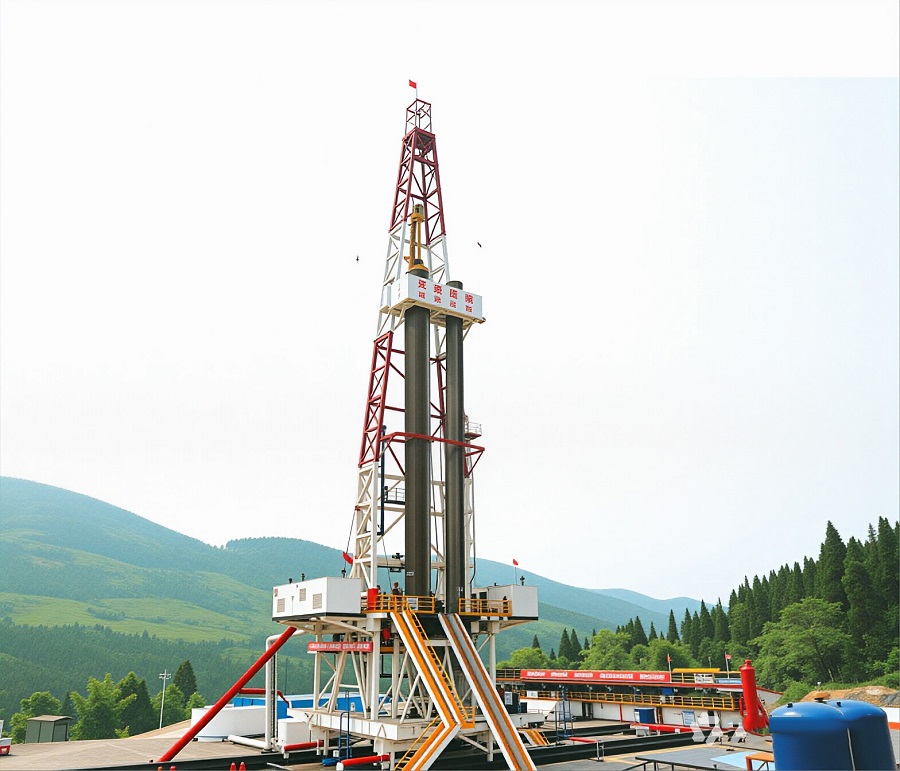
The Stepping-Type Drilling Rig is a land rig that moves between cluster wells by "walking" on its own hydraulic legs, without trucks, cranes or rail systems. Unlike the skid-movement device (which slides on pre-laid tracks), the stepping rig literally lifts itself, steps forward, and lowers —the same principle as a walking dragline or a heavy construction crane.
This design is preferred where a cluster pad is not concrete-laid (the rig can step over uneven ground), where well spacing is irregular, or where the operator wants to avoid investing in a permanent track system. A typical step is 1.5–2 m per cycle, and a move between wells 10 m apart takes 2–4 hours.
How the walking system works
Hydraulic lift-and-slide legs
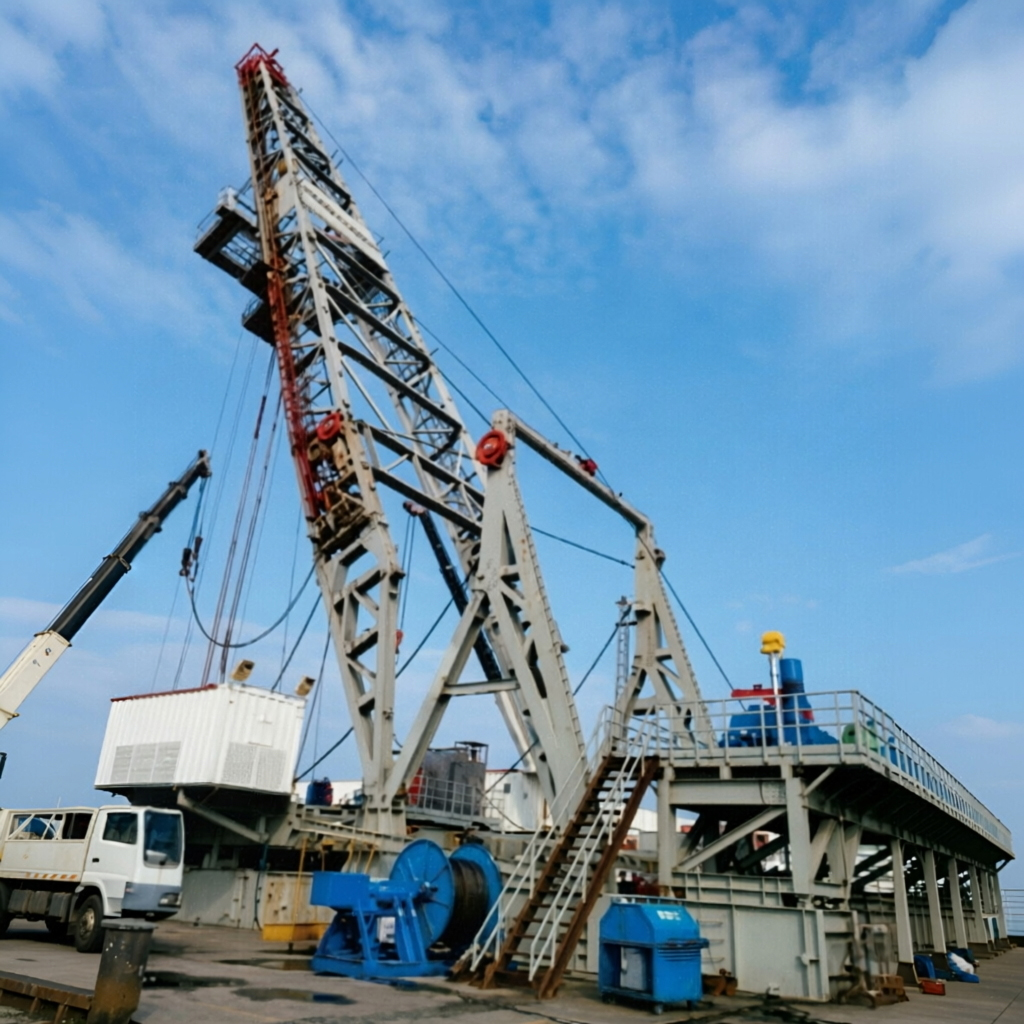
Six to eight hydraulic leg assemblies under the substructure lift the entire rig by 300–400 mm. Horizontal cylinders then slide the lower foot forward by 1.5–2 m. The legs lower, the upper frame slides forward relative to the feet, and the cycle repeats.
Up to 1000 t walking weight
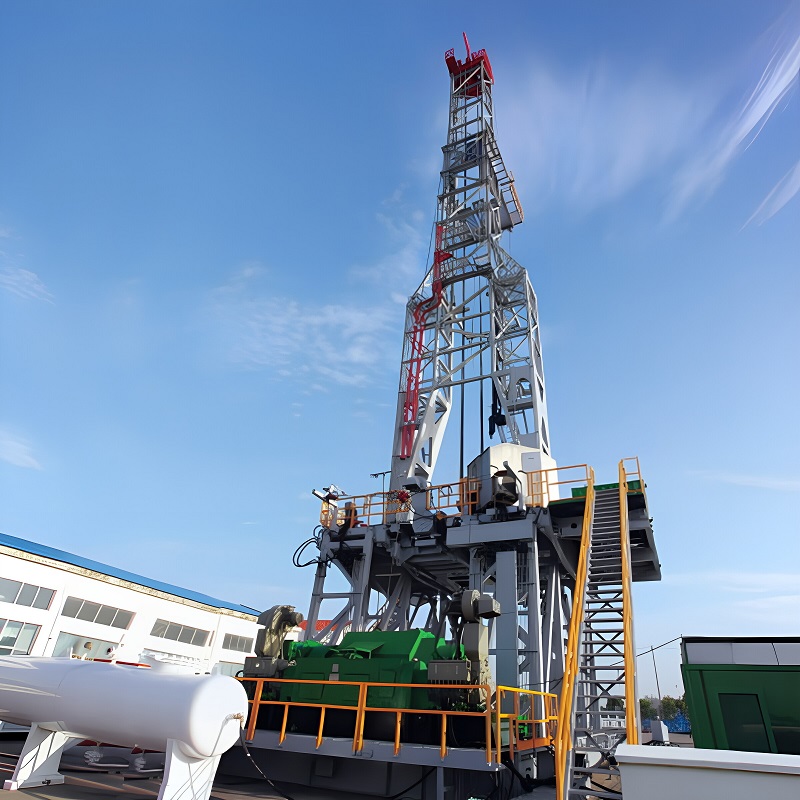
The walking system is rated for rigs up to 1000 t total weight (including mast). This covers ZJ30 through ZJ50 class rigs; heavier ZJ70+ rigs require a skid or rail system.
Works on compacted ground, no concrete pad
The wide feet distribute load at 0.15 MPa, so the rig can walk on compacted gravel or earth. No pre-laid concrete pad is required, which lowers site construction cost.
Forward, backward, and steering
The rig can walk forward, backward, and turn by differential leg extension. It can navigate an L-shaped pad layout, not just a straight line.
Single-operator control panel
One operator controls the walking sequence from a panel on the drill floor. Inclinometers and pressure sensors stop the cycle if the rig tilts or a leg loses pressure.
200–300 m per hour
Actual walking speed is 200–300 m per hour, including pauses. A 10 m well move takes 2–4 hours; a 100 m reposition across a large pad takes half a day.
Where this rig fits
- Cluster pads without concrete: where site preparation budget is limited.
- Irregular well spacing: where a linear track system would not fit.
- Short campaign pads: 4–8 wells where investing in a permanent skid system is not worth it.
Stepping rig vs skid-on-skid vs rail — which movement system for your pad?
A stepping (walking) rig uses hydraulic legs to lift and slide the entire rig. Unlike a skid-on-skid system that moves only in a straight line, a stepping rig can move forward, backward, and sideways — it can walk to any well location on the pad. This is the most flexible movement system for cluster pads with irregular well spacing.
Choose a stepping rig when:
- Well spacing is irregular (not a straight line). Skid-on-skid systems move in one direction along a rail or slide. If your cluster pad has wells arranged in a pattern (not a straight row), the rig needs to move sideways as well as forward. The stepping system can walk to any well location on the pad without repositioning rails.
- You do not want to build a concrete or steel pad. The wide feet distribute load at 0.15 MPa, so the rig can walk on compacted dirt. Skid-on-skid systems require a steel rail or concrete pad to slide on. The stepping system saves pad construction cost — you just level the ground and compact it.
- Rig weight is 500–1,000 t (ZJ30–ZJ50 class). The walking system is rated for up to 1,000 t total rig weight. This covers most onshore development rigs. If you have a ZJ70+ rig (> 1,000 t), you need a skid or rail system — the walking legs cannot support that weight.
- Move distance is short (10–50 m between wells). The stepping system moves at ~1 m per cycle (about 2–3 minutes per step). It is designed for short moves within a pad, not long-distance transport. If you need to move 500 m between wells, a truck or trailer is better.
Stepping vs skid-on-skid vs rail — which for your cluster pad?
- Stepping (this rig): Irregular well layout, no concrete pad needed, ZJ30–ZJ50 weight, short moves. Most flexible but most expensive movement system.
- Skid-on-skid: Straight row of wells, level pad already exists, cheaper than stepping. Less flexible but lower cost.
- Rail system: Very close wells (< 10 m), or extreme terrain (snow, soft ground). Requires laying temporary rail.
Buyer questions
Q: How does this compare to a skid-movement system?
A: Skid systems slide on rails and are faster for long linear moves on concrete. Walking systems work on unprepared ground and can steer. Choose based on pad layout.
Q: Can the rig walk with the mast up?
A: Yes. The mast stays raised during walking, which is the main time saver. The rig must be level within 0.5 degrees during the walk.
Q: What ground pressure do the feet exert?
A: About 0.15 MPa with spreader plates. This is suitable for compacted gravel, compacted earth, or steel matting.
Q: What is the typical price range for this equipment?
A: Pricing depends on capacity, configuration, and option list. Contact our sales team with your requirements for a detailed quote. We offer factory-direct pricing with no middleman markup.
Q: Do you provide on-site commissioning and operator training?
A: Yes. We provide on-site installation supervision, commissioning, and operator training as part of every package. Our service engineers travel worldwide to support your team during startup and operation.
Ready to discuss this rig?
Send your rig model, pad layout, and ground condition. We will return a walking-system spec and pricing within 48 hours.