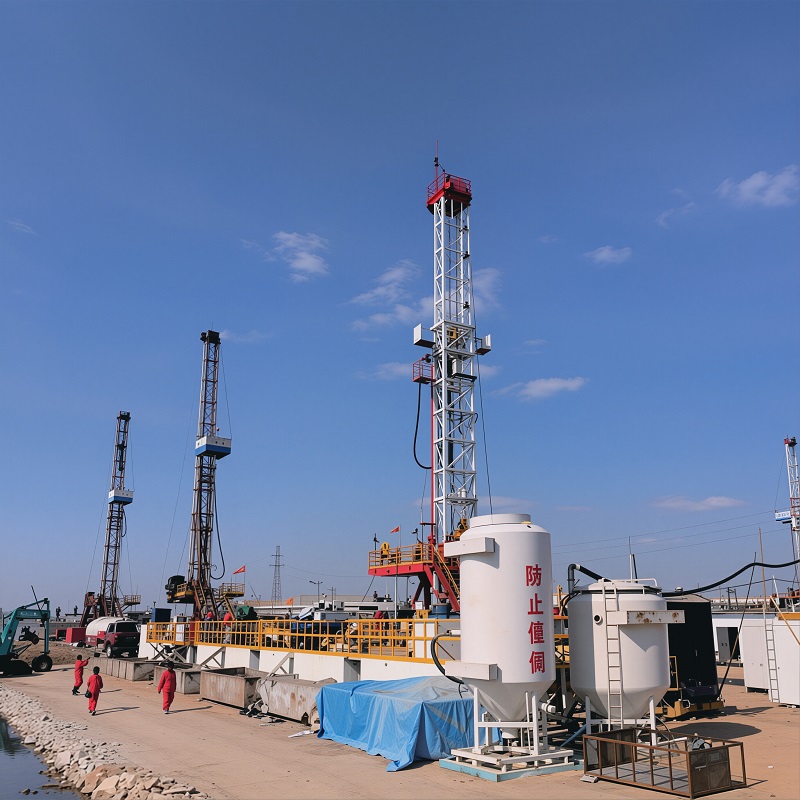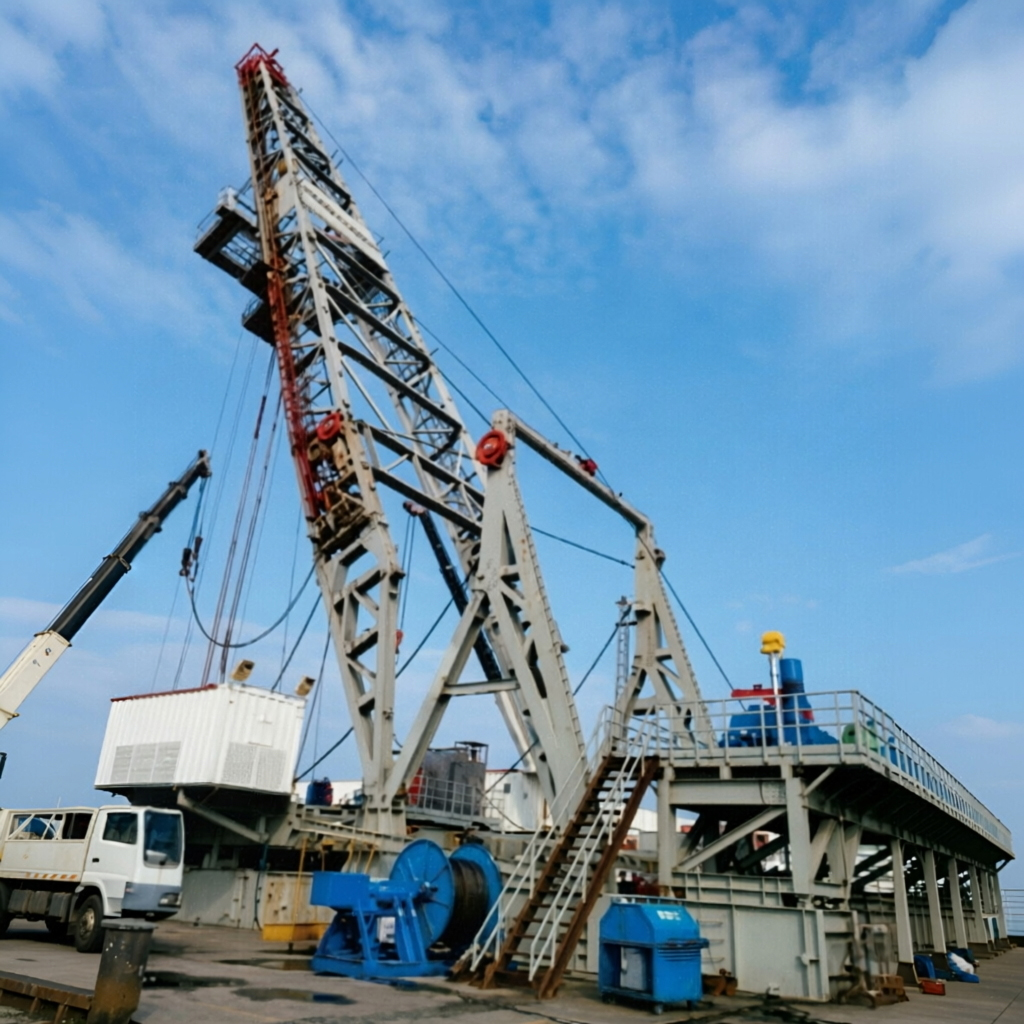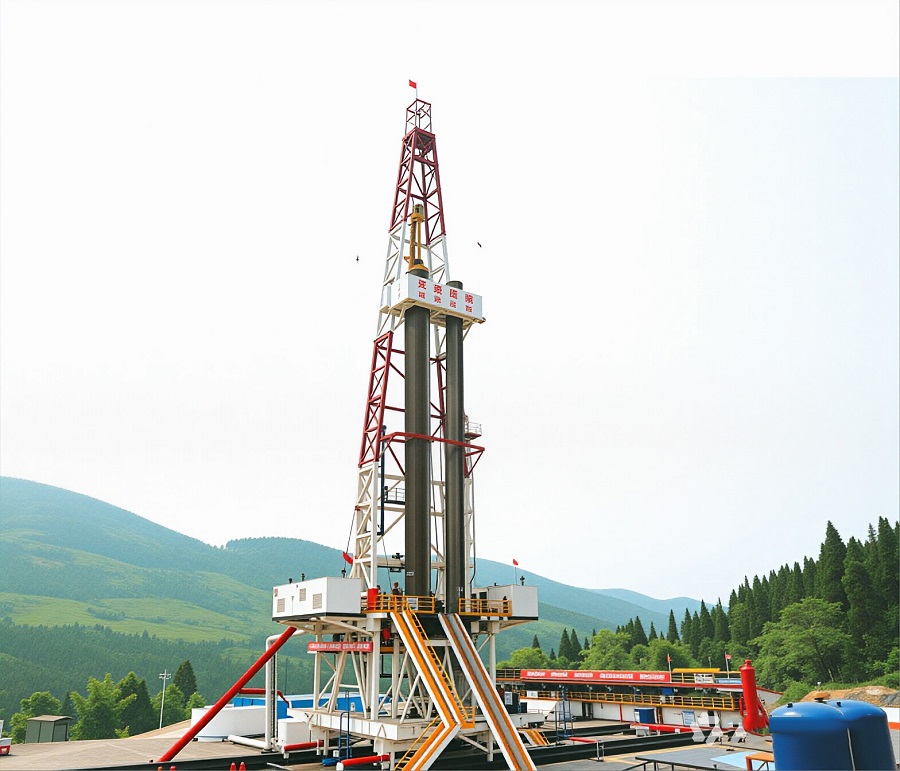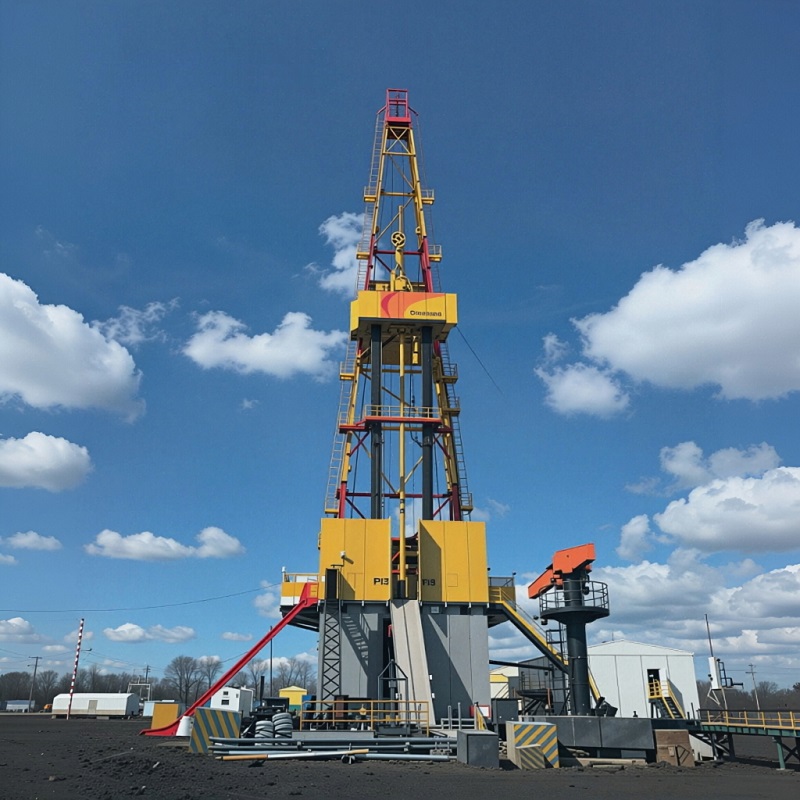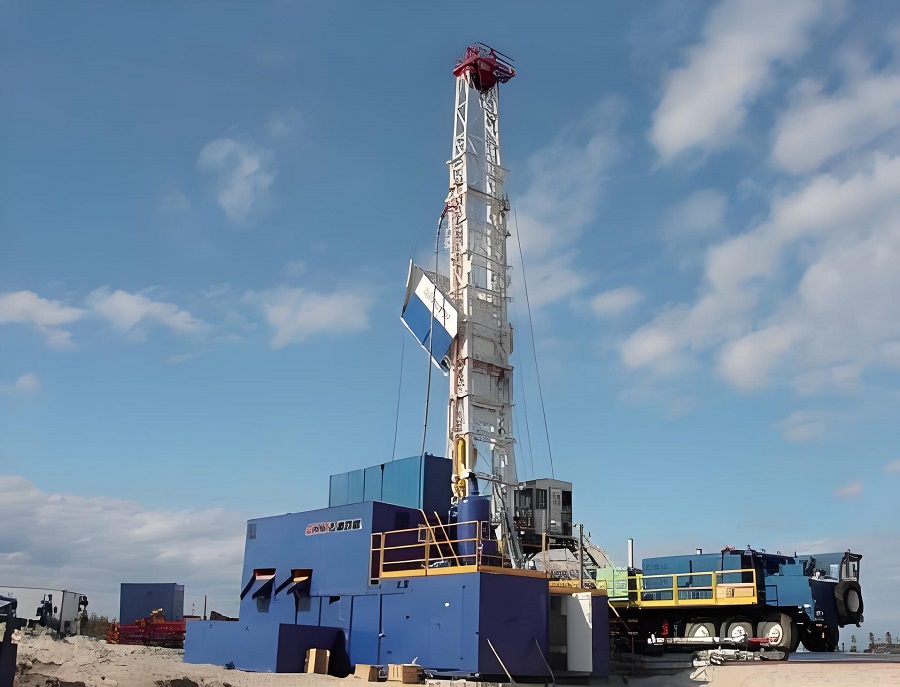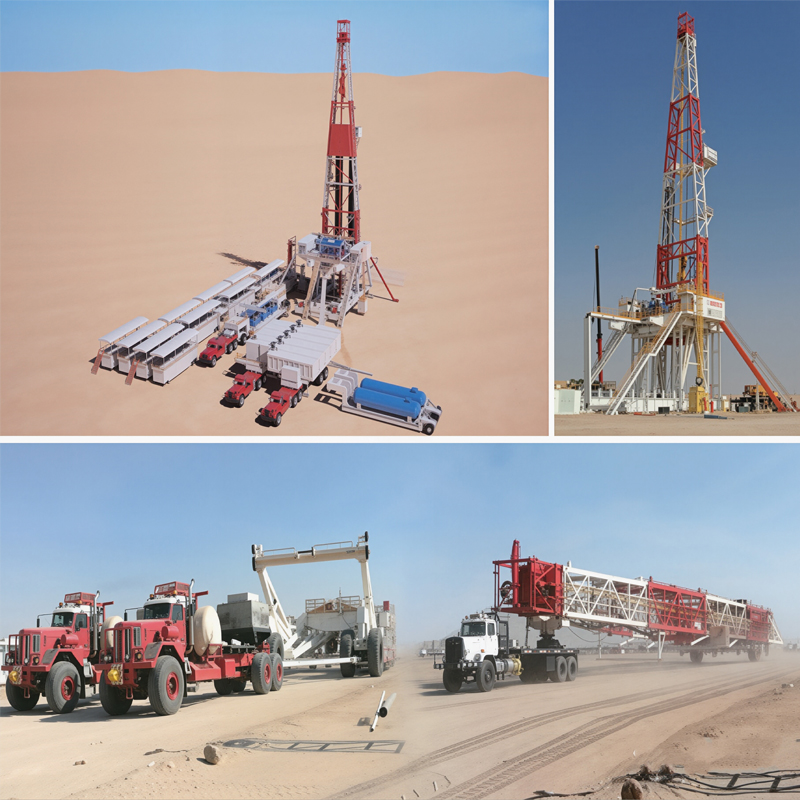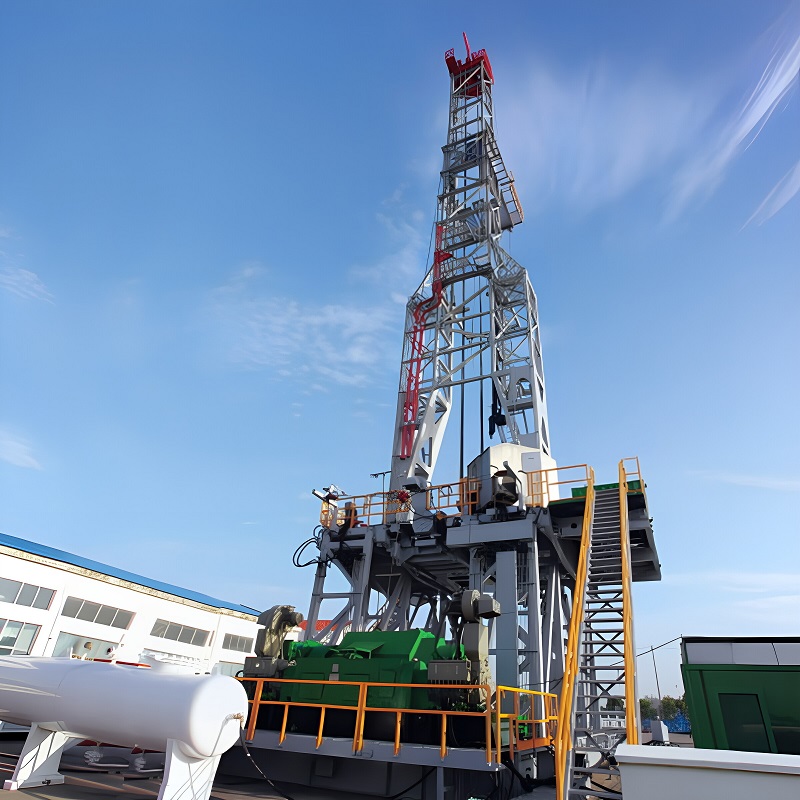
BE770 Big Easy Drilling Rig
The BE770 Big Easy is a mechanical-drive land drilling rig rated for 3500 kN hook load, designed for 3000–4000 m onshore oil and gas wells. Unlike the AC VFD rigs in the ZJ series, the BE770 uses a conventional chain-and-clutch transmission driven by Caterpillar or Cummins diesel engines, which makes it the preferred choice for operators who already have mechanics trained on mechanical rigs and want lower capital cost.
The "Big Easy" name refers to its service philosophy: the drawworks, transmission and mud pumps are laid out for easy access, with simple mechanical controls instead of VFD cabinets. There is no VFD room, no harmonic filter, and no complex PLC troubleshooting on location —the rig can be maintained by a standard field crew without an electrical engineer.
What distinguishes this rig
Mechanical chain transmission
Diesel engines (Cat D399 or equivalent) connect through a fluid coupling and a gear clutch to a mechanical drawworks. Speed is selected by shifting clutches, the same control pattern crews have used for decades. No VFD, no electric motors, no battery bank.
3500 kN for 3000–4000 m wells
Rated hook load 3500 kN (787,000 lb), with a 250 t traveling block and 150 t hook. This is the sweet spot for development wells in mature fields where the well profile is well known and a VFD rig would be over-specified.
Single drum, band brake
The drawworks is a single-drum mechanical unit with a band brake and a auxiliary disc brake. Simple to rebuild on location —brake blocks are stock items, not proprietary VFD parts.
Two F-1300 triplex pumps
Two F-1300 triplex pumps (1300 hp each) provide circulating. The lower horsepower rating matches the mechanical transmission, and pump parts are interchangeable with most other field rigs.
Self-supporting K mast
A 42 m K-type mast raised by hydraulic cylinders. The mast is designed for mechanical rig-up with standard field equipment; no swing-up hydraulics and no VFD-controlled raising sequence.
Lower CAPEX, familiar OPEX
The BE770 typically costs 30–40% less than an equivalent AC VFD rig of the same hook load. Maintenance is simpler: mechanics who work on mechanical rigs anywhere in the world can service it.
Where this rig fits
- Mature field development: 3000–4000 m development wells where the formation is known.
- Regions with mechanical-rig crews: Middle East, Central Asia, West Africa where VFD-trained electricians are scarce.
- Budget-constrained projects: work programs that need hook load but not the automation premium.
- Workover and sidetrack: medium-depth intervention where a full VFD rig would be underutilized.
Why buy a mechanical BE770 when VFD rigs are standard now?
The BE770 is a deliberately mechanical rig — diesel engines, chain drive, band brakes, no VFD. This is not outdated technology; it is the right choice for specific operating conditions. At 3,500 kN hook load and 2 × F-1300 pumps, it sits in the 3,000–5,000 m development drilling class. The mechanical design keeps purchase cost low and maintenance simple in regions where electricians and VFD spare parts are hard to find.
Choose this mechanical rig when:
- Target depth is 3,000–5,000 m development wells. Mature fields with known well profiles, standardized casing programs, and no need for the extra capability of a VFD rig. The 3,500 kN hook load covers typical production casing in this depth range.
- Your maintenance team is mechanical, not electrical. In many onshore fields (especially in Africa, Central Asia, and parts of the Middle East), experienced mechanics are available but VFD electricians are not. A mechanical rig can be rebuilt on location with stock parts; a VFD rig needs trained technicians and proprietary spares.
- Capital cost is the priority. A mechanical rig costs 30–40% less upfront than an equivalent VFD rig. If your drilling program is short (1–2 years) or your budget is constrained, the mechanical rig gets you drilling for less money.
- You want simple, proven controls. The driller shifts clutches like on rigs they have used for 20 years. No touchscreen, no VFD software, no learning curve. Crew productivity is higher from day one.
BE770 mechanical vs VFD electric rig — when is mechanical better?
- Choose mechanical (BE770): Short program, budget-constrained, remote location with limited electrical support, mature field with simple well profiles.
- Choose VFD electric: Long program, fuel cost matters (VFD saves 15–20% fuel), deep wells with complex profiles, safety and automation are priorities.
Buyer questions
Q: Why choose mechanical over AC VFD?
A: Lower capital cost, simpler maintenance, and a larger pool of trained mechanics. You give up soft-start and regenerative braking, but for 3000–4000 m development wells that trade-off is usually worthwhile.
Q: Can we upgrade to VFD later?
A: The drawworks and mast mounting points are compatible with a VFD retrofit. Most customers who start with mechanical later add VFD on the drawworks only, keeping the rest mechanical.
Q: What engines are standard?
A: Caterpillar D399 or Cummins KTA50, depending on local preference and parts availability. We can spec to your existing fleet.
Q: How does it compare to a ZJ50?
A: Similar hook load (3500 kN vs 3150 kN), but ZJ50 is AC VFD. BE770 is cheaper and simpler; ZJ50 is more efficient and smoother on trips.
Q: What is the typical price range for this equipment?
A: Pricing depends on capacity, configuration, and option list. Contact our sales team with your requirements for a detailed quote. We offer factory-direct pricing with no middleman markup.
Ready to discuss this model?
Send your well depth, mud weight, preferred engine brand and whether you already operate mechanical rigs. We will return a layout and pricing within 48 hours.