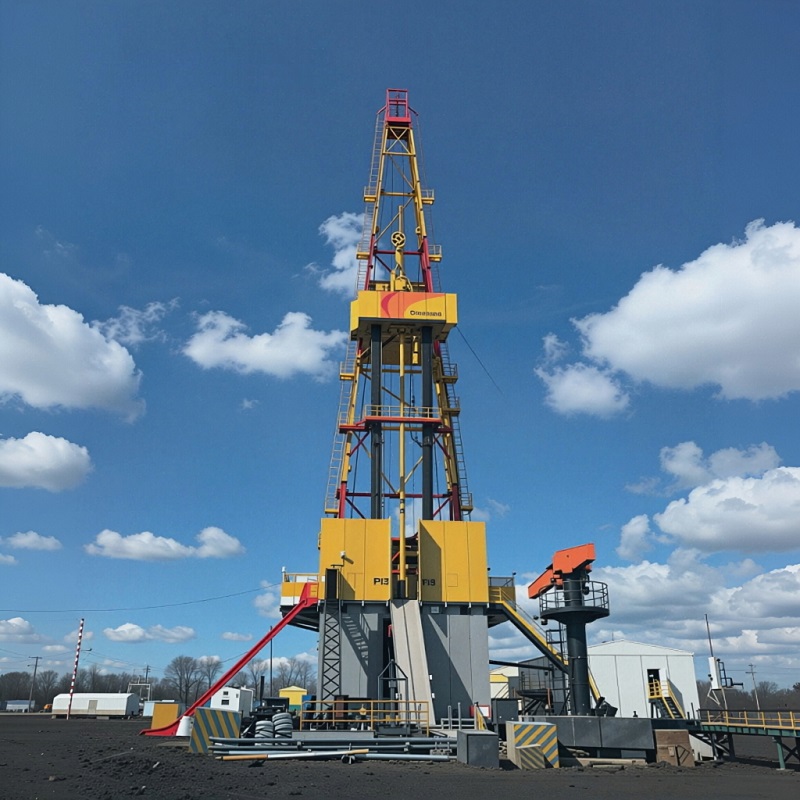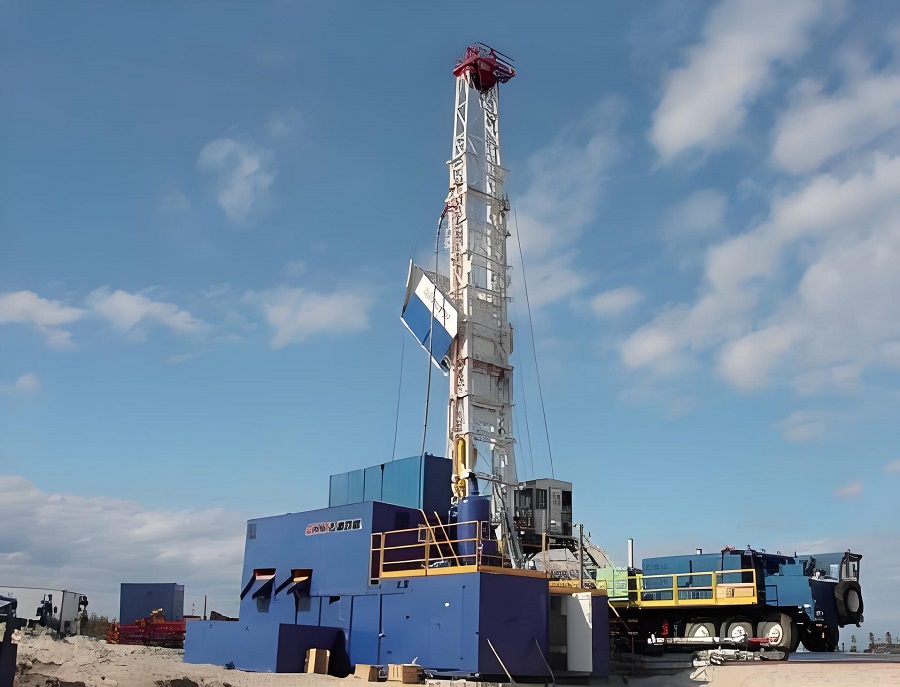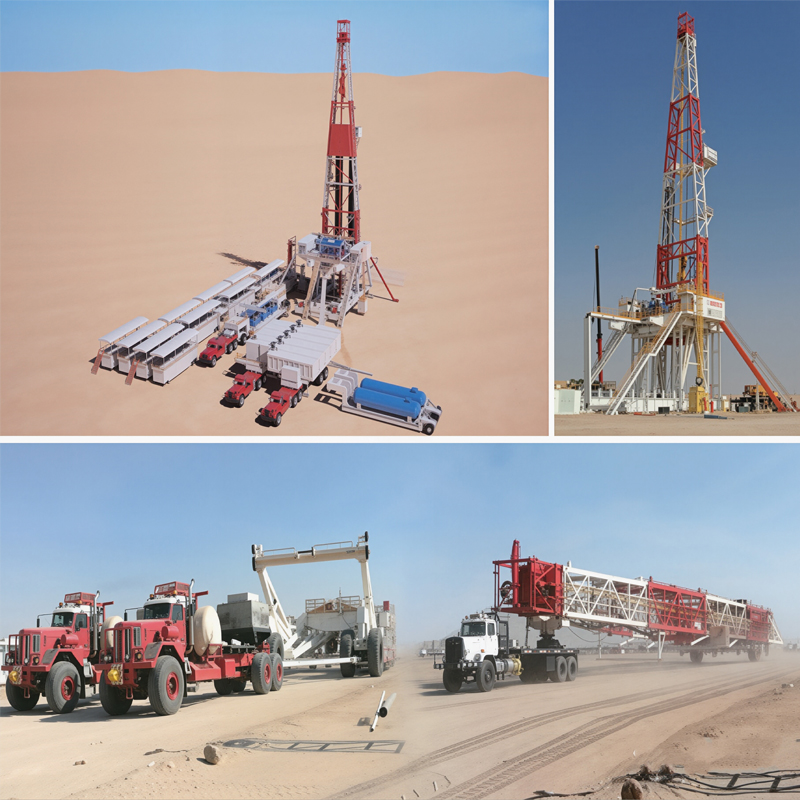
Desert Fast-Moving Drilling Rig
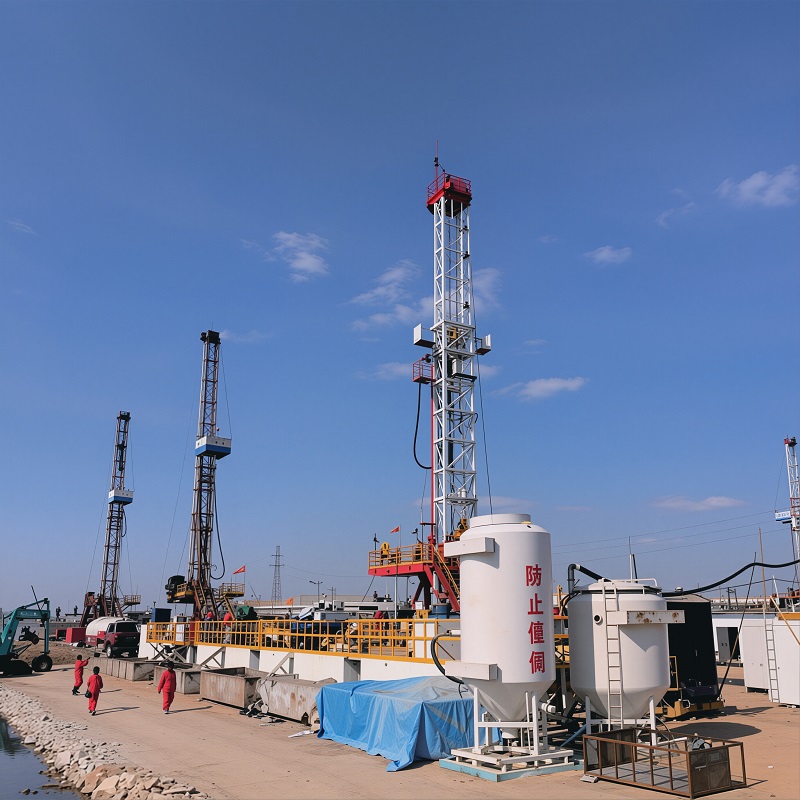
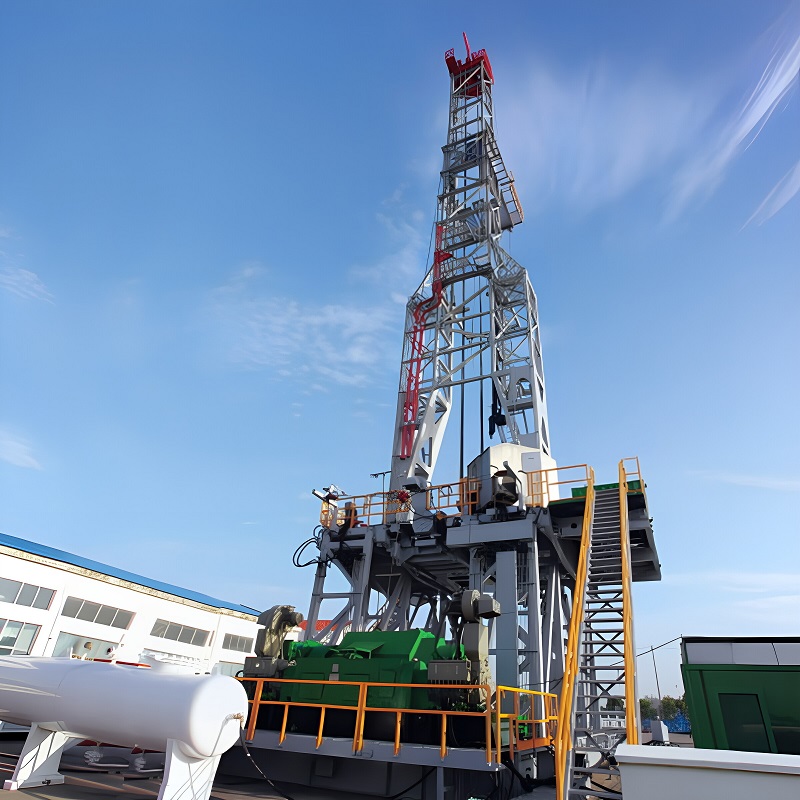
The Desert Fast-Moving Drilling Rig is a land rig purpose-built for sand-dune oilfields in the Middle East, North Africa and Central Asia. The base rig is a 1500–3000 kN class onshore unit, but every system has been modified for desert operation: sand-filtered air intake, desert-rated cooling, high-flotation tires, dust-sealed electrical cabinets, and a quick-mast rig-up sequence.
The "fast-moving" name is operational: in desert oilfields like Kuwait, Oman and Algeria, well pads are 5–10 km apart across open sand. A conventional rig would spend 3–5 days per move on disassembly, trucking and rig-up. This rig is designed to do the same move in 1–3 days, because the mast is raised without a crane and the rig splits into fewer loads.
Desert adaptation details
Sand-precleaner filters
Engines and air compressors use multi-stage precleaners (cyclonic + oil-bath) that remove 95% of sand before it reaches the air filter. This extends filter change intervals from 200 hours to 1000 hours in dusty conditions.
Desert radiators, 55C ambient
Radiators are upsized for 55C ambient air temperature, with a pressurized cooling system and fan-shroud design that prevents sand clogging. The cooling system can operate continuously at 50C ambient without deration.
High-flotation desert tires
The carrier chassis uses wide, high-flotation desert tires (24.00R20 or similar) instead of standard highway tires. Ground pressure is low enough to drive on packed sand without sinking, reducing the need for a prepared road.
Dust-sealed cabinets
All electrical cabinets are IP55 sealed with positive-pressure air purging. Door gaskets are desert-grade; cables use UV-resistant insulation that does not degrade under direct sun.
Hydraulic swing-up, no crane
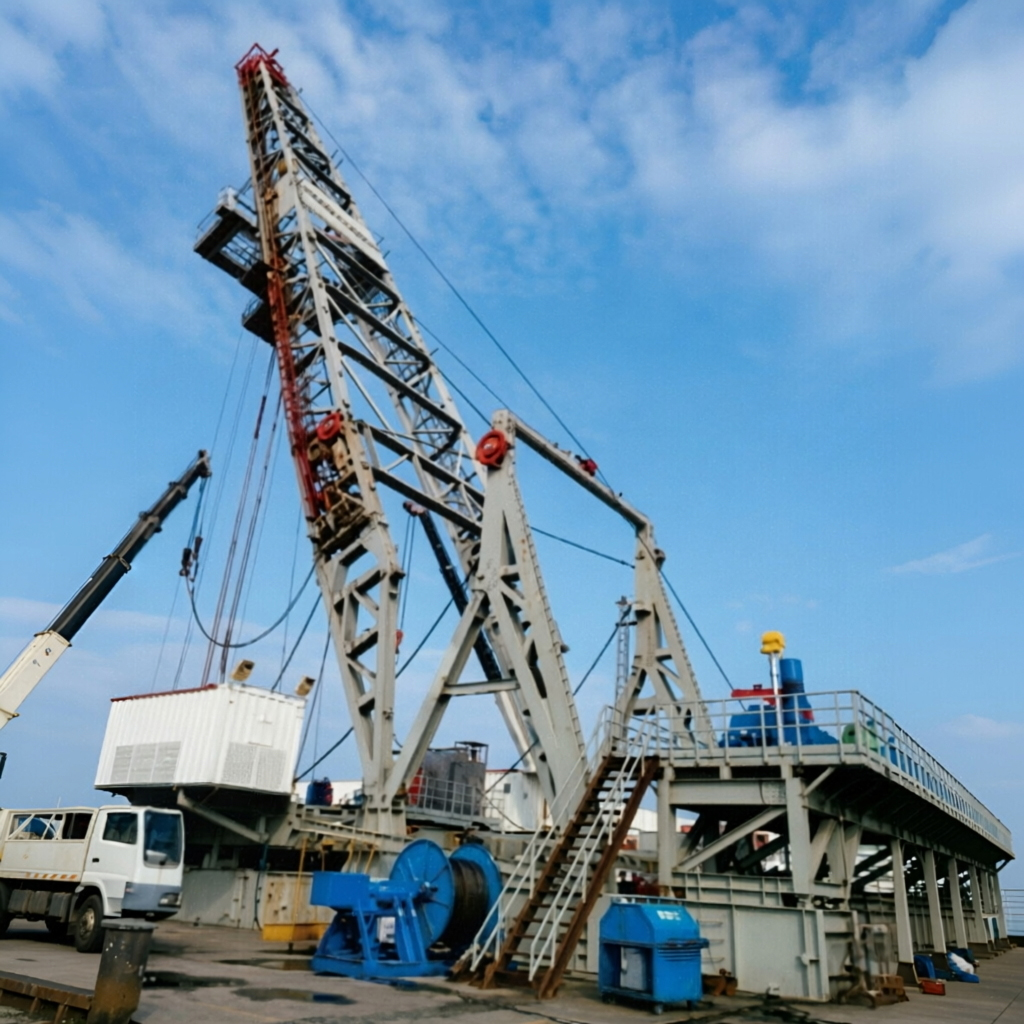
The mast is raised hydraulically from horizontal, the same principle as our swing-up rig but optimized for fast desert moves. No crane is needed on location, which matters because cranes are hard to mobilize across open sand.
Onboard water storage
The rig carries 5–10 m3 of onboard water for cooling and crew use, because water supplies in desert fields are often 50–100 km away. Water recycling from the mud system reduces consumption.
Where this rig fits
- Arabian Peninsula deserts: Kuwait, Saudi Arabia, Oman, UAE where ambient hits 50C and sand is continuous.
- North African Sahara: Algeria, Libya, Egypt desert fields.
- Central Asian sand deserts: Karakum, Kyzylkum fields.
When does a standard rig become a liability in desert drilling?
A desert fast-moving rig is not a standard rig painted tan. It is engineered for two desert-specific problems: high temperatures (up to 55°C ambient) and sand ingress (dust storms, sandstorms, fine silica everywhere). The "fast moving" designation also means the rig is designed for quick rig-up/rig-down and mobility across soft desert sand without getting stuck.
Choose this rig when:
- Ambient temperatures exceed 45°C for months at a time. Standard radiators are sized for 35–40°C ambient. At 50°C, a standard rig will derate engine power, overheat hydraulics, and have shorter component life. The desert-spec radiator handles 55°C without power loss — this matters when you are drilling 24/7 in the Middle East, North Africa, or the Australian outback.
- Sand and dust are constant, not occasional. In a sandstorm environment, a standard air filter plugs in 200 hours. The desert precleaner system (cyclonic + oil bath) removes 95% of sand before it reaches the filter, extending filter life to 1,000 hours. This reduces maintenance stops and filter costs dramatically.
- You need to move across soft sand without road access. Standard truck chassis sink in soft desert sand. The high-flotation desert tires (24.00R20) spread the rig weight over a larger contact area, so the rig can drive across unimproved desert terrain. This matters in remote desert fields where there are no paved roads.
- Rig-up speed matters in a multi-well program. The "fast moving" designation means the mast and substructure are designed for rapid rig-up (one-lift mast, quick-connect wiring). If you are drilling a 10-well desert development program, cutting rig-up time from 5 days to 2 days saves significant rig cost.
Desert spec vs standard rig — when is standard enough?
- Standard rig is fine if: Temperatures stay below 40°C, dust is manageable, you have paved roads between wells, and rig-up time is not critical. Cost premium for desert spec is ~15–20%.
- Desert spec (this rig) is required if: You operate in true desert conditions (50°C+, sandstorms, soft sand, remote locations). The reliability and uptime payback is usually within the first year of operation.
Buyer questions
Q: What is the maximum ambient operating temperature?
A: 55C continuous. Above 55C we recommend derating or shifting operations to night.
Q: Can the rig drive on soft sand?
A: High-flotation tires are rated for packed sand. Loose dune sand requires grading or a steel road. We supply a road preparation trailer if needed.
Q: How often do filters need changing?
A: With the precleaner system, engine air filters last ~1000 hours in desert conditions, versus 200 hours without.
Q: How does this compare to a standard rig?
A: The desert package adds ~15% to rig cost but reduces non-productive time from sand and heat problems by an estimated 30% on a typical desert campaign.
Q: What is the typical price range for this equipment?
A: Pricing depends on capacity, configuration, and option list. Contact our sales team with your requirements for a detailed quote. We offer factory-direct pricing with no middleman markup.
Ready to discuss this rig?
Send your ambient temperature range, sand conditions, and typical well spacing. We will return a desert spec and pricing within 48 hours.