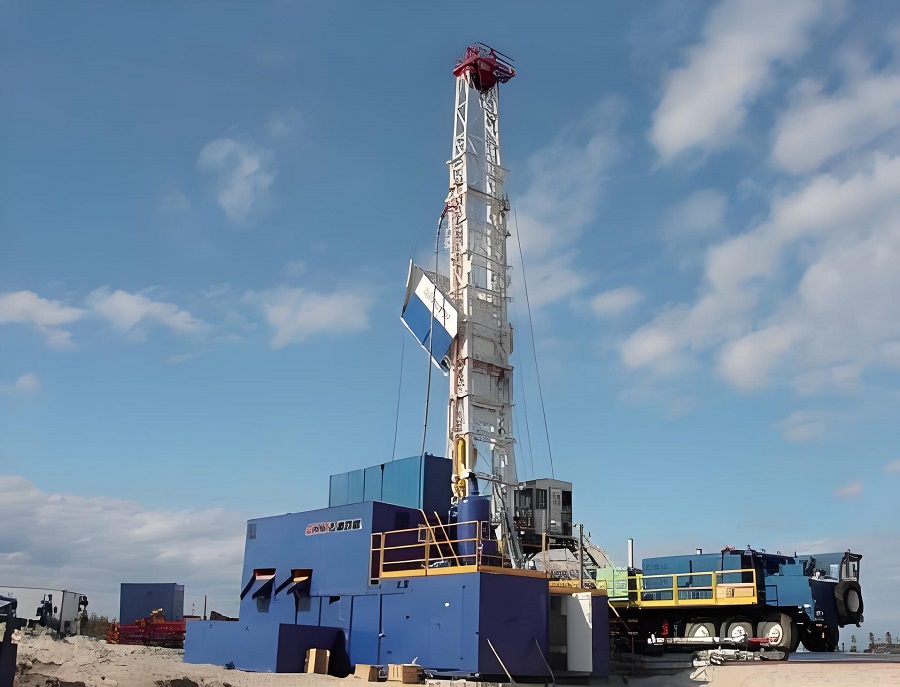
ZJ80 8000m Swing-Up Drilling Rig
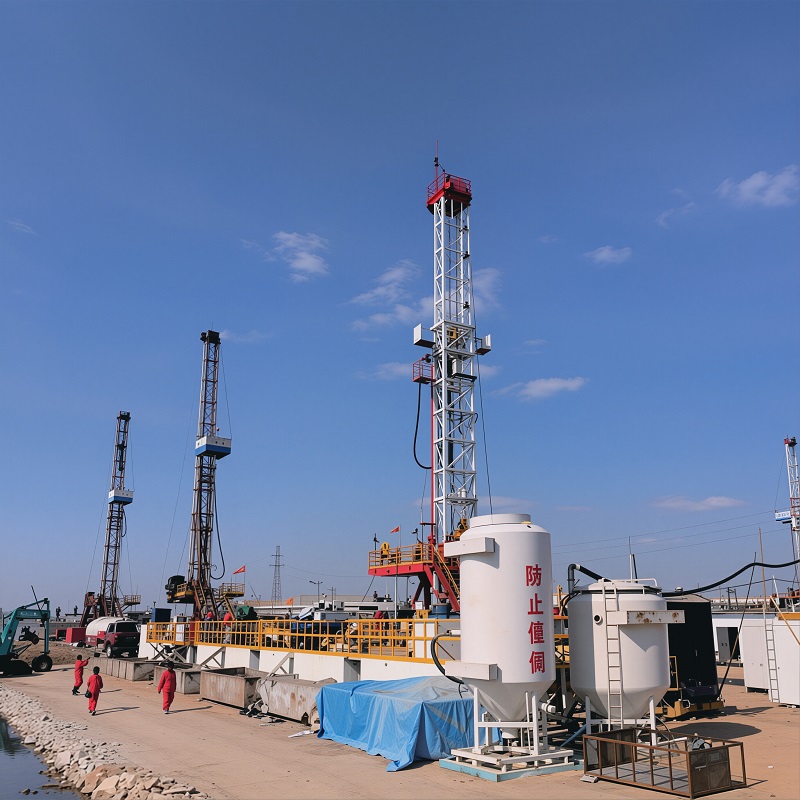
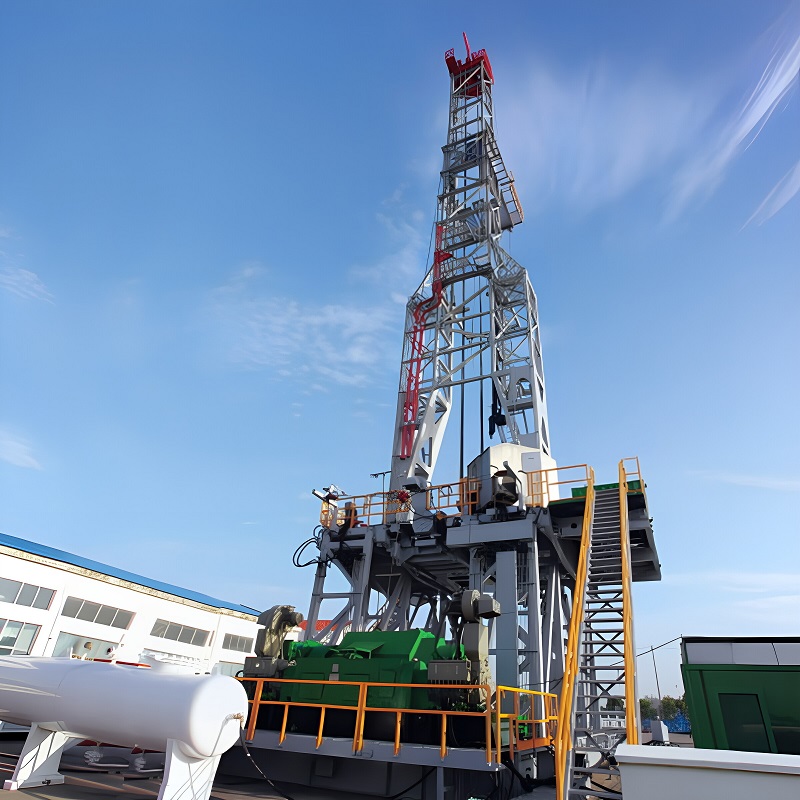
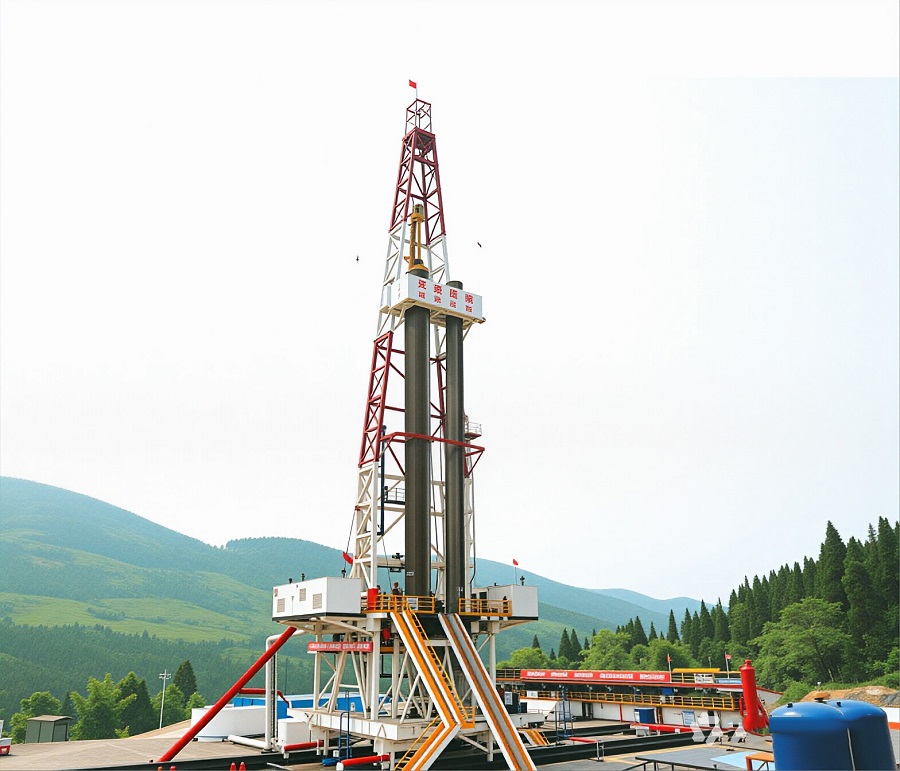
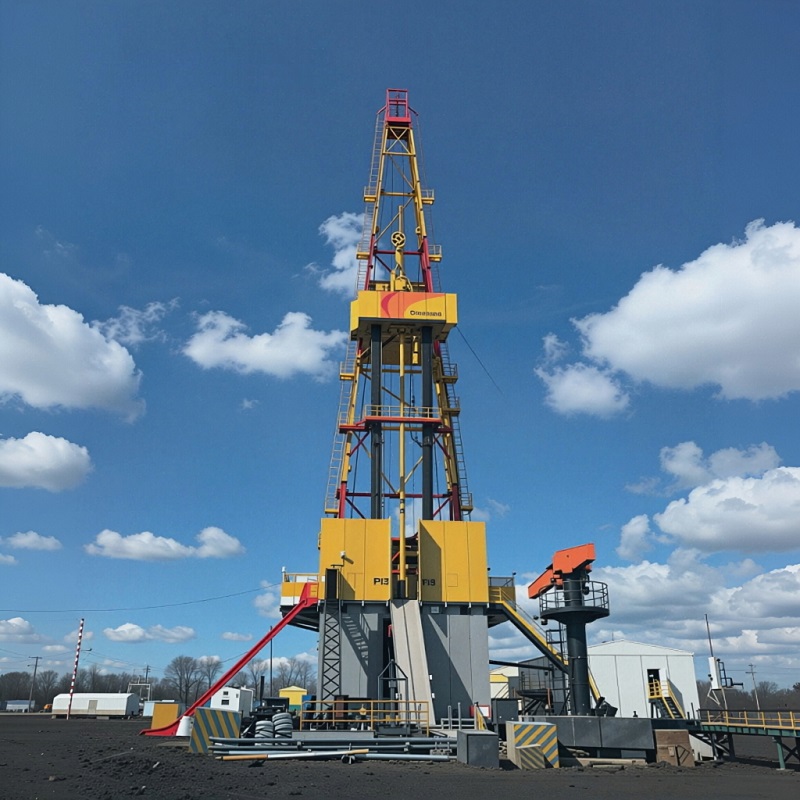
The ZJ80 8000m Swing-Up is a land drilling rig rated for 8000 m nominal drilling depth with 127 mm drill pipe. With a 4500 kN (1,012,000 lb) hook load and AC VFD drawworks, it is designed for deep oil and gas exploration and development wells where a conventional crane-assisted rig-up is impractical.
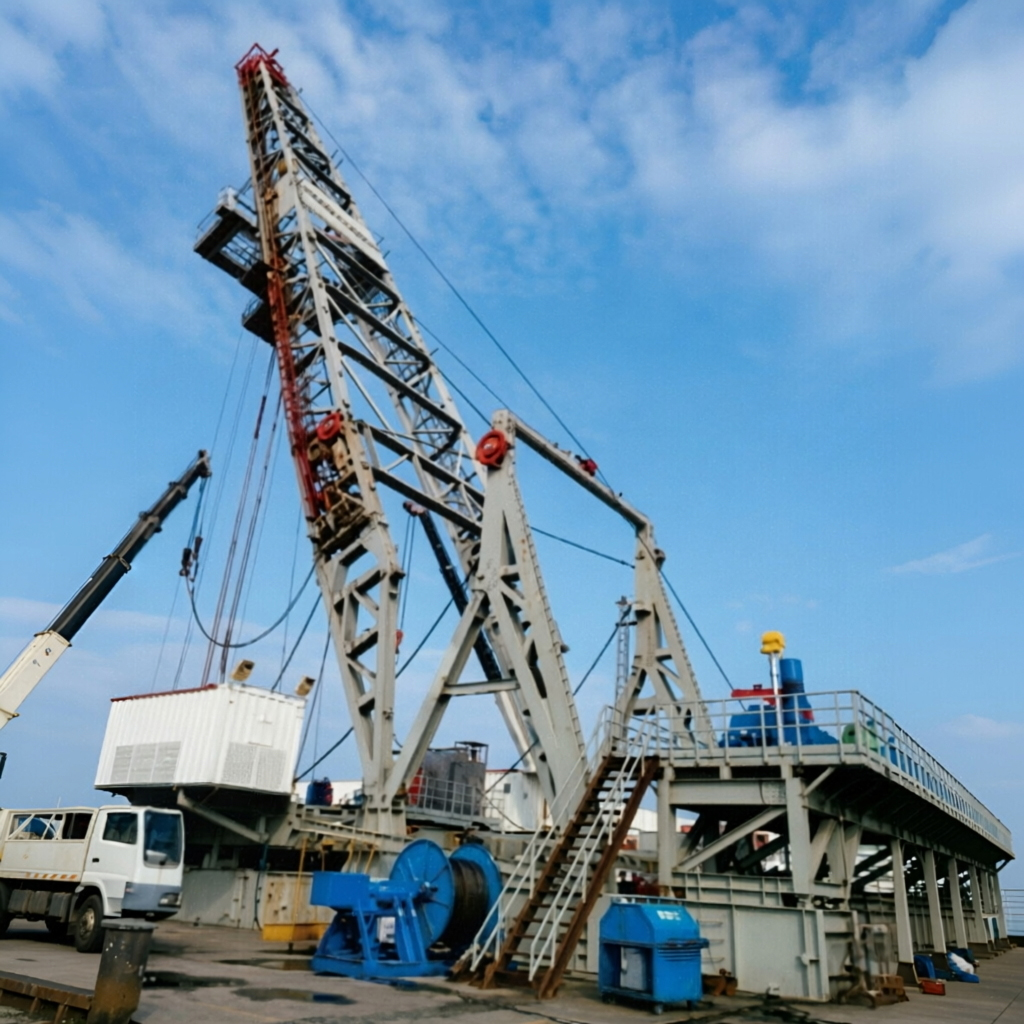
The name swing-up refers to how the mast is raised: the K-type mast arrives on its transport trailer in the horizontal position, then pivots upward around a base hinge to vertical in a single hydraulic lift. No separate crane, no pinned sections, and no ground crew standing under a suspended boom. This rig-up method is the main reason this class is preferred in remote fields where crane access is expensive or weather windows are short.
What distinguishes this rig
Swing-up hydraulic lift
The mast pivots around a heavy base hinge using two hydraulic cylinders. One operator in the driller's cabin controls the lift angle, with hydraulic accumulators as backup. The whole mast goes from horizontal to vertical in roughly 90 minutes, compared with 2–4 days for a conventional guyed or section-assembled mast.
4500 kN hook load, AC VFD
The drawworks is driven by two 800 kW AC motors through VFD, with a maximum hook load of 4500 kN. Five-wheel traveling block (315 t) and a 135 t traveling hook are standard. The VFD allows soft-start and regenerative braking, which matters for deep wells where tripping long pipe strings generates large energy.
Top drive + rotary table
A 350 t top drive handles most drilling, with a 1257 mm (49-1/4") rotary table for casing running and fishing. The top drive is rated for continuous 5000 m drilling; the rotary table takes over when the top drive needs maintenance or when running long casing strings.
Two F-1600 mud pumps
Two F-1600 triplex pumps (1600 hp each, 52 MPa discharge) provide redundant circulating capacity. For 8000 m holes with heavy mud, running both pumps in parallel is standard; one pump can be isolated for maintenance while the other continues circulation.
Box substructure, 750 mm clearance
The drill-floor substructure is a box-type design with a 750 mm cellar clearance, enough for BOP stack and wellhead handling. The substructure is raised hydraulically to working height; no cribbing or jacking is required.
Eight truck loads
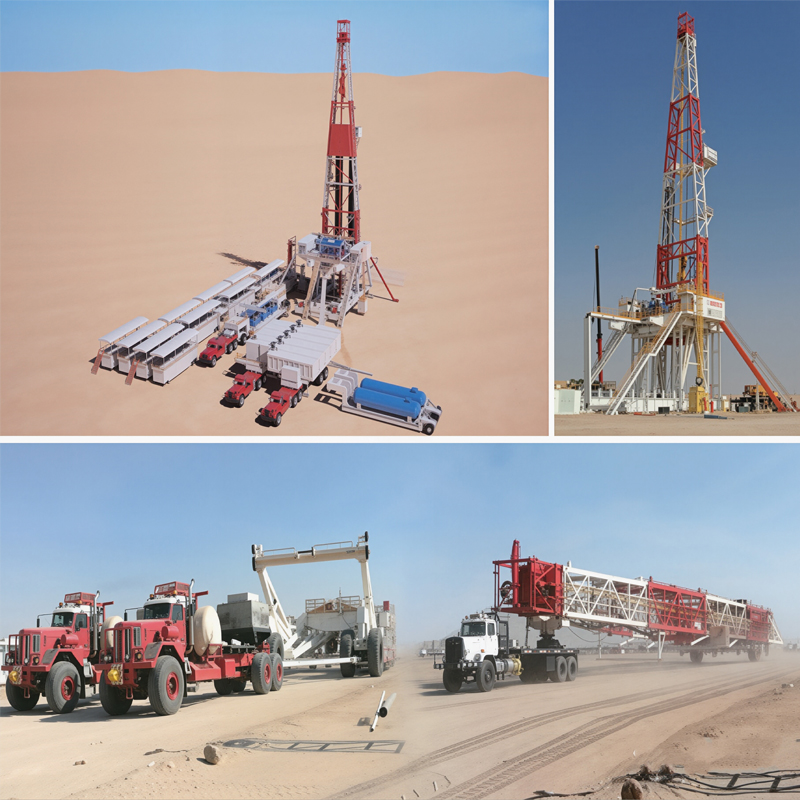
The rig splits into roughly eight heavy-haul loads: mast, substructure, drawworks, engine room, two pump skids, solids control, and pipe racking. Each load is within standard wide-load limits for most jurisdictions.
Where this rig fits
- Deep exploration wells: 5000–8000 m oil and gas wells where a smaller rig would be overloaded on trips.
- Remote field camps: locations where crane mobilization is slow or expensive and weather windows are short.
- High-pressure wells: wells requiring two redundant mud pumps and a 1357 mm rotary for BOP installation.
- Developer campaigns: multi-well pads where the swing-up rig-up saves 1–3 days per location.
Is the 8000 m Swing-Up rig built for your deep-well program?
The 8000 m swing-up rig is a deep-capacity AC VFD rig with a hydraulic swing-up mast. At 4,500 kN hook load and 350 t top drive, it is designed for deep and ultra-deep drilling where conventional section-assembled masts would take too long to rig up. The swing-up design lets one operator raise the full mast in 90 minutes, compared with 2 days for a conventional guyed mast.
Choose this rig when:
- Target depth is 5,000–8,000 m. The 4,500 kN hook load covers production casing and liner running in deep wells. Below 5,000 m, a ZJ70 rig is more cost-effective. Above 8,000 m, you step up to the ZJ90/120 class.
- Rig-up time is a critical cost factor. Deep-well rigs are expensive to move — day rates for a 8,000 m class rig are high. Cutting rig-up time from 2 days to 90 minutes saves roughly – per move in rig time and labor. This pays back the swing-up premium quickly on a multi-well program.
- You need both top drive and rotary table. The 350 t top drive handles drilling; the 1,257 mm rotary table takes over for casing running, fishing, and stuck pipe operations. This is standard for deep wells where you need backup when the top drive is out of service.
- AC VFD with regenerative braking matters. Tripping 5,000 m of drill pipe generates enormous energy. VFD regenerative braking converts that energy back to the grid, reducing fuel consumption by 15–20% compared with mechanical brakes on deep wells.
Swing-up mast vs conventional section-assembled mast — when does swing-up pay?
- Conventional section mast: Cheaper upfront, but 2+ days rig-up. Best for single deep wells where moves are rare and you stay on location for months.
- Swing-up mast (this rig): Higher upfront cost, but 90-minute rig-up. Best for multi-well deep programs where you move rigs every few weeks and rig time is expensive.
Swing-up mast sequence
On arrival, the mast trailer is positioned over the hinge. The hydraulic cylinders are pinned to the mast base, and the driller lifts the mast while a ground crew guides the vertical alignment. Once vertical, the mast base pins are locked, the top drive is lowered from its transport cradle to the drill-floor position, and the drawworks wire rope is strung through the traveling block. Typical rig-up from trailer arrival to first connection is 1–3 days for an experienced crew.
Common selections
- Winterized package: engine heaters, heated cabin, arctic hydraulic fluid.
- Desert package: sand-fill radiators, pre-cleaners, dust-sealed cabinets.
- Iron roughneck: automated pipe handling on the drill floor.
- Second top drive: spare top drive for deep-well campaigns.
- Managing arm: integrated pipe racking system.
Buyer questions
Q: What drill pipe does the 8000 m rating use?
A: 127 mm (5") drill pipe. With 114 mm pipe the rated depth increases; with 139.7 mm pipe it drops to roughly 6000 m.:
Q: How long does the swing-up mast raise take?
A: About 90 minutes from horizontal to vertical, including pinning. The full rig-up from trailer arrival to drilling is 1–3 days.
Q: Do we need a crane on location?
A: No crane is needed for mast raising. A small forklift is sufficient for connecting hoses and guiding the base pins.
Q: Can the rig handle HPHT wells?
A: The rig itself is rated for 8000 m; HPHT well control depends on the BOP and wellhead selected separately. We can supply the complete BOP stack to match.
Q: Lead time?
A: 8–10 months for a new rig. Refurbished units available in 90–120 days.
Manufacturing background
SJ Petroleum Machinery is a factory-direct manufacturer of oilfield equipment. We have built swing-up rigs since the 1990s. The ZJ80 platform is API 4F certified, and rigs of this class have shipped to operators in the Middle East, Central Asia and South America. Each rig is load-tested before shipment.
Ready to discuss this model?
Send your target drilling depth, formation pressure, well-site terrain and preferred automation level. We will return a tailored rig layout and pricing within 48 hours.