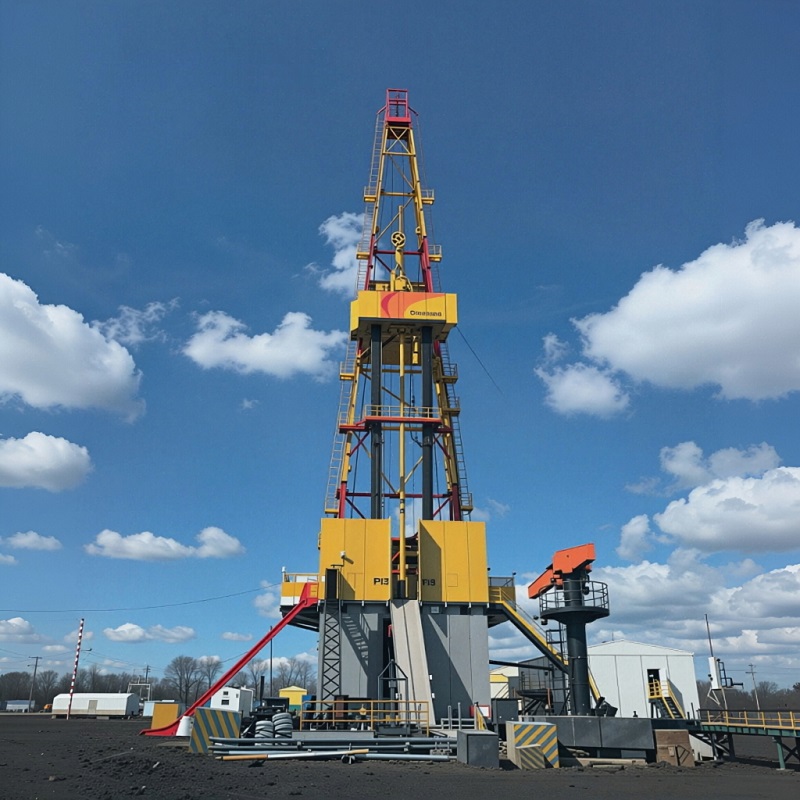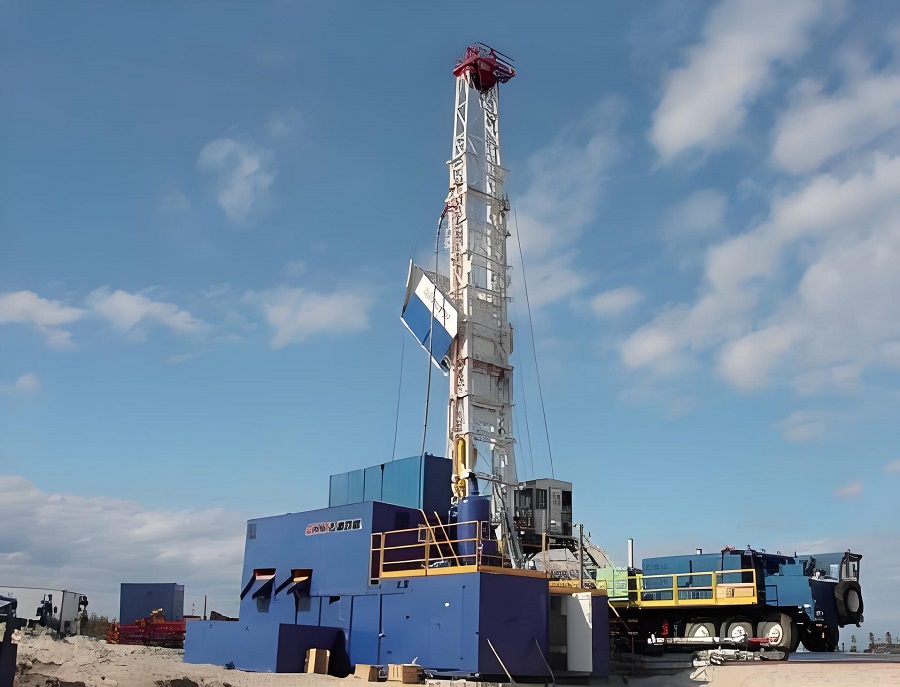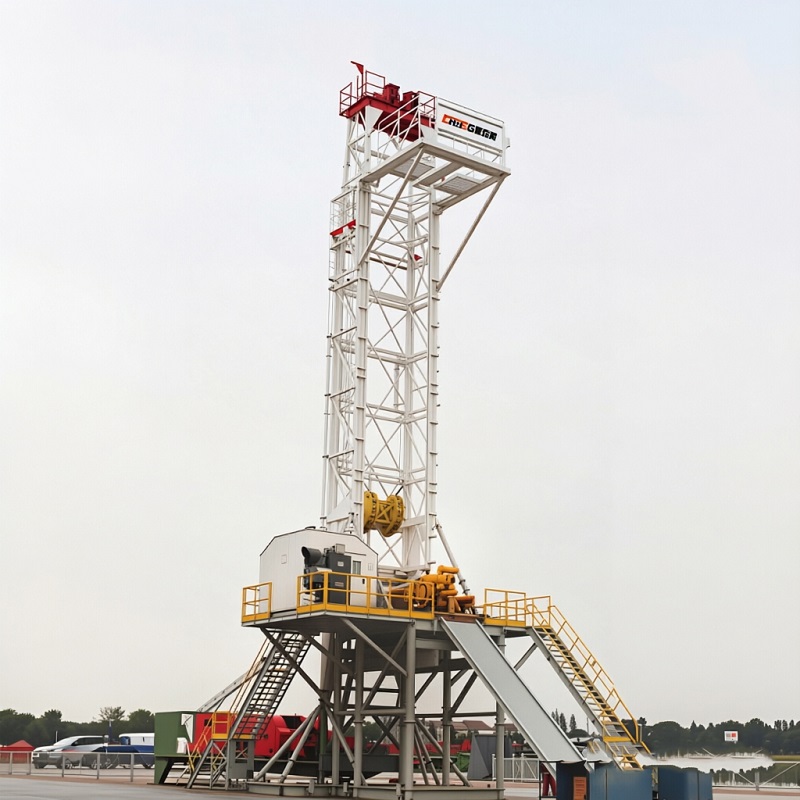
Helicopter-Transportable Drilling Rig
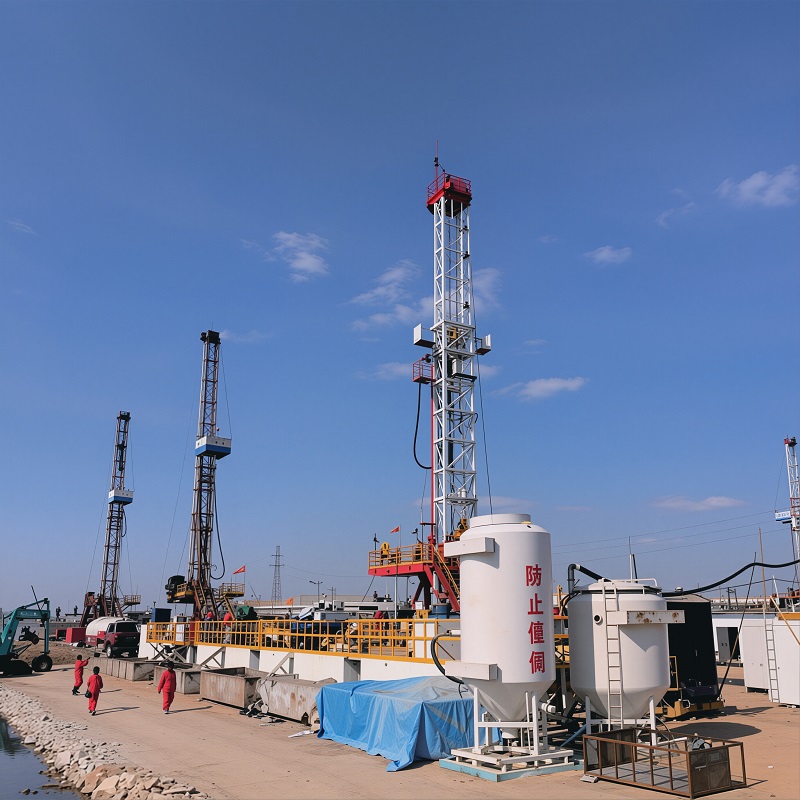
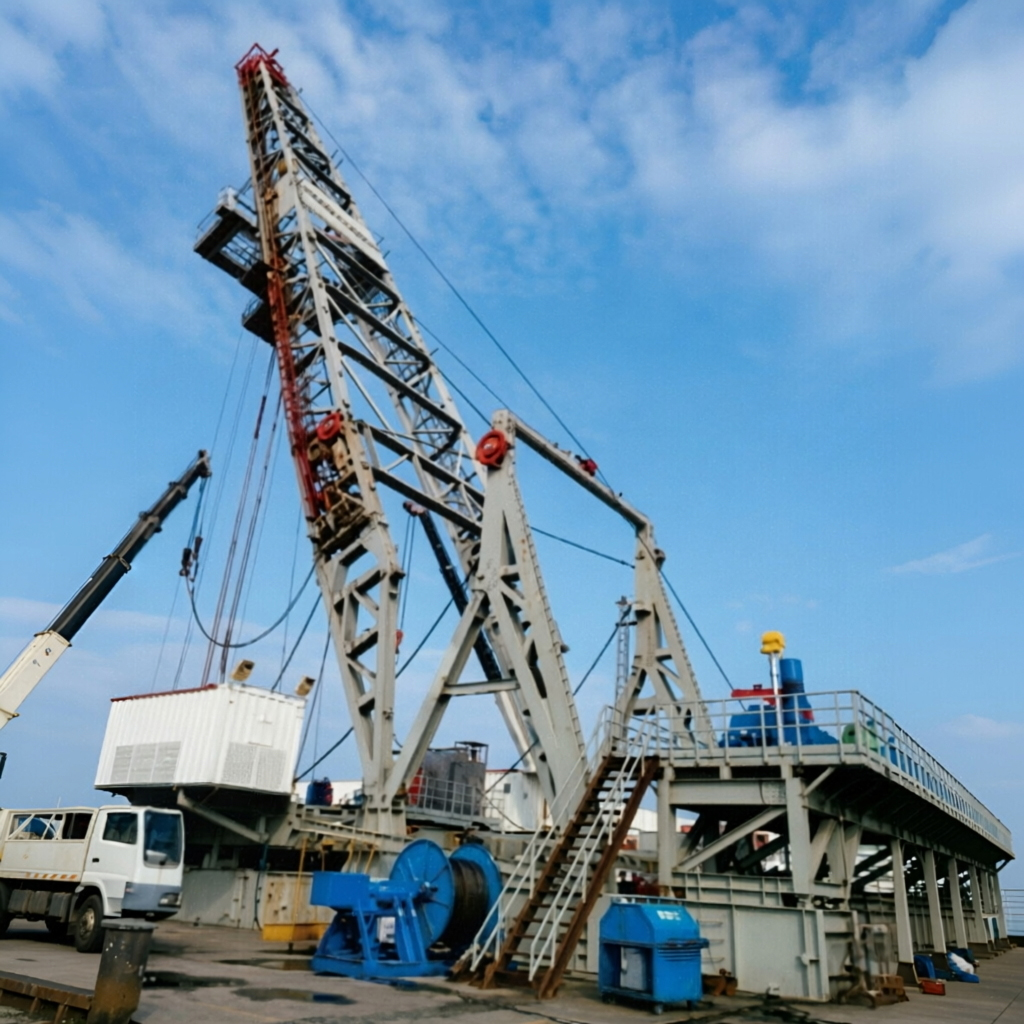
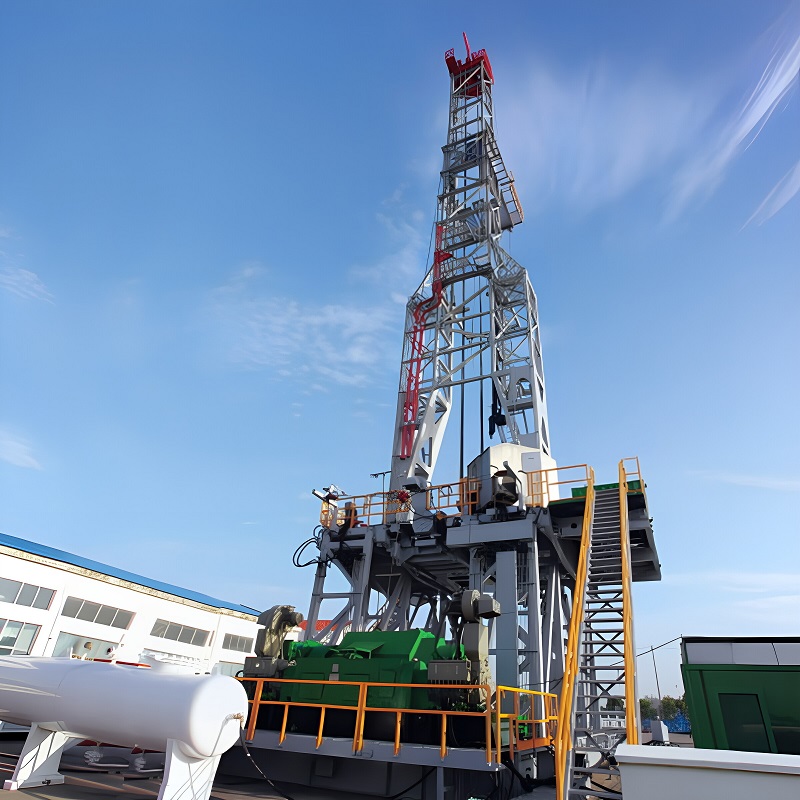
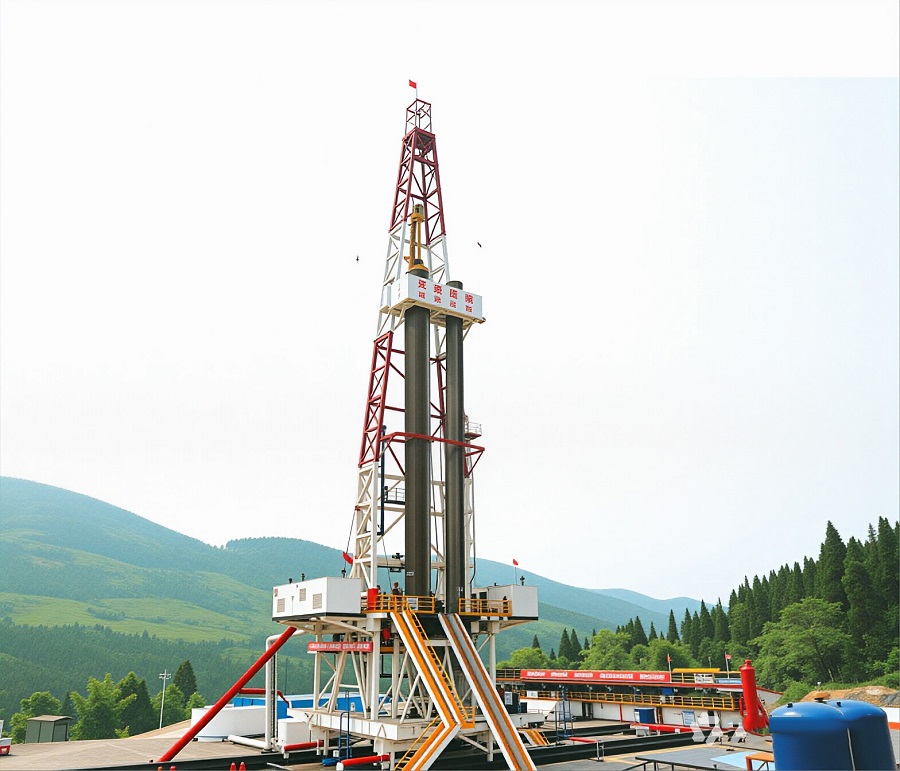
The Helicopter-Transportable Drilling Rig is a lightweight exploration rig designed for locations inaccessible by road: mountains, swamps, tundra, jungle and offshore islands. Every component of the rig is engineered to fit under a helicopter cargo sling —typically a Mil Mi-8, Mi-26, or S-61 —with each load under the helicopter's maximum sling weight.
The rig is used for shallow to medium-depth exploration wells (1000–3000 m) where building a road to the location would cost more than drilling the well itself. Typical applications include mountain-front exploration in South America, swamp drilling in Siberia, jungle exploration in Southeast Asia, and remote islands.
Helicopter-portable design
Each load under 5 t
Every component —mast sections, drawworks, engine, mud pump, substructure —is designed as a module weighing 3–4 t, which is within the sling capacity of a Mil Mi-8 (4 t) or Mi-26 (20 t). No component exceeds the helicopter limit.
Sectional mast, hand-assembled
The mast comes in 4–6 bolted sections that crews assemble by hand on location. No hydraulic lift cylinder is heavy enough to be a problem; the mast is raised with a gin pole and the drawworks.
Compact diesel engines
One or two compact diesel engines (Cummins 6CT or Cat C18) provide power. The engine package is a single 3 t module that can be slung in one trip.
Single triplex pump, lightweight
One triplex pump (500–800 hp) handles circulation for shallow wells. The pump skid is 3–4 t, designed to sling in one load.
Aluminum alloy substructure
The drill-floor substructure uses aluminum alloy instead of steel to reduce weight. It is designed to break into pieces under 500 kg each for hand carry to the location.
Portable camp modules
Crew quarters, mess and storage come as soft-walled tent modules that sling under the helicopter. No permanent buildings are needed on location.
Where this rig fits
- Mountain-front exploration: Andean foothills, Tibetan plateau, Rocky Mountain access wells.
- Swamp and tundra: Siberian swamp, Canadian tundra, where roads are seasonal or nonexistent.
- Jungle exploration: Southeast Asian and South American jungle where ground access is limited.
- Remote islands: offshore island exploration without barge access.
When does a helicopter-portable rig make economic sense?
A helicopter-portable drilling rig is the most expensive way to move a rig — helicopter time costs ,000–,000 per hour. But in remote, roadless terrain (mountains, jungle, arctic tundra), it may be the only way to get a rig to the wellsite. Every component is designed as a module under 5 tons so a Mil Mi-8 (4 t sling) or Mi-26 (20 t sling) can carry it.
Choose this rig when:
- There is no road, trail, or waterway to the wellsite. This is the #1 reason. If you can drive or barge the rig to location, a helicopter-portable rig is a waste of money. But in remote mountains, jungle, or arctic islands, building a road costs millions of dollars. Helicopter lift is cheaper than road construction for short access distances.
- Wells are small (shallow to medium depth). A helicopter-portable rig is typically 1,000–3,000 m class. You cannot move a 5,000 hp ZJ70 rig by helicopter — the modules would be too heavy. This rig is for exploration or small development wells in remote areas, not large-field development.
- Environmental restrictions prevent road building. In national parks, wildlife reserves, or sensitive ecosystems (arctic tundra, rainforest), building a road is environmentally prohibited. Helicopter access minimizes surface disturbance — you land a small pad, drill the well, and leave with almost no environmental trace.
- The cost of helicopter time is justified by the well value. If the well is an exploration well worth –10M, spending – on helicopter moves is a small fraction of total cost. If you are drilling 100 shallow wells in a field, the helicopter cost per well becomes unsustainable — you need a road or airstrip.
Helicopter-portable vs truck-movable rig — cost comparison?
- Truck-movable rig: Cheaper rig cost, but requires road access. If no road exists, road construction cost can exceed the rig cost.
- Helicopter-portable (this rig): Higher rig cost (lightweight modules, sectional mast, hand-assembled), but no road needed. Best for remote exploration wells where road construction is impossible or environmentally prohibited.
Buyer questions
Q: How many helicopter loads does a full rig move take?
A: Typically 40–60 sling loads depending on rig size and helicopter type. A Mi-8 can move 4 t per load; a Mi-26 can move 20 t and reduces the number of loads by 70%.
Q: What depth can this rig reach?
A: 1000–3000 m with 114 mm drill pipe. The rig is designed for exploration, not development drilling.
Q: How long does rig-up take in remote location?
A: 7–14 days for a 6-person crew, including mast assembly and substructure build. There is no crane on location, so all lifting is by drawworks or helicopter.
Q: Can it be moved by barge instead?
A: Yes. All modules fit in standard 20-foot containers for barge or road transport when access allows. The helicopter-portable design is a bonus, not the only transport mode.
Q: What is the typical price range for this equipment?
A: Pricing depends on capacity, configuration, and option list. Contact our sales team with your requirements for a detailed quote. We offer factory-direct pricing with no middleman markup.
Ready to discuss this rig?
Send your target depth, access method (helicopter model, barge, or road), and location terrain. We will return a module breakdown and pricing within 48 hours.