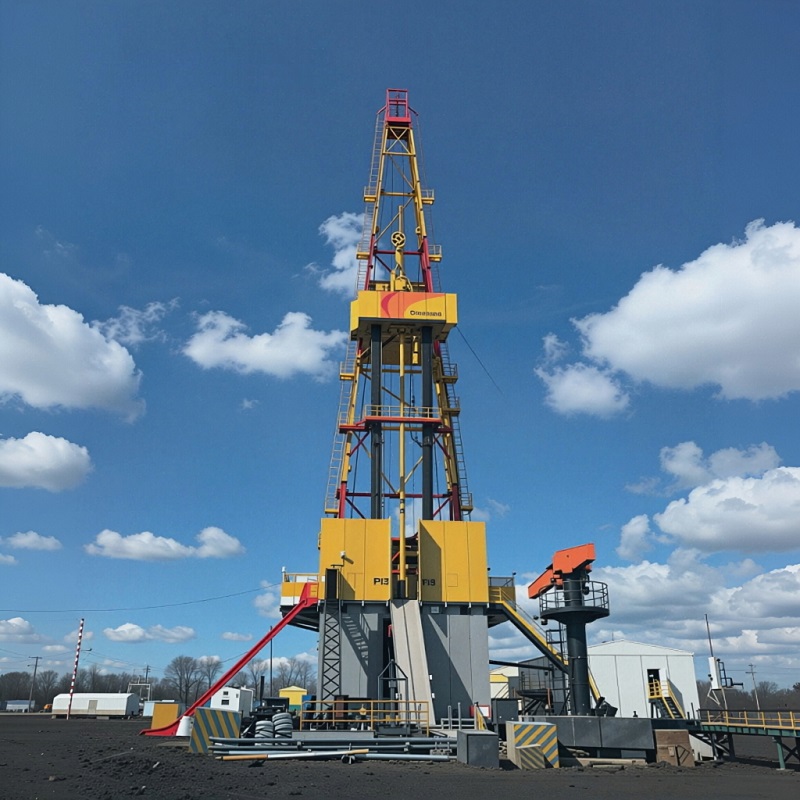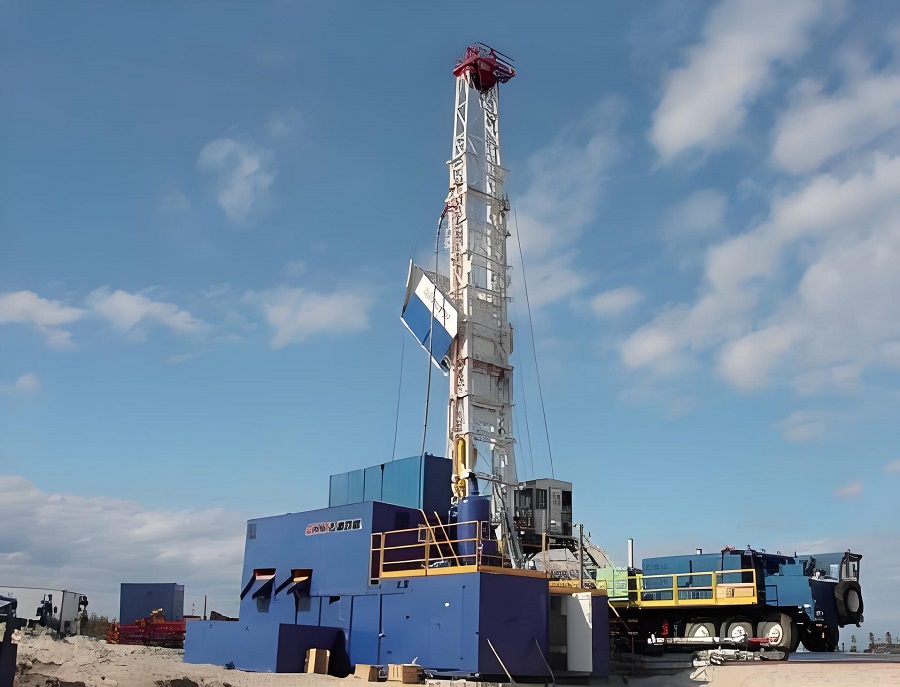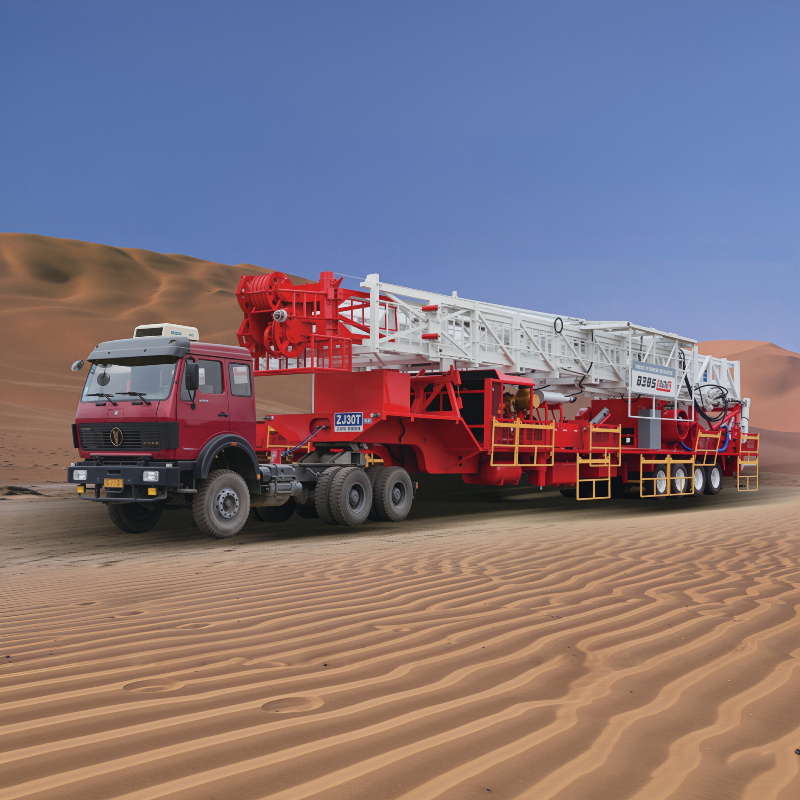
SZJ180TZ Trailer-Mounted Rig for Remote Fields
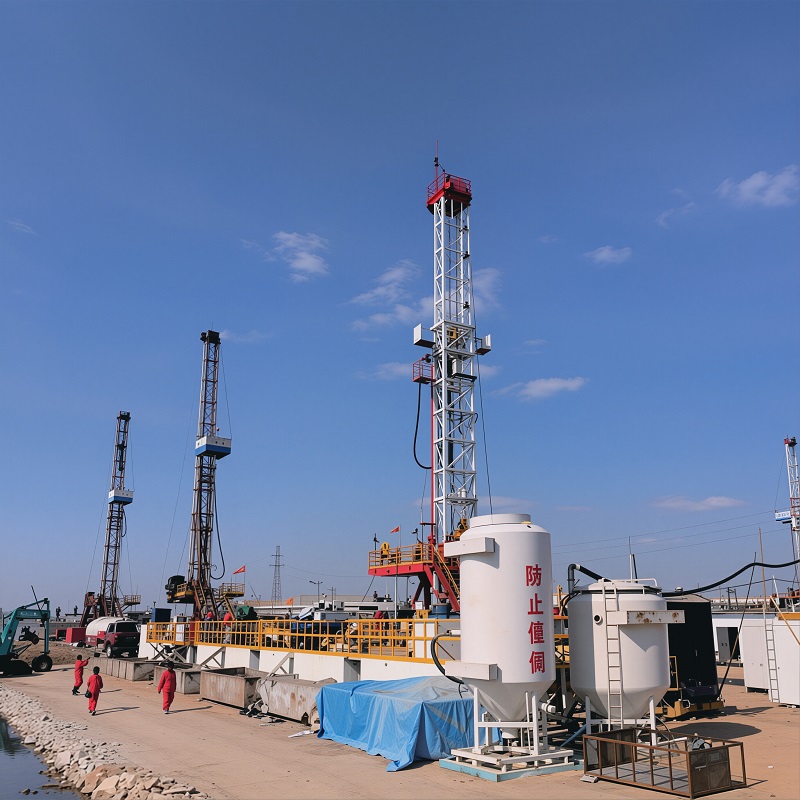
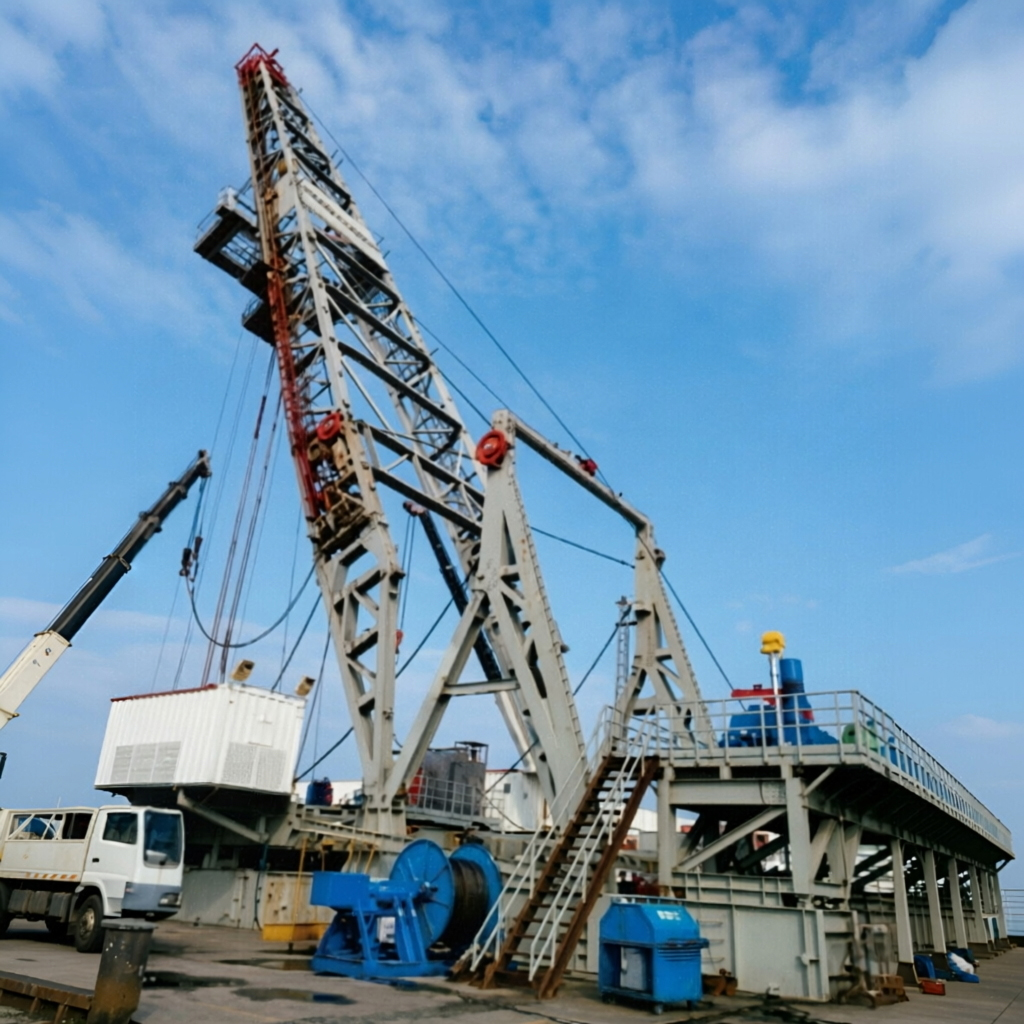
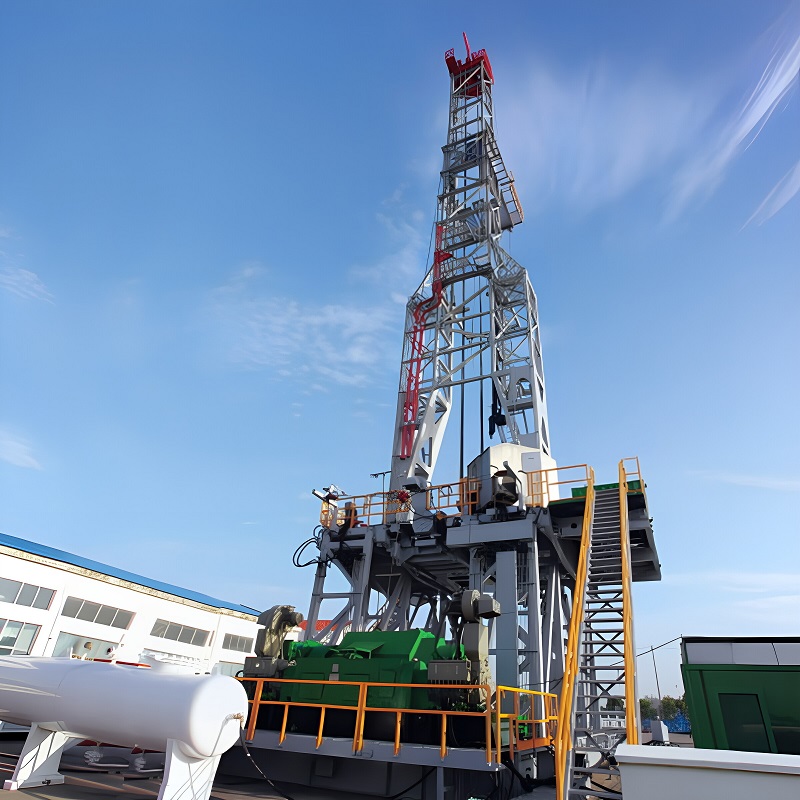
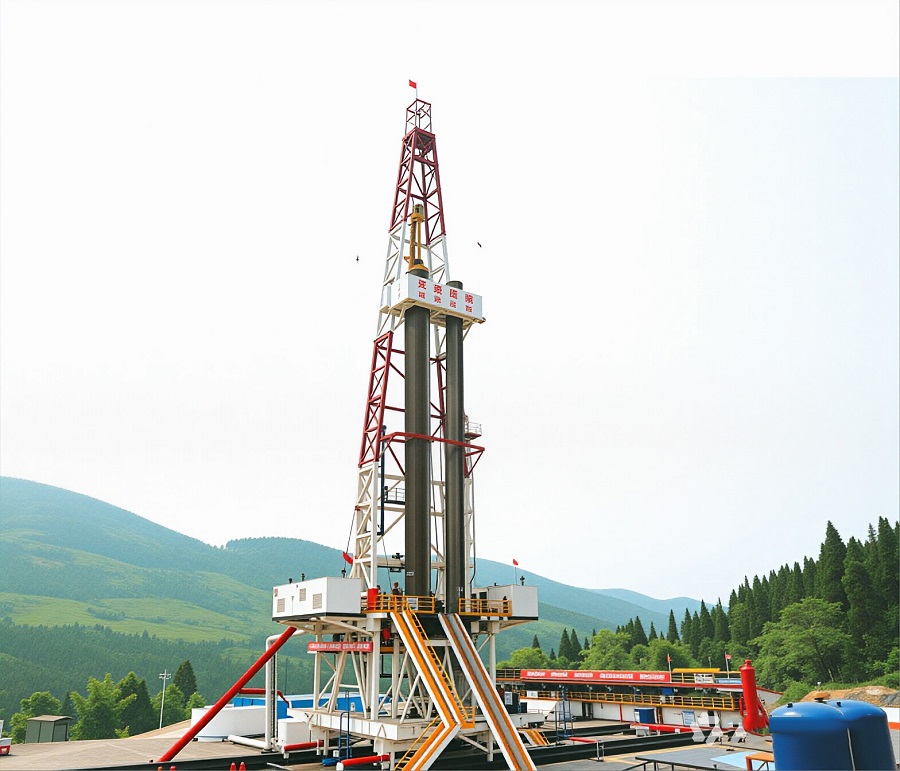
The SZJ180TZ Trailer-Mounted version is configured for remote field operations where road infrastructure is limited. Same 1800 kN hook load and 2000 m depth rating as the standard trailer rig, but with reinforced chassis, larger fuel and water tanks, and a self-contained power package that does not rely on site utilities.
This configuration is selected by operators in Central Asia, West Africa and South America where well pads are 50–100 km from the nearest town, and the rig must be self-sufficient for a week or more. The standard trailer rig is optimized for highway moves; this version is optimized for rough-road and off-grid operation.
Is the SZJ180TZ the right trailer rig for your remote program?
The SZJ180TZ is a trailer-mounted drilling rig rated at 1,800 kN hook load and 2,000 m depth. Unlike truck-mounted rigs with a permanent cab, this unit is pulled by a tractor and built for a specific niche: remote field operations 50–200 km from town, off-grid locations, and rough-road campaigns where you cannot rely on road infrastructure, fuel supply, or on-site water.
Choose this rig when:
- Target depth is up to 2,000 m. This is the working range for 1,800 kN hook load — shallow development wells, workover-heavy programs, and exploration slimholes. If your wells routinely exceed 2,000 m, step up to a ZJ30 or ZJ40 class rig.
- The wellsite is 50–200 km from the nearest supply base. The rig carries its own fuel (800 L diesel), water (2 m³ onboard), and spare parts cabinet. This means you do not need daily supply trucks to keep drilling — a critical advantage on rough roads where supply convoys are slow and expensive.
- You face rough-road campaigns, not paved highways. The reinforced off-road suspension handles corrugated gravel tracks, unmaintained roads, and soft shoulders. A standard highway trailer would damage its suspension and frame on these routes.
- You want a self-contained unit without a permanent truck. Because the trailer is pulled by a tractor you can share across other equipment, you avoid the cost of a dedicated truck cab, engine, and drivetrain. This lowers fleet capital cost if you already own suitable tractors.
SZJ180TZ trailer rig vs a comparable truck-mounted rig — which to choose?
- Choose the trailer (SZJ180TZ, this model): You already own tractors, moves are occasional (every few weeks), the routes are rough, and you want lower fleet cost plus onboard self-sufficiency (fuel/water/spares).
- Choose a truck-mounted rig: You move daily between wells, you want a single self-contained vehicle, and you need highway-speed moves. You pay for the truck chassis but gain daily mobility.
What changes for remote service
Reinforced off-road suspension
The semi-trailer uses heavy-duty leaf-spring suspension rated for rough gravel roads and graded earth tracks. Ground clearance is raised to 400 mm for creek crossings and rock fields.
800 L onboard diesel
The rig carries 800 L of diesel on board (vs 300 L standard), enough for a week of drilling without refueling. A separate 1000 L fuel trailer can be towed for longer campaigns.
2 m3 onboard water tank
Onboard water for cooling and crew use, with a water recycling loop from the mud system. External water supply is not required for the first week of operation.
Self-contained genset
A 50 kW auxiliary genset powers lights, controls and crew facilities when the main engine is off. No external grid connection is needed on location.
Onboard spare parts cabinet
A locked spare parts cabinet on the trailer carries common wear parts: brake blocks, seals, fuses, hoses. Critical spares for a week of remote operation are on board.
Self-contained camp option
An optional crew cabin module mounts on the trailer, sleeping 4–6 crew. This eliminates the need for a separate camp in remote locations.
Buyer questions
Q: How does this differ from the standard SZJ180TZ?
A: Same rig, but reinforced chassis, larger fuel/water, self-contained power and spare parts. The standard version is for highway moves; this version is for off-grid remote fields.
Q: Can it operate without any site infrastructure?
A: Yes. The rig is self-sufficient for 7–10 days. After that, a water or fuel resupply is needed.
Q: What kind of roads can it handle?
A: Graded earth tracks, gravel roads and dry creek crossings. Not designed for swamp or deep mud.
Q: What is the typical price range for this equipment?
A: Pricing depends on capacity, configuration, and option list. Contact our sales team with your requirements for a detailed quote. We offer factory-direct pricing with no middleman markup.
Q: Do you provide on-site commissioning and operator training?
A: Yes. We provide on-site installation supervision, commissioning, and operator training as part of every package. Our service engineers travel worldwide to support your team during startup and operation.
Ready to discuss this configuration?
Send your field location, road condition, and typical campaign length. We will return a remote-spec version and pricing within 48 hours.