Double-Lifting Box Substructure for ZJ90DB
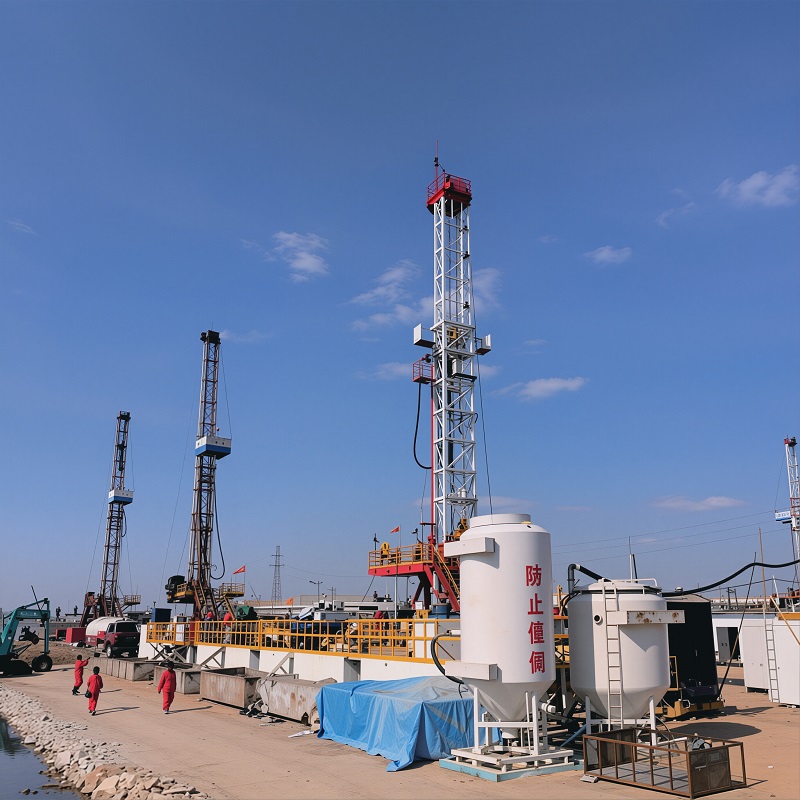
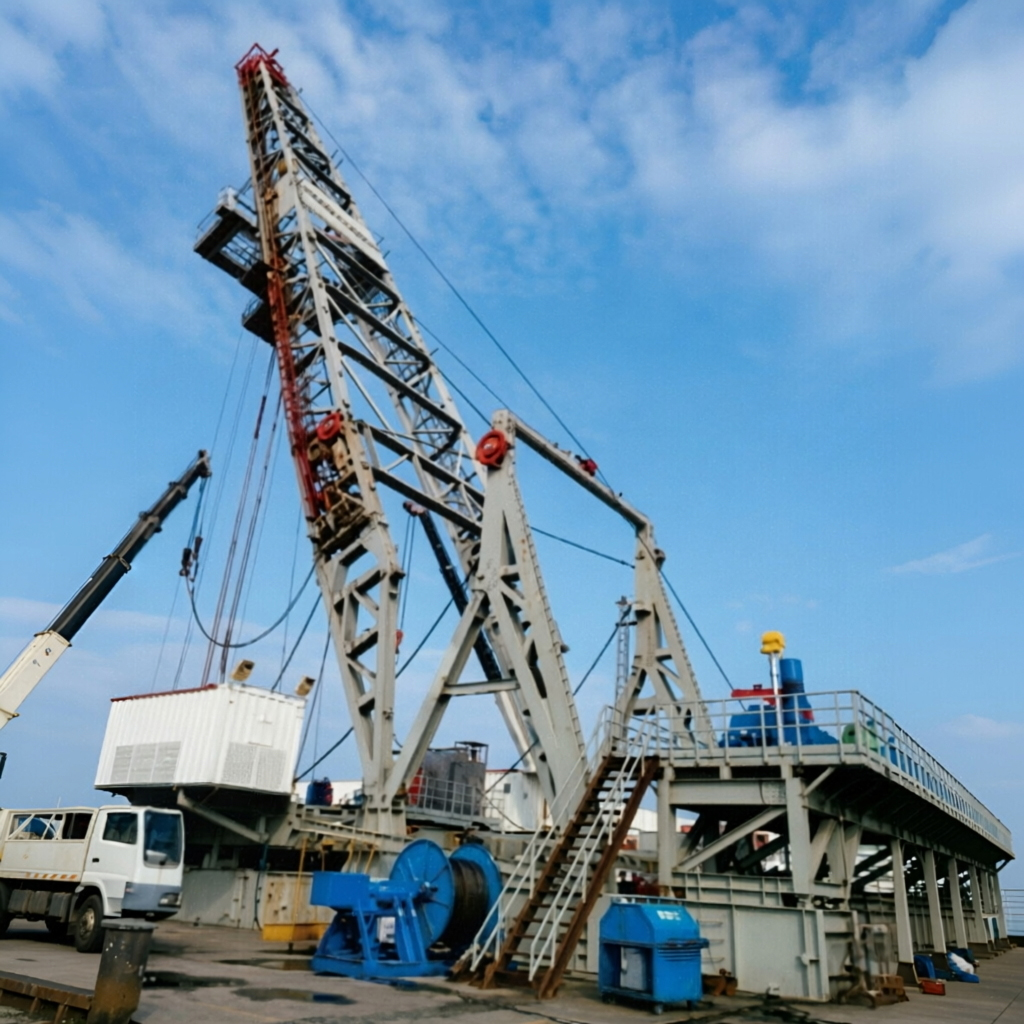
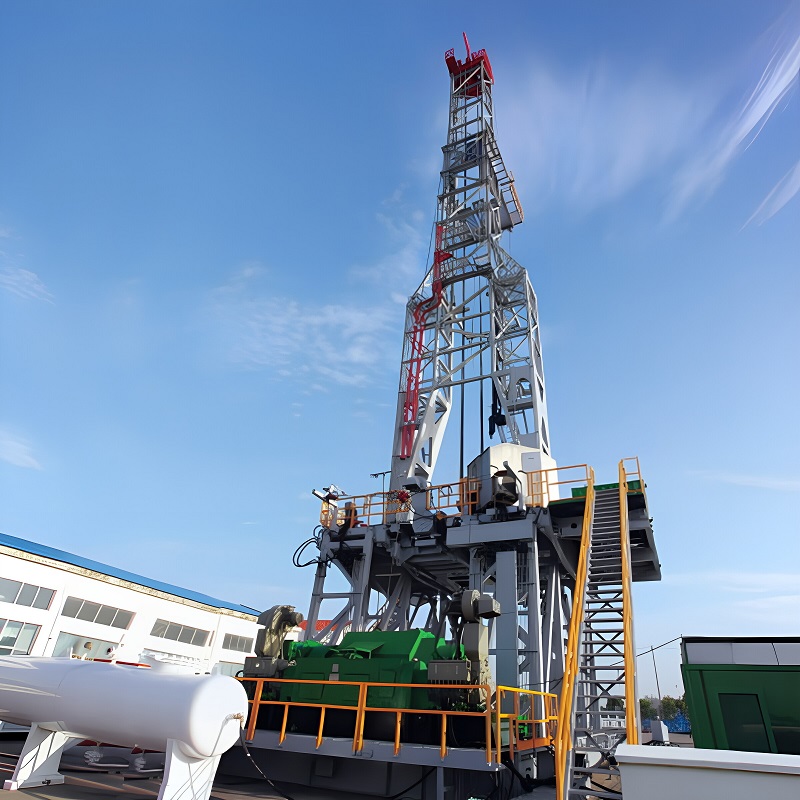
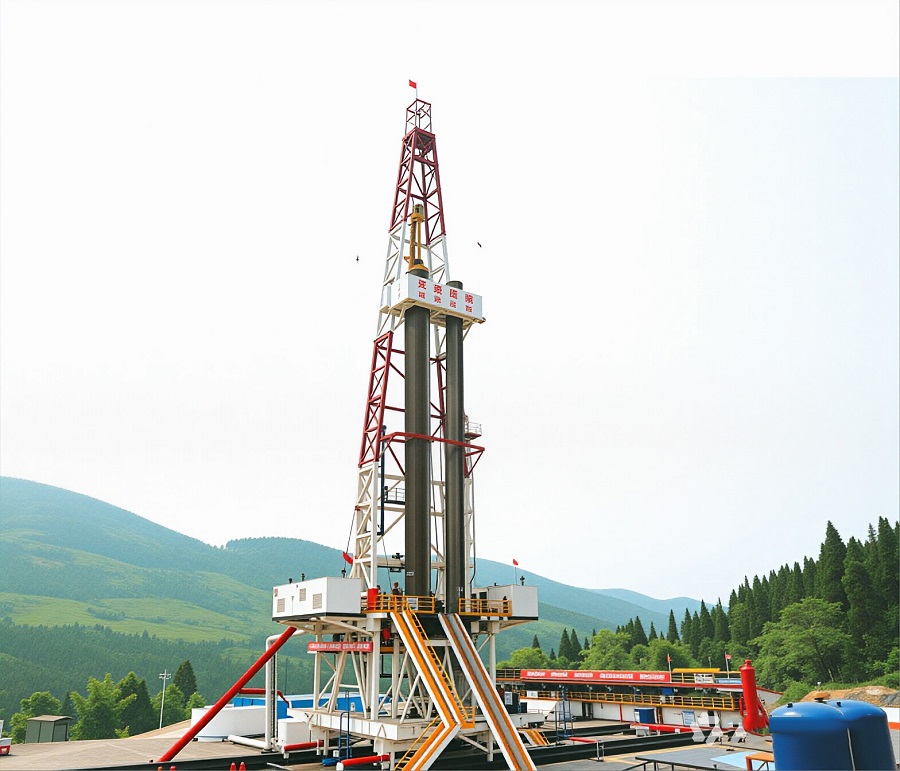
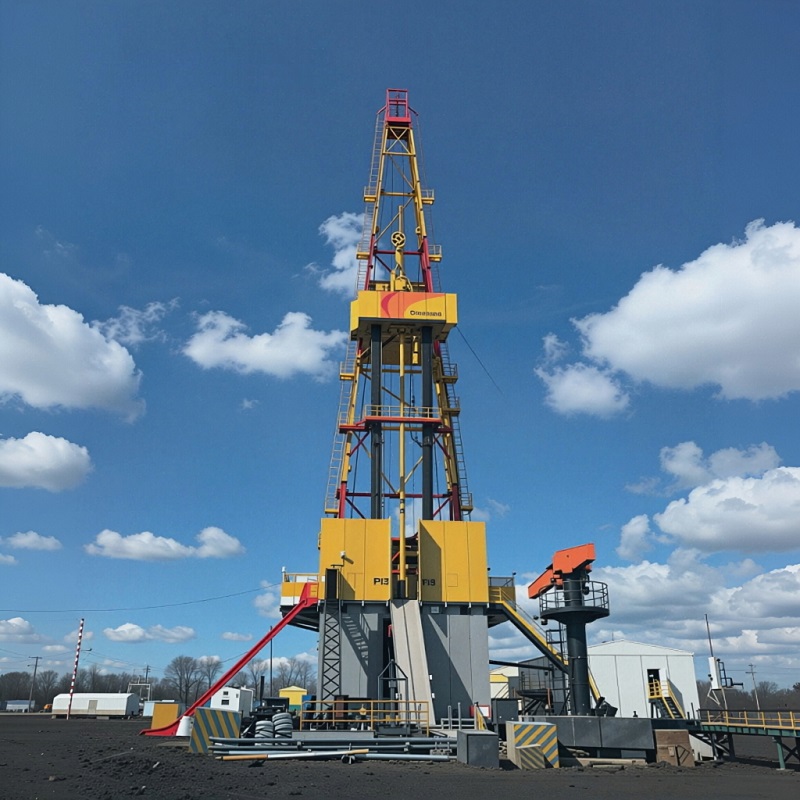
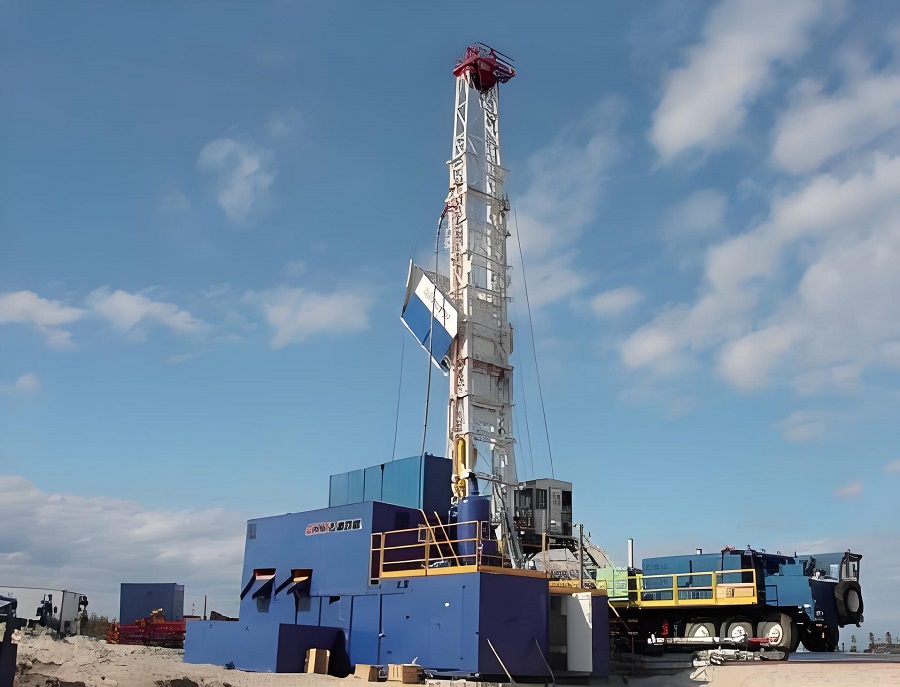
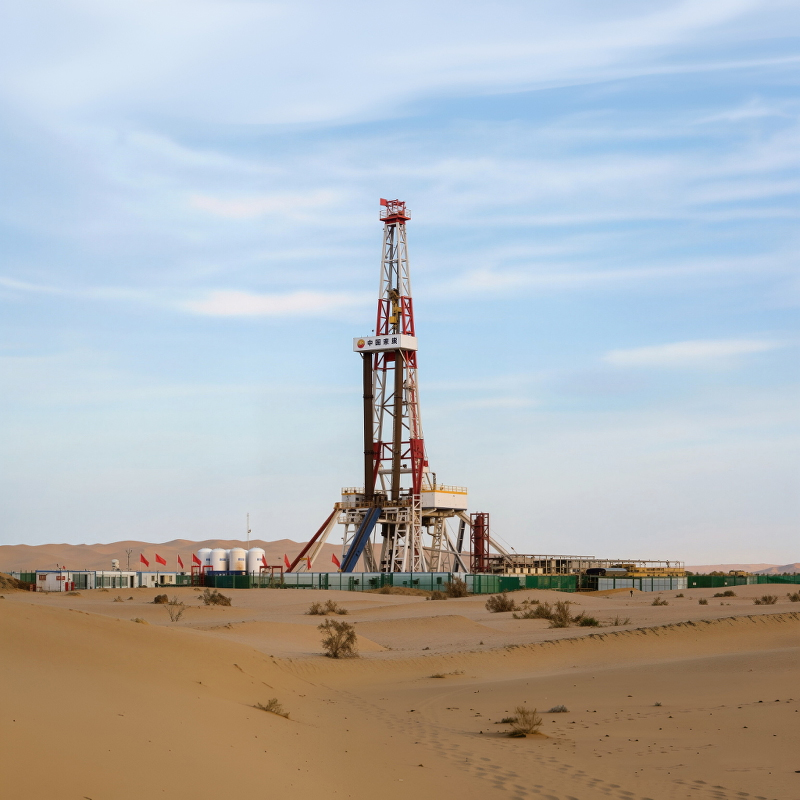
This is a substructure —the drill-floor support frame that carries the rotary table, drawworks, BOP and wellhead —engineered for the ZJ90DB ultra-deep rig. It is a double-lifting box design: the drill floor and the cellar beam are raised independently, first to working height and then to transport height, using synchronized hydraulic cylinders.
The substructure is rated for 6750 kN rotary beam load, which matches the ZJ90DB rig's 6750 kN hook load. The double-lifting design is chosen for ultra-deep rigs because the drill floor must be high enough (7.5–9 m) to accommodate a high-pressure BOP stack, and the substructure must be low enough to transport on standard trucks.
Double-lifting design
6750 kN rotary beam
The rotary beam is rated for 6750 kN static load, matching the ZJ90D rig's hook load. This means the substructure can handle the full weight of string and BOP during deep-well operations without deformation.
Two-stage hydraulic lift
Stage 1: the drill floor rises from transport height (3 m) to working height (7.5 m). Stage 2: the cellar beam rises independently to clear the BOP stack. The two-stage design avoids the need for a single extremely tall lift cylinder.
Synchronized cylinder control
Eight hydraulic cylinders work in pairs, controlled by a synchronized valve bank. The drill floor stays level within 2 mm during the entire lift, preventing binding or uneven load.
3 m transport height
When collapsed, the substructure is 3 m high, which fits standard heavy-haul trucks without over-height permits. The working height of 7.5 m is achieved by the double lift.
Box-type, no cribbing
The substructure is a welded box structure, not a beam-and-post design. It is self-supporting once pinned; no wood cribbing or steel shims are needed on location.
7.5 m cellar clearance
The cellar beam clearance is 7.5 m, enough for a 13-5/8" 105MPa BOP stack plus a riser. This is the key dimension for HPHT ultra-deep wells.
Do you need a double-lifting substructure, or is a standard single-lift enough?
This is a substructure (the steel frame that supports the drill floor and rotary table), not a complete drilling rig. It is designed for the ZJ90D class rig (9,000 m depth, 6,750 kN hook load). The "double-lifting" designation means the drill floor and the cellar beam (which supports the BOP stack) rise independently in two stages, instead of one tall lift.
Choose the double-lifting substructure when:
- You are running a large BOP stack that needs clearance. On deep high-pressure wells, the BOP stack can be 5–7 m tall (multiple rams, annular, choke manifold). A standard single-lift substructure raises the drill floor to working height, but the cellar opening may not be large enough to clear the BOP. The double-lift design lets you raise the drill floor first, then raise the cellar beam independently, giving enough clearance for the full BOP stack.
- Working height is 7.5 m or higher. A single-stage lift from transport height (3 m) to 7.5 m working height requires very long hydraulic cylinders. The two-stage design uses shorter, more reliable cylinders — first to 5 m, then to 7.5 m. This reduces cylinder cost and improves safety.
- Rig-up speed matters. The synchronized cylinder system (8 cylinders in pairs) lets a two-person crew raise the substructure in 4–6 hours, compared with 1–2 days for a pinned/bolted substructure. This matters on multi-well deep drilling programs where rig time is expensive.
- You need to upgrade an existing ZJ90 rig. If you already own a ZJ90D rig but the substructure is old or damaged, this double-lift substructure is a direct replacement. It matches the ZJ90D hook load and rotary table dimensions, so you do not need to buy a whole new rig.
Double-lift vs single-lift substructure — when does single-lift work?
- Single-lift is fine for: Shallow to medium depth wells (< 5,000 m), small BOP stacks, and low working height (< 6 m). Cheaper, simpler, fewer cylinders to maintain.
- Double-lift (this substructure) is required for: Deep high-pressure wells (> 5,000 m), large BOP stacks, and working height 7.5 m+. The two-stage design is safer and faster to rig up.
Buyer questions
Q: Which rigs is this substructure compatible with?
A: It is engineered for ZJ90DB (6750 kN hook load). We also build equivalent double-lifting substructures for ZJ70D (4500 kN) and ZJ80D (5850 kN) classes.
Q: How long does the lift take?
A: About 2–4 hours for both stages, including leveling and pinning. The substructure is then ready for rig-up.
Q: Can it be adapted for a different BOP height?
A: Yes. The cellar beam height can be specified from 5 m to 9 m depending on the BOP stack selected.
Q: What is the typical price range for this equipment?
A: Pricing depends on capacity, configuration, and option list. Contact our sales team with your requirements for a detailed quote. We offer factory-direct pricing with no middleman markup.
Q: Do you provide on-site commissioning and operator training?
A: Yes. We provide on-site installation supervision, commissioning, and operator training as part of every package. Our service engineers travel worldwide to support your team during startup and operation.
Ready to discuss this substructure?
Send your rig model, required drill-floor height, and BOP stack dimensions. We will return a structural drawing and pricing within 48 hours.