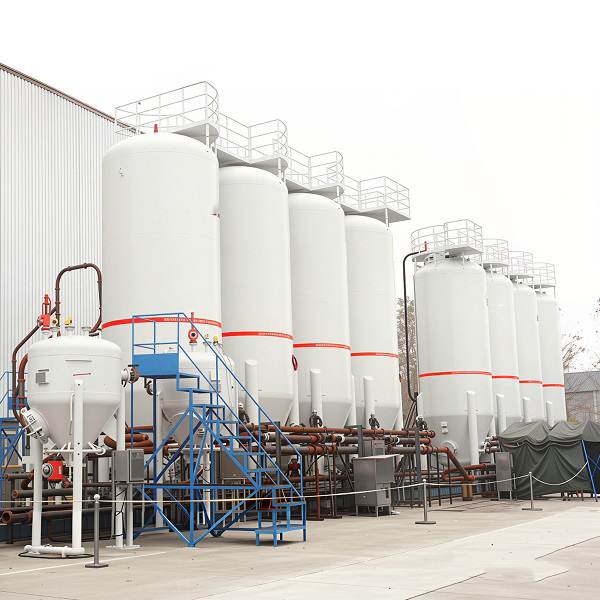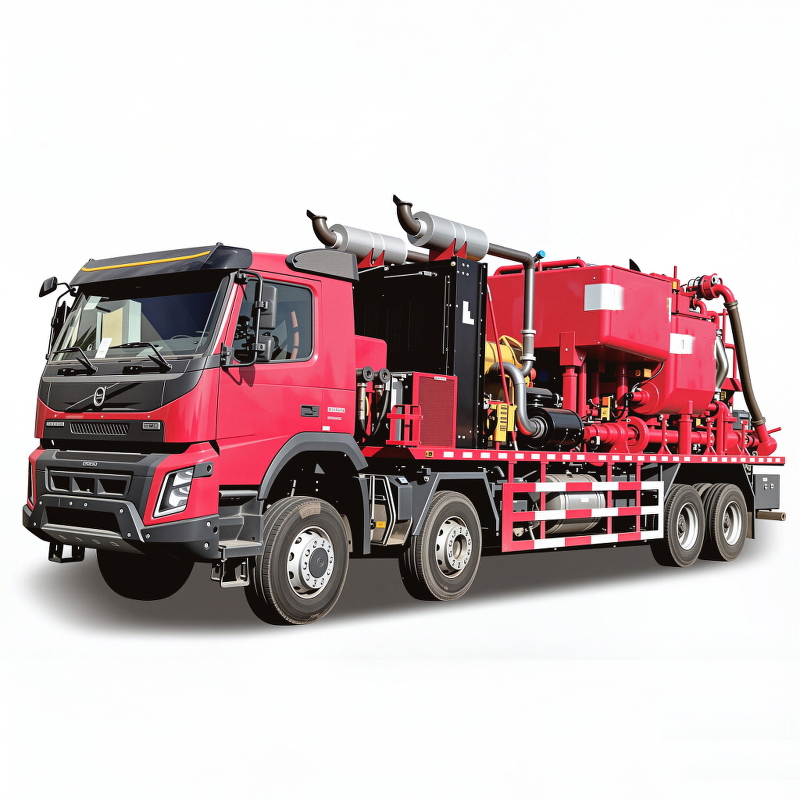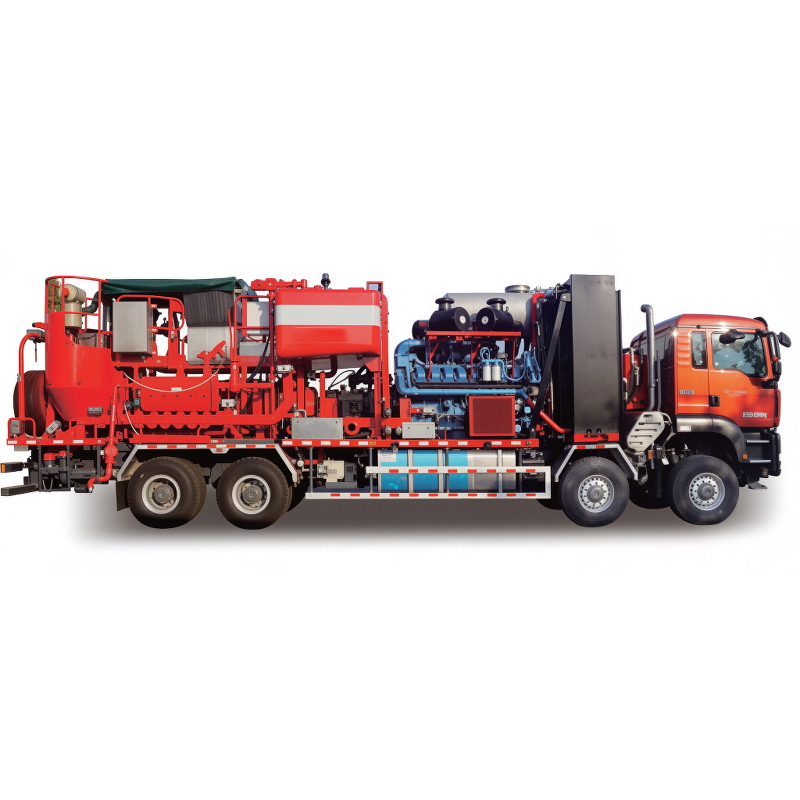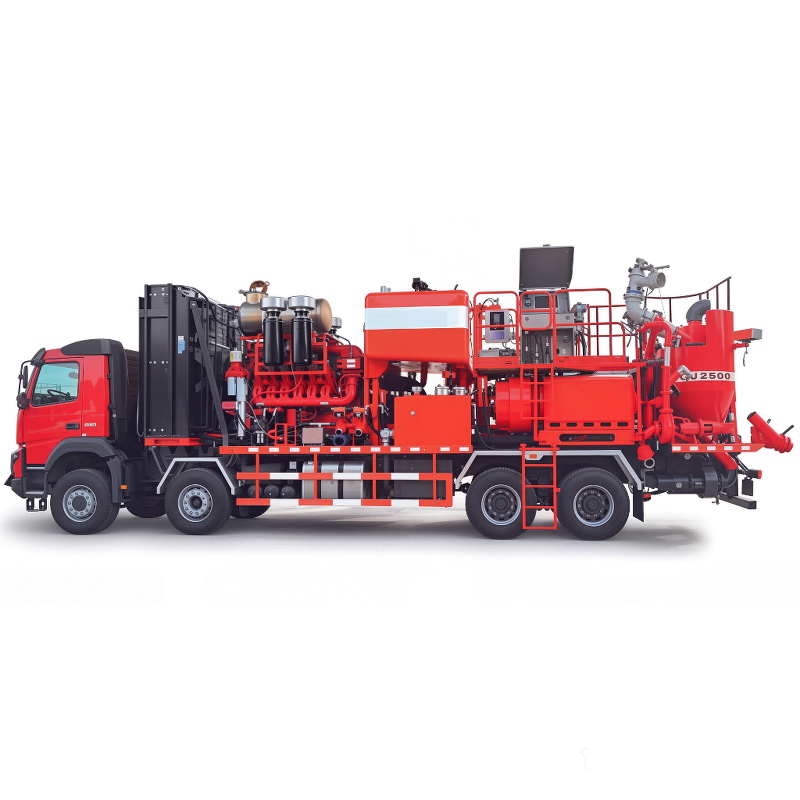
Continuous Liquid Additive System
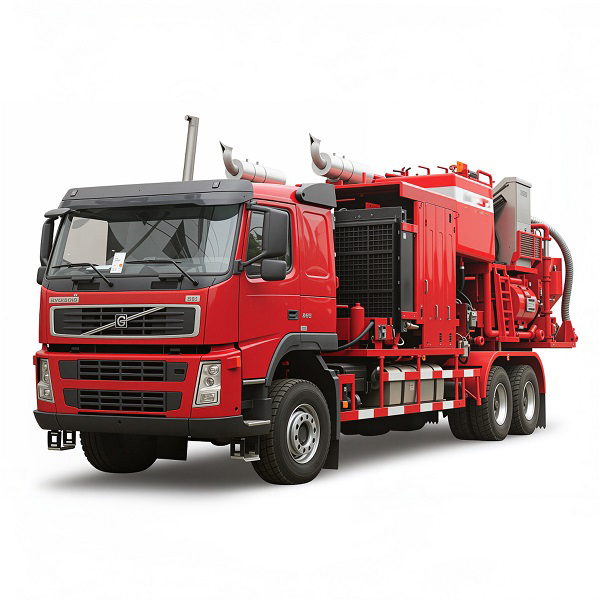
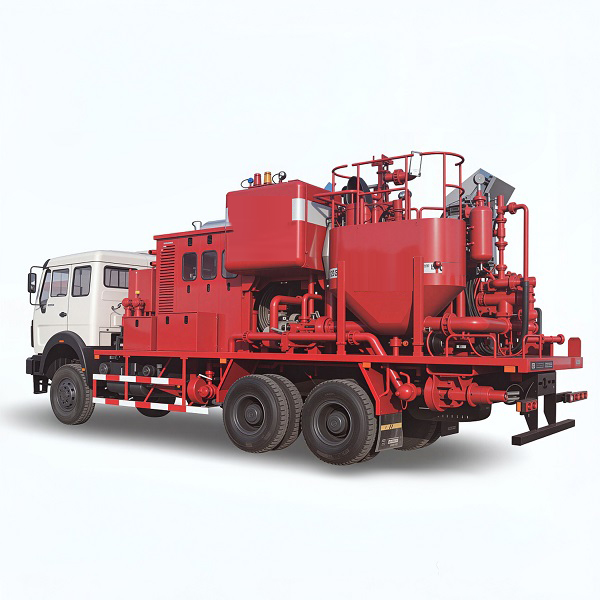
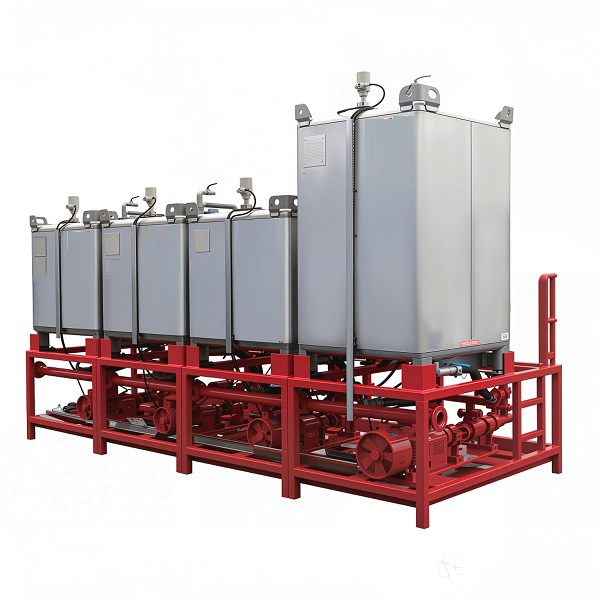
Continuous liquid additive system, automatic precision dosing, improves cement slurry performance consistency. This heavy-duty cementing unit (high-pressure working capacity) is designed for professional oilfield service companies who need reliable, field-proven cementing equipment that performs consistently under continuous well cementing duty.
SJ Petroleum Machinery manufactures this high-pressure cementing unit to API 6A standards, with full factory pressure and flow testing before shipment. We provide on-site commissioning, operator training, and global spare parts support tailored to this model.
Key features
The diesel engine and drivetrain are rated for continuous cementing pump duty. Critical components (Cummins engine, Siemens control system) are sourced from reputable manufacturers with global service support.
Additive flow: 0-50 L/min
Fluid end is designed for high-pressure service with modular valve seats and quick-change components. Field maintenance is straightforward; a trained crew can service the pump in hours, not days.
Operator cabin with data logging
Stand-alone air-conditioned operator cabin with pressure gauges, engine controls, and a data recorder for treating pressure, rate, and density. Operators work safely away from high-pressure lines.
Road-legal, single-unit transport
The entire unit is mounted on a standard truck or skid chassis. No disassembly needed for road transport. Drive or tow it to the well location, connect hoses, and start work.
Factory-tested before shipment
Every unit is API-certified (API 7K / API 6A as applicable) and manufactured under our ISO 9001 quality system. Full pressure testing, load testing, and function testing are conducted before leaving the factory. We provide test reports and certification documents with each shipment.
Global spare parts network
We supply spare parts kits, field service engineers, and operator training. Critical spare parts are stocked in our warehouse and shipped within 48 hours of order.
Where this unit fits
This continuous liquid additive system is designed for:
- High-quality cementing projects: Precise chemical dosing ensures slurry properties meet specification requirements
- Applications requiring precise chemical dosing: Continuous injection system for dispersants, retarders, accelerators, and fluid loss additives
- Complex slurry designs: Multiple additive streams for customized cement recipes in challenging wells
- Quality assurance: Metered dosing with data recording for compliance and job verification
Operating sequence
The cementing operation follows these key steps:
- Site positioning: Truck or skid unit positioned at wellhead, suction and discharge lines connected
- Pre-job checks: Operator verifies fluid end condition, safety valves, and control system calibration
- Mix preparation: Mixing system prepares cement slurry to target density and specifications
- Pumping stage: Pump delivers slurry at controlled rate and pressure, operator monitors real-time data
- Displacement: After cement slurry, displacement fluid pushes cement to target depth
Do you need a continuous liquid additive system, or are manual bags enough?
Liquid additives (retarders, accelerators, dispersants, extenders) are mixed into cement slurry to adjust thickening time, strength development, and rheology. On small jobs, crews add these by hand from bags or buckets. On large or critical jobs, a continuous additive injection system pumps liquid chemicals at a precise, controlled rate into the mixing hopper — no manual measuring, no human error.
Choose a continuous liquid additive system when:
- You are doing critical cement jobs where consistency matters. Primary production casing, liner cementing, or high-pressure gas wells — if the thickening time is off by even 30 minutes, you can get a stuck pipe or a failed cement job. The injection system maintains additive concentration within ±0.1% of design, compared to ±5–10% with manual dosing.
- You are using multiple additives (3+ products). Most deep well cement jobs use 4–6 liquid additives simultaneously. Trying to meter each one by hand is error-prone and slow. The system has separate pump channels for each additive, all controlled from a single panel.
- You need data records for compliance. International oil companies (Shell, BP, Total) require chemical dosing records per well — what additive, at what concentration, for what job. The continuous system logs this automatically. Manual dosing means paper records that are hard to verify.
- You want to reduce chemical waste. Manual dosing tends to over-add chemicals to be safe ("just in case"). This costs money and can hurt slurry properties. The injection system adds exactly what the job needs, reducing chemical spend by 15–25% on average.
Manual vs continuous injection — when is manual OK?
- Manual dosing is fine for: Surface casing jobs (< 2,000 m), single-additive formulations, or small workover jobs where chemical cost is low and job failure risk is minimal.
- Continuous injection pays for itself on: Deep wells, critical casing strings, multi-additive systems, and any operation where the oil company requires dosing records. The system typically pays for itself in chemical savings and avoided job failures within 6–12 months.
Common selections
- More additive channels: customized configuration tailored to your field conditions
- automatic ratio control.: customized configuration tailored to your field conditions
- Automated control system: PLC-based control with touchscreen HMI
- Data acquisition and recording: real-time monitoring and data logging
Buyer questions
Q: What is the lead time for a new unit?
A: 6–8 months for a new unit, depending on option list. Refurbished units available in 60–90 days.
Q: Do you supply the complete cementing spread for oil well cementing?
A: Yes. We can supply complete cementing spreads for oil well cementing operations: cementing trucks, batch mixers, cement tanks, and additive systems as a package, engineered to work together for onshore and offshore oilfield projects.
Q: Can you customize cementing units for deep well and high-pressure operations?
A: Yes. We customize cementing units for ambient temperature, terrain, power supply, and emission regulations. Whether you need desert, cold-weather, or offshore configurations, send your site conditions and we will return a tailored cementing truck configuration.
Q: What is the typical price range for this equipment?
A: Pricing depends on capacity, configuration, and option list. Contact our sales team with your requirements for a detailed quote. We offer factory-direct pricing with no middleman markup.
Q: Do you provide on-site commissioning and operator training?
A: Yes. We provide on-site installation supervision, commissioning, and operator training as part of every package. Our service engineers travel worldwide to support your team during startup and operation.
Manufacturing background
SJ Petroleum Machinery has been manufacturing cementing equipment since the 1980s, with over 500 cementing units delivered to oilfield operators in the Middle East, Central Asia, Africa, and Southeast Asia. Our cementing trucks and skids are API-certified and customized for well depths ranging from shallow to ultra-deep wells. We provide factory-direct pricing, global after-sales support, and on-site commissioning for your cementing operations.
Ready to discuss this model?
Send your well program, target pressure, flow rate requirement, and site conditions. We will return a tailored configuration and pricing within 48 hours.